 Whatever your traditions for this season, we here at History Hoydens wish you a wonderful season of celebration. We'll be back with more history, more books, and more book-related chitchat on January 5th.
Monday, December 22, 2008
Happy Holidays!
Whatever your traditions for this season, we here at History Hoydens wish you a wonderful season of celebration. We'll be back with more history, more books, and more book-related chitchat on January 5th.

Friday, December 19, 2008
Medieval English Carols

The English expression of the medieval carol is unique, and I say this from my own experience; I have sung and played many of these carols in medieval music ensembles, and there is a distinctly different, emotionally gripping feel to the songs. In medieval England, the carol is more external, more in-this-world oriented, than mystical in its religion. With little deep individual feeling, the caroller sings as a member of the human race, one who is cursed by death.
Fuweles in the Frith
Fuweles in the frith,
The fishes in the flood,
And I must waxe wood,
Much sorw I walke
With the best of bon and blood.
(Fowls in the woodland, the fishes in the waters,
And I must make woe;
Much sorrow I walk with, for best of bone and blood)
Salvation is more an objective, external thing than a spiritual process. Many carols are prayers, expressed in song, for a safe , and a good death:
St. Godric ’s Vision
Sainte Nicolaes, Godes drud,
Tymbre us faire scone hus;
At the burth, at thi bare
Sainte Nicolaes, Bring us wel thire.
(St. Nicholas, God’s darling, graciously prepare for us beautiful dwellings.
At the birth, at the bier,
St. Nicholas, bring us safely there.)
And sometimes the religious carol is little more than a gay pastoral song:
The shepard upon a hill he satt;
He had on him his tabard and his hat,
His tarbox, his pipe, and his flagat;
His name was called Joly Joly Wat,
For he was a gud herdes boy,
Ut hoy!
For in his pipe he made so much joy.
Many traditional carols are creations of wandering goliards, who interwove Latin with English words. Here’s one from the 15th century:
Make We Joy (an Epiphany carol)
Make we joy now in this feast.
In quo Christus natus est: E-ya!
A Patre unigenitus,
Through a maiden is come to us,
Sing we of him and say
Welcome.
Veni Redemptor gentilum."
Another type of carol is the "traditional" song, whose origins are probably pagan–hence, inclusion of some puzzling lyrics . One such is "The Holly and the Ivy":
The Holly and the Ivy
The holly and the ivy
When they are both full grown,
Of all the trees that are in the wood,
The holly bears the crown.
Chorus: The rising of the sun, And the running of the deer,
The playing of the merry organ, Sweet singing in the choir.
Such carols celebrate nature’s cycle of life and predated Christian usage. Holly was revered because it stayed green all year long. The reference to "the running of the deer" in particular refers to the ancient ceremony of "deer running," once a mid-winter ritual dance of the hunt. Eight men, holding reindeer antlers above their heads, and accompanied by the traditional (pagan) folk Fool, the Man-Woman, Hobby Horse and Boy Hunter, process through the village and outlying farms, "bringing in the luck."
There are no words to this haunting tune, (called "Abbots Bromley Horn Dance Tune") but I have played the lilting melody line in a recorder ensemble; the music is evocative and a has a definite "spooky" feel.
Another such song, "Apple Tree Wassail," comes from a pagan winter solstice ritual performed at night by firelight to ensure new growth in the fruit trees. Old cider (and sometimes ashes from the Yule log) was poured at the base of the tree, and the accompanying singing and dancing was punctuated with loud banging noises and shouts to drive away evil spirits. The "carol" was performed by joining hands and singing while dancing in a ring around a bush, or a May tree (from which evolved the May pole).
Apple Tree Wassail
Old apple tree, we’ll wassail thee,
And hoping thou wilt bear;
The Lord does know where we shall be
To be merry another year.
To blow well and to bear well,
And so merry let us be;
Let every man drink up his cup:
Here’s health to the old apple tree.
Shouts at the conclusion: Capfulls! Hatfulls! Baskets full!
Bushels full! Barrels full! Barn floors full!
—and a little heap under the stairs!
With the gradual absorption of old pagan ritual into Christian rites, such carols passed on into festivals honoring not only nature, but Christ the Lord, the Virgin Mary, and many saints.
Sources: The Christmas Revels Songbook (Langstaff); The Oxford Book of Carols (Oxford University Press); Christmas Customs and Traditions (Clement Miles); and The Mediaeval Stage (E.K. Chambers).
Tuesday, December 16, 2008
The King O'er the Water
It is a well-known fact that the grass on the other side is always greener. Perhaps it’s equally true that the prince on the other side of the water—or the throne—is invariably more dashing. I write, of course, of Bonnie Prince Charlie, onetime Pretender to the English throne and the ongoing epicenter of enough adulation to make even a modern rock star jealous. (Although, to be fair, it didn’t take much to be more dashing than George II. Those Hanoverians weren’t exactly known for their looks.)
Known as Bonnie Prince Charlie or the Young Pretender, Charles Edward Stuart was the grandson of James II of England, who had been drummed off the throne after a three year reign by his own daughter, Mary, an d her husband, William of Orange, in a little event we all know as the Glorious Revolution of 1688. Raised in exile in Italy, the young prince sailed to Scotland in 1745, at the age of twenty-five, to raise the clans against the Hanoverian King, George II. The rebellion was brutally squished and the Bonnie Prince spent some time skulking about the Highlands before making it back to safety on the Continent. He died in 1788, a broken and disappointed man, who reputedly said of his erstwhile supporters, “I will do for them what they did for me, I shall drink their health”.

What is it about Bonnie Prince Charlie that has elicited such adulation across the centuries? His father, the Old Pretender, led a failed rebellion, too: the ’15 to Bonnie Prince Charlie’s ‘45. Yet one never sees Bonnie Prince Jimmy novelty candy boxes being sold along Princes Street in Edinburgh. It’s always that rascal of a Charlie, sometimes paired with Flora MacDonald (it depends on the size of the candy box).
When you look closely at Charles Edward’s life, it doesn’t bear up with romantic legend. Fond of the bottle, he deteriorated into alcoholism after the collapse of his cause, ruining both his temperament and the profile so beloved of his early portraitists. The drinking proved too much for his common law wife, Clementina Walkinshaw, who left him, taking their daughter with her. In 1772, Charles contracted a formal marriage with a German princess, Louise of Stolberg-Gedern. She left him, too, citing physical cruelty. Not exactly the picture of a prieux chevalier, eh?
Amanda wrote last week about historical saints and sinners, the reputations that have followed various characters through the ages, deserved or not. In Bonnie Prince Charlie’s case, it is the legend of that charming twenty-five year old that has survived, not the reality of the man he became. Wrapped about in myth and legend, he came to encapsulate all the romance of the Lost Cause, wrapped in a kilt and tied in a tartan bow.
Are you a Bonnie Prince Charlie partisan or a Charlie skeptic? Which historical icons leave you cold?

Friday, December 12, 2008
On Refilling my Bookshelves: the Romantics in their Time
 The room I write in is the nicest in our house. A do-it-yourself add-on built by a former owner, my study has an improvisatory, even a romantic, air to it. Resembling a screened porch at the back of the house, it's wainscoted up to its ceiling, with lots of fanciful if not awfully efficient cabinets and unexpected moldings that probably mask seams in the carpentry.
Best of all (especially for a room in a tiny San Francisco Victorian on a narrow little urban plot of ground) the paneled windows along the back and a side wall let in lots of light and other amusements from our backyard and the ones adjoining. Cats in the shrubbery keep watch on their territories even as they doze, while my glamorous actress/model neighbor modulates from singing torch songs to informing one or another of her little boys that he has to "share that with your brother."
When our visitors get the (necessarily very brief!) front-to-back house tour, this is the last room they see. And they usually breathe something like "ah," or "oh yes" -- windows and woodwork calling attention away from the 1950s crumbling asphalt tile on the floor, the white paint yellowed and threatening to flake off the walls and ceiling.
At least until recently. Though who knows how long we would have gone on that way if an architect friend hadn't murmured, "That tile is made of asbestos, you know."
We hadn't known. We raised our son here, after all. But as of last week, the tile is sealed off by a nice new floor and the walls and ceiling are wonderfully, beautifully repainted.
"Just white," I told Teresa, the housepainter. But Teresa's an artist at what she does and artists don't go for easy answers (they're also more curious -- she's read some of my books and came to my book party).
"There are an infinite number of whites," Teresa told me. "You need to think about this."
And so I did. I thought about the room's northern exposure, the cool blue light that pours in when I'm in the throes of a project and begin writing at dawn or before.
And so the white walls and ceiling now have a pearly sunrise glow; the lower wainscoting is a cool, pale blue-gray; moldings, window frames, cabinets, and bookshelves as pure and bright a clouds-of-glory white as Teresa could manage.
And now that I've seen the room empty for the first time since 1984, I can see where the bookshelves (here, in the hallway that Teresa also painted, even in the nearby kitchen) really should have been. Not to speak of beginning getting intimations of how they should have been arranged.
And so... inevitably (you writers and perhaps some of you readers as well know where this is going, don't you?) I, and Michael too, are undertaking a major rearrangement of our books and shelving all through the house.
As you can see from the books scattered about in the photograph waiting to be categorized, it's a slow process. I need to think about this, I tell myself. It's not wasted time, I insist, it's a shape of the space of my life.
Of the life I share with my husband/research partner/most astute reader. Perhaps it's a holiday gift to ourselves and each other. It's not our custom to exchange anything else this time of year. But I'm finding it delicious to realize a little better every day what I need to read and what I don't, not to speak of what I want to work on next -- together or maybe even with Michael.
But in preparation, we're gathering the books about the history of eros and romance -- even (or especially) in literature and philosophy -- in shared space, in a big mahogany bookcase I once got at an auction.
While as for my study -- luxuriously, I may devote one whole bookcase to to-be-read and check-this-out-again, though part of this may also be given over to indispensable-never-to-be-without.
All the books about Jane Austen go together. Lord Byron. Mary Wollstonecraft.
Fiction and poetry (except for novels directly relevant to what I might be working on) still go on the floor-to-ceiling shelves of our living room, though. Because it's a social space, I guess, for sharing with guests what we most love. And showing off (just a little) what we're made of.
But there will be one fiction shelf in my study devoted to a growing passion of mine: for those novels (some out of print) inspired by that moment in literary history when writers and lovers came together, not only to create the modern horror genres (Frankenstein and also Byron and Polidori's gentleman-vampire) but to live and die too fast, and hence to remain (in Keats' words) "for ever young," forever frustrated, angry, selfish, brave and beautiful...
So far I've got:
Passion, by Jude Morgan. A big, delicious, deeply affecting novel by a British romance writer -- who, btw, turns out to be a guy! In alternating sequences covering a decade or two,
 Morgan tells the stories of the younger romantic poets, Keats, Shelley, and Byron, by telling the stories of the women in their lives, Fanny Brawne, Mary Godwin Shelley, and (two for Byron) Lady Caroline Lamb and Augusta Byron Leigh, with a brilliant prologue about the literal mother of one of them and the figurative mother of them all (and maybe us as well), Mary Wollstonecraft. All of the stories are beautifully wrought, but if I had to pick a favorite, it would be of Augusta, Lord Byron's half sister and (according to some, though not -- I'm told -- the Byron Society), his lover and the true love of his life. (And thanks again to hoyden Janet Mullany for insisting I schlep this one back home from the 2007 Dallas RWA National conference).
Love's Children, by Judith Chernaik. Constructed in a manner similar to Passion, but on a miniature rather than an epic scale. This one comprises first-person narratives by four of the women in Shelley's life: Mary Shelley, her stepsister Claire Claremont, half-sister Fanny Imlay, and Shelley's first wife Harriet, during the year when Mary was revising Frankenstein. Delicate, perceptive, tragic, a story of erotic and amatory liberation in a time when the risks to women were immense (both Harriet and Fanny committed suicide). I read this one after I'd finished writing The Slightest Provocation, and was fascinated that Chernaik had Mary, Claire, and Percy Shelley angrily reading newspaper accounts of the Home Office provocateuring that constituted the political heart of my novel. And I was deeply amused by Chernaik's portrayal of the dalliance between Shelley and Claire: in The Slightest Provocation, my heroine Mary Penley rebuffs Shelley's advances and advises him to "leave aside the fantasies of communal love and for God’s sake get rid of the stepsister." (Love's Children is out of print, but worth the search)
The Year of December, by Lucy Gores. Lots of readers find Claire, "the stepsister," a shallow, bratty annoyance, but her life and letters tell a more interesting story. Yes, she threw herself at Lord Byron at seventeen and had a daughter, Allegra, by him. But she showed backbone and judgment when she protested his sending the child to an Italian convent school. And one can't help but grieve for her upon learning that five-year-old Allegra died there in a fever epidemic that swept the convent -- and to root for her when she pulled herself together to travel across Europe and work as a governess in Russia. Living a long, productive life and never marrying, Claire remained more faithful to Mary Wollstonecraft's passionate feminism than Mary Shelley did. Gores' fanciful novel (written in 1974 and long out of print) follows Claire to Russia and thrusts her into a radical political intrigue worthy of her, the 1825 Decembrist Uprising against the Tsar. I haven't read this yet, but I love its imagined premise -- and its reminder that the romantic era was bracketed by the French and American Revolutions on one end and the rebellions that swept across Europe for decades on the other.
Imposture, by Benjamin Markovits. I was hot to read this when I posted to this blog
 about the roots of Regency vampire fiction last September, and I loved Imposture when I read it soon after. Though I will have to admit that the story of John Polidori, who lived and died in Byron's shadow, is so sad that I had to switch off with Christopher Moore's hilarious vampire novel Bloodsucking Fiends. Still, in some ways Polidori survives with honor, as the author of The Vampyre, which originated the gentleman-vampire school of fiction, even if its source was a (less good) story by Byron.
I'm not entirely sure what draws me to the romantics and their little wrinkle in literary/historical time, but I suspect it has something to do with my coming to adulthood in another outrageous, risky era -- the 60s -- and that I feel myself to be part of a collective story that I want to hear from more angles than my own...
...if still in my own newly pearly and glorious writing space.
And so -- perhaps returning to thoughts prompted by Mary's lovely post earlier this week -- do you have a mythic, personal time period, either your own or one in history?
And how about your own space for getting in touch with it?
Wednesday, December 10, 2008
Historical Saints and Sinners (or not!)
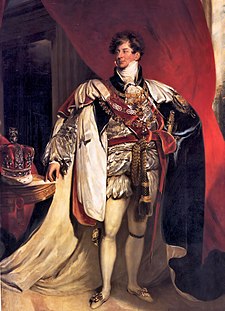
One of my mother’s favorite expressions is “Spoiled by a damned eyewitness!” which she gleefully utters when a person explodes an apocryphal anecdote about someone or something by contradicting a widely accepted version of events, then remarking that they were present at the time. The eyewitness naturally goes on to insert his or two cents on what really happened.
My research for my current historical nonfiction manuscript on notorious royal marriages has yielded several of these “spoiled by a damned eyewitness” moments, and I live for them! Some of the scandalous love affairs (which eventually became marriages, or the subject of judicial review) that I profiled in ROYAL AFFAIRS, my maiden voyage into nonfiction, will be revisited in my book on notorious royal marriages. It seemed egregious to omit them, merely because I’d mined some of the same territory in an earlier book (never expecting that I’d eventually get a contract to write a companion volume).
As an example, George IV’s two exceptionally notorious marriages could not be ignored just because I’d taken a different slant on them in a previous book. And in my decision to include a handful of rewritten entries bolstered by new and additional research, I figured I was in relatively good company; during the past couple of years I’ve read quite a few historical biographies that are updated and revised editions of an author’s prior tome on the same subject.
Having a much longer deadline for this wip (which still feels too short!) than I had for ROYAL AFFAIRS (a whirlwind of less than six months to research and write the ms.) has enabled me to discover additional sources. No wonder historical biographers love to revisit their old friends when they discover something new about them—material that contradicts the long-held theories about who a given person really was. I have no interest in agendist or apologist biographies (which too often inappropriately impose 20th and 21st century constructs and mores on a subject). However, I love finding primary source material that had not been included in other biographies, and which shines a different colored gel on that subject. . . .

Which brings us back to saints and sinners. Since I can’t get them out of my mind, I’m eager to share a few of my recent discoveries about the two wives of the man who would become George IV, the big—and I do mean big—guy at the top of that sainted period known as the Regency, that kinder, gentler era (hah!) that was filled to the rafters with sinners of all stripes (and at the top of he heap was the bigamous Prinny).
The “Saint”
History tells us that the twice-widowed Maria Fitzherbert was a devout Catholic, patient as Griselda, maternal as Mother Teresa, and as long-suffering as Niobe. And certainly, George was awful to her, as were several of his cronies in Parliament, particularly Charles James Fox who vociferously denied the reality of her December 15, 1785 marriage to the Prince of Wales in a thundering oration delivered in the House of Commons. He lied because the prince had literally crossed his heart and vehemently denied that a wedding ceremony took place. Of course, to have done so would have cost him the crown. His clandestine wedding to Maria, while “legal” in the eyes of the Catholic Church, violated about five statutory laws, and in the case of the heir to the throne, civil law took precedence over canon law.
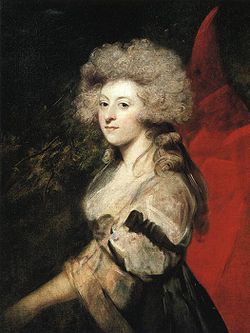
Mrs. Fitzherbert is often depicted as the long-suffering romantic victim of the Prince of Wales. But my second visit with her life exploded some of the myths about her personality. Evidently, she had a “fierce temper” in the words of the prince, but his estimation is corroborated by others who knew her well. She was also a woman of spirit and spunk who liked an off-color joke, spoke frankly, and (although her income had derived from her marriage settlements) was remarkably self-reliant. Like her royal admirer, she was vain, proud, and not without a sizeable ego. One of these “damned eyewitnesses” to the real Maria was her dear friend Lady Anne Lindsay, with whom she decamped to the Continent after Maria capitulated to George’s bedside marriage pledge (which followed his melodramatic, botched suicide attempt).
In Lady Anne’s words, “In spite of much nonsense, some haughtiness, some duplicity, I like her. She is . . . lovely and lovable amidst her circle of foibles and follies . . . whose inconsistencies deserve a long chapter from some historian who will attempt to draw her character and will make no real likeness because she has no fixed character but a medley of inconsistent and inconsequent particulars.”
The “Sinner”
Nothing can excuse Caroline of Brunswick’s emphatic inattention to personal hygiene, but did she really deserve to be called “the fiend” by her husband? A victim of her society’s double standards, Caroline was blatantly bawdy in an era when ribald humor was de rigueur—as long as it was men who were telling the jokes. And she was highly sexed in an age when marital infidelity seemed rather the rule than the exception—as long as the dalliances were discreet. Caroline blew that one, too.

“I had rather see toads and vipers crawling over my victuals than sit at the same table with her,” her husband (the oversexed, hypocritical hypochondriac also known as the Prince of Wales) declared to Lord Malmesbury soon after their royal marriage. And during the course of said union, while the prince took numerous mistresses in addition to his brief flings (some of which resulted in royal bastards) Caroline’s sexual misconduct became the subject of two separate investigations—the 1806 “Delicate Investigation” and the 1820 “Bill of Pains and Penalties.”
The first time Caroline and I spent some time together, I confess that I was somewhat firmly in the camp that considered her vulgar in the extreme. But the Caroline I gave a second chance to during the past couple of weeks filled my heart with pity; consequently, my entry on her mutually unhappy marriage to the Prince of Wales has become one of my favorites within my forthcoming book.
She was deprived of companions who might have become friends and eventually deprived of her own daughter’s society. George considered Caroline a dreadful maternal role model, but he wasn’t about to win any medals for fatherhood either. Their daughter, Princess Charlotte, tended to blame her mother for their separation, though toward the end of her young life she observed, “My mother was bad, but she would not have become as bad as she was if my father had not been infinitely worse.”
Lonely and bored under the prince’s “Carlton House System,” which endeavored to keep her a shut-in and proscribed her companions—one of whom was her husband’s mistress, Lady Jersey—Caroline needed a confidant, but didn’t know who to trust. She sought allies, but the prince’s friends would not interfere in the royal marriage. She wished to see more of her child, to watch little Charlotte being bathed and fed. And when she learned that the head of the nursery, the kindly and efficient Mrs. Dashwood, was ill, Caroline availed herself of the disruption to break her husband’s rules, and begged to see her little girl at an unappointed time.
Her attendants and visitors could see her unhappiness. Lady Sheffield, who dined with the princess in Brighton in late July noted that “her lively spirits which she brought over with her are all gone, and they say the melancholy and anxiety in her countenance is quite affecting.”
Caroline was in marital purgatory, in her words “a princess and no princess, a married woman and no husband—never was dere a poor devil in such a plight as I.”
In the spring of 1814, when Tsar Alexander of Russia came to England, Caroline was omitted from the guest list for his reception at Carlton House. Charlotte added her mother’s name, but her father scratched it out again. Then he thrice prevented the Tsar from paying a social call on Caroline by sending messengers to intercept him.
One night at the opera house Caroline arrived to hear the orchestra playing “God Save the King.” The people remained on their feet and greeted her with resounding cheers. On her way home, her carriage was mobbed with sympathetic well wishers. Poking his head into her coach, one man assured the princess, “We will make the prince love you before we are done with him.”
George’s pettiness even went so far as to prohibit Caroline from worshipping at St. Paul’s; he reserved every seat in the cathedral for a service to commemorate the peace and she was turned away. Balls in her honor were cancelled when the prince forbade his friends from accepting invitations to attend them. And we know that he had the doors of St. Paul’s barred against her entry on his coronation day, prohibiting her from entering the cathedral, let alone being crowned beside him.
The opportunity to revisit these two women whose romantic lives I had profiled earlier, gave me additional angles from which to view them and altered my opinion of them as well. Mrs. Fitzherbert was not entirely a saint and Caroline of Brunswick, though many of her sins were of her own making, often comes across as more sinned against than sinning—which is one of the reasons the House of Lords (albeit reluctantly) refused to convict her after the hearings on the Bill of Pains and Penalties.

During the course of your research have you ever discovered things about certain historical figures that contradict the perceived wisdom about their lives and characters and made you alter your own perception of them? Who were they and what did you learn about them that changed your mind?
Monday, December 8, 2008
Time and Place
Book signings are such an adventure. When I attend one as fan and not as an author, I am introduced to whole new worlds. One of my regular favorites are the signings at Turn the Page Bookstore in Boonsboro, Maryland. The store is owned by Bruce Wilder and managed by his daughter-in-law, Stacie Aufdem-Brinke.
The store focuses on mass market and trade especially romance, science fiction and mystery. Since the store is less than fifteen minutes from the Antietam Battlefield they also have a healthy collection of books related to the Civil War.
At Saturday’s signing I purchased books by Nora Roberts (who is married to Bruce), Gail Barrett, Elaine Fox, Cathy Caskie, and Dolly Nasby. What a range of stories from Nora’s last book in the sign of Seven trilogy, Elaine’s laugh out loud romantic comedy BEDTIME FOR BONSAI, Kathy’s regency set historical TO SIN WITH A STRANGER(just nominated for an RT Reviewers Choice Award), Gail’s latest, a princess in jeopardy silhouette TO PROTECT A RPINCESS) and Dolly’s book of annotated photographs on Gettysburg then and now, entitled simply GETTYSBURG.
Leafing through the Nasby book which I intend as a Christmas gift, I started to think about “then and now” in the context of writing historicals. London is a wonderful example. There are still pockets of the city that can take you back to the Regency and the Tower of London (minus the tourists) is as close as I have ever come to a time travel machine. But the river is completely different and the parliament buildings are not nearly as old as Parliament itself.
In my own neighborhood, the land and what grows on it has changed so dramatically that it would be an egre gious historical error to write a book set in 1808 with the landscape of 2008.
Our neighborhood, within sight of the Chesapeake Bay, is filled with tulip poplar trees many of which are over one hundred feet tall and look as though they have been here forever, yet not one of them is more than seventy years old.
At the turn of the century a squirrel could travel from Maine to Carolina and never leave the branches of an American Chestnut tree. A blight destroyed all of the chestnuts by mid-century and the tulip poplar rook over what land that had not been cleared for tobacco farming. Eventually that was abandoned when the acreage was developed as a summer community of rustic log cabins.

There was another major change in the landscape in the early part of this century when the state of Maryland instituted a tobacco buy-out in which they paid framers to stop growing tobacco. Tobacco is a beautiful plant, elegant glossy leaves that cluster in plants that grow between three and four feet. Now the only sign of tobacco farming are the great barns that were used for drying.
How does the lay of the land influence what you write? How important is it to you to know what a city really looked like or how the farm land was used? As a reader do you care? Oh, and do you enjoy books signings – as a reader!
The store focuses on mass market and trade especially romance, science fiction and mystery. Since the store is less than fifteen minutes from the Antietam Battlefield they also have a healthy collection of books related to the Civil War.
At Saturday’s signing I purchased books by Nora Roberts (who is married to Bruce), Gail Barrett, Elaine Fox, Cathy Caskie, and Dolly Nasby. What a range of stories from Nora’s last book in the sign of Seven trilogy, Elaine’s laugh out loud romantic comedy BEDTIME FOR BONSAI, Kathy’s regency set historical TO SIN WITH A STRANGER(just nominated for an RT Reviewers Choice Award), Gail’s latest, a princess in jeopardy silhouette TO PROTECT A RPINCESS) and Dolly’s book of annotated photographs on Gettysburg then and now, entitled simply GETTYSBURG.

Leafing through the Nasby book which I intend as a Christmas gift, I started to think about “then and now” in the context of writing historicals. London is a wonderful example. There are still pockets of the city that can take you back to the Regency and the Tower of London (minus the tourists) is as close as I have ever come to a time travel machine. But the river is completely different and the parliament buildings are not nearly as old as Parliament itself.
In my own neighborhood, the land and what grows on it has changed so dramatically that it would be an egre
 gious historical error to write a book set in 1808 with the landscape of 2008.
Our neighborhood, within sight of the Chesapeake Bay, is filled with tulip poplar trees many of which are over one hundred feet tall and look as though they have been here forever, yet not one of them is more than seventy years old.
At the turn of the century a squirrel could travel from Maine to Carolina and never leave the branches of an American Chestnut tree. A blight destroyed all of the chestnuts by mid-century and the tulip poplar rook over what land that had not been cleared for tobacco farming. Eventually that was abandoned when the acreage was developed as a summer community of rustic log cabins.

There was another major change in the landscape in the early part of this century when the state of Maryland instituted a tobacco buy-out in which they paid framers to stop growing tobacco. Tobacco is a beautiful plant, elegant glossy leaves that cluster in plants that grow between three and four feet. Now the only sign of tobacco farming are the great barns that were used for drying.

How does the lay of the land influence what you write? How important is it to you to know what a city really looked like or how the farm land was used? As a reader do you care? Oh, and do you enjoy books signings – as a reader!
Friday, December 5, 2008
Winter Holiday Traditions
The Season is upon us! Wishing everyone the best, but I know the economy may make the winter holidays a little less festive this year.
This year my family will be very conservative about gift giving. We've tried to donate where we could to food banks, wish-trees, and toys-for-tots more often than we ever have before. At home, we are focusing on traditions...my kids and I are dragging out all those old Christmas decorative doo-das and putting them everywhere. I had to look up a little info about the tradition behind mistletoe, holly, stockings, and Christmas cards so I could answer my kids many questions, so I thought I would share what I learned:
 " Mistletoe was used by Druid priests 200 years before the birth of Christ in their winter celebrations. They revered the plant since it had no roots yet remained green during the cold months of winter. The ancient Celtics believed mistletoe to have magical healing powers and used it as an antidote for poison, infertility, and to ward of evil spirits. The plant was also seen as a symbol of peace, and it is said that among Romans, enemies who met under mistletoe would lay down their weapons and embrace. Scandinavians associated the plant with Frigga, their goddess of love, and it may be from this that we derive the custom of kissing under the mistletoe. Those who kissed under the mistletoe had the promise of happiness and good luck in the following year.
 In Northern Europe Christmas occurred during the middle of winter, when ghosts and demons could be heard howling in the winter winds. Boughs of holly, believed to have magical powers since they remained green through the harsh winter, were often placed over the doors of homes to drive evil away. Greenery was also brought indoors to freshen the air and brighten the mood during the long, dreary winter.Legend also has it that holly sprang from the footsteps of Christ as he walked the earth. The pointed leaves were said to represent the crown of thorns Christ wore while on the cross and the red berries symbolized the blood he shed.
 According to legend, a kindly nobleman grew despondent over the death of his beloved wife and foolishly squandered his fortune. This left his three young daughters without dowries and thus facing a life of spinsterhood.The generous St. Nicholas, hearing of the girls' plight, set forth to help. Wishing to remain anonymous, he rode his white horse by the nobleman's house and threw three small pouches of gold coins down the chimney where they were fortuitously captured by the stockings the young women had hung by the fireplace to dry.
 A form of Christmas card began in England first when young boys practiced their writing skills by creating Christmas greetings for their parents, but it is Sir Henry Cole who is credited with creating the first real Christmas card. The first director of London's Victoria and Albert Museum, Sir Henry found himself too busy in the Christmas season of 1843 to compose individual Christmas greetings for his friends. He commissioned artist John Calcott Horsley for the illustration. The card featured three panels, with the center panel depicting a family enjoying Christmas festivities and the card was inscribed with the message "A Merry Christmas and a Happy New Year to You."
The above came from:
http://www.allthingschristmas.com/traditions.html. There's more there on the nativity, Kwanzaa, Hanukkah, and Santa Claus, and other, but I've written mistletoe into a 13th century Christmas story I'm working on now and was glad to see that tradition has been around a long, long time.
I am hoping my kids will remember helping us hang goofy colored lights from our porch, setting up our ceramic Christmas city scene on the dining room table, and building the train set around the base of the Christmas tree long after they've forgotten which Lego set they got, or which character doll from High School Musical they didn't get!
What's your holiday tradition? Please spread some cheer and share!
This year my family will be very conservative about gift giving. We've tried to donate where we could to food banks, wish-trees, and toys-for-tots more often than we ever have before. At home, we are focusing on traditions...my kids and I are dragging out all those old Christmas decorative doo-das and putting them everywhere. I had to look up a little info about the tradition behind mistletoe, holly, stockings, and Christmas cards so I could answer my kids many questions, so I thought I would share what I learned:
 " Mistletoe was used by Druid priests 200 years before the birth of Christ in their winter celebrations. They revered the plant since it had no roots yet remained green during the cold months of winter. The ancient Celtics believed mistletoe to have magical healing powers and used it as an antidote for poison, infertility, and to ward of evil spirits. The plant was also seen as a symbol of peace, and it is said that among Romans, enemies who met under mistletoe would lay down their weapons and embrace. Scandinavians associated the plant with Frigga, their goddess of love, and it may be from this that we derive the custom of kissing under the mistletoe. Those who kissed under the mistletoe had the promise of happiness and good luck in the following year.

 In Northern Europe Christmas occurred during the middle of winter, when ghosts and demons could be heard howling in the winter winds. Boughs of holly, believed to have magical powers since they remained green through the harsh winter, were often placed over the doors of homes to drive evil away. Greenery was also brought indoors to freshen the air and brighten the mood during the long, dreary winter.Legend also has it that holly sprang from the footsteps of Christ as he walked the earth. The pointed leaves were said to represent the crown of thorns Christ wore while on the cross and the red berries symbolized the blood he shed.
 According to legend, a kindly nobleman grew despondent over the death of his beloved wife and foolishly squandered his fortune. This left his three young daughters without dowries and thus facing a life of spinsterhood.The generous St. Nicholas, hearing of the girls' plight, set forth to help. Wishing to remain anonymous, he rode his white horse by the nobleman's house and threw three small pouches of gold coins down the chimney where they were fortuitously captured by the stockings the young women had hung by the fireplace to dry.
 A form of Christmas card began in England first when young boys practiced their writing skills by creating Christmas greetings for their parents, but it is Sir Henry Cole who is credited with creating the first real Christmas card. The first director of London's Victoria and Albert Museum, Sir Henry found himself too busy in the Christmas season of 1843 to compose individual Christmas greetings for his friends. He commissioned artist John Calcott Horsley for the illustration. The card featured three panels, with the center panel depicting a family enjoying Christmas festivities and the card was inscribed with the message "A Merry Christmas and a Happy New Year to You."

The above came from:
http://www.allthingschristmas.com/traditions.html. There's more there on the nativity, Kwanzaa, Hanukkah, and Santa Claus, and other, but I've written mistletoe into a 13th century Christmas story I'm working on now and was glad to see that tradition has been around a long, long time.
I am hoping my kids will remember helping us hang goofy colored lights from our porch, setting up our ceramic Christmas city scene on the dining room table, and building the train set around the base of the Christmas tree long after they've forgotten which Lego set they got, or which character doll from High School Musical they didn't get!
What's your holiday tradition? Please spread some cheer and share!
Subscribe to:
Posts (Atom)