Showing posts with label The Slightest Provocation. Show all posts

Friday, February 5, 2010

Telling a Book by its Cover Redux

"Just looking at its cover, would you guess that this is a very sexy romance novel?"

A fellow romance writer held up a copy of my now out-of-print The Slightest Provocation at lunch last summer.

And the answer, repeated 'round the table of history hoydens? Sadly (especially sadly in light of such a lovely, period-appropriate cover) the answer was a resounding NO!

The consensus being that you'd more likely suppose The Slightest Provocation was a classy -- even an elegant -- historical novel, perhaps of the snobby "stealth romance" variety.

"Ah, yes," a distracted shopper might tell herself as she makes her way past it on the bookstore shelves, "I think I read somewhere that Pam Rosenthal writes 'poetically.'

"Maybe I'll check it out later," said shopper might think, "when I'm in the mood for something improving and uplifting."

But sexy? No way.

While as for hot (not to speak of hawt?) -- not a chance.

Which is a big part of the reason this June the mass market edition of The Slightest Provocation will look like this -- officially encoded as sexy by means of those pecs and abs, and (these days -- go figure) by that arcane female leg action so ubiquitous on romance covers and so rarely found in nature.

Even, I dare to dream, encoded as hawt. Well hot, anyway.

Which is a good thing. Because The Slightest Provocation isn't a sweet, shy sort of love story, but probably the most challenging, turbulent historical romance I've written, Mary and Kit certainly my angriest, sweatiest, most contentious pair of lovers.

DearAuthor.com called the book "envelope-pushing, smart and astonishing," and thanked me for my "courage to break so many conventions." You can read the whole review here, and get links to some other enthusiastic praise here -- though I haven't posted this one yet, received unsolicited last December in an email from Regency romance writer Christine Wells, who said The Slightest Provocation was:
...unlike anything I've read, devoid of romance cliches, yet it was such a satisfying romance, I cheered at the end.
But let me also be clear that The Slightest Provocation made a couple of reviewers angry too. I didn't save the links, but I'm sure Google will help you chase down those opinions too.

All of which leads me to think conclude that the original elegant and sedate cover wasn't exactly right for a controversial, "raw, unflinching" romance (thanks, Contra Costa Times) between an estranged couple whose relationship might at first not seem worth salvaging.

Maybe a little more graphic passion and a little less period rectitude would made for a more accurate representation of what's between the covers of The Slightest Provocation (because when NAL asked me for some hints on what I remembered from the erotic scenes, I wrote back, "overgrown greenery... rain... rumpled linen," some of which it seems they actually caught).

In any case, I'll be eager to think what romance buyers think next June.

And right now, eager to hear what what you think as well.

Friday, March 6, 2009

I Lost it at the Movies: The Hollywood Remarriage Comedy

As so often happens, I find myself bouncing off what other hoydens have been saying.

This time I’m inspired by what Tracy’s thoughts, in a recent post, about social class and escapist glitter in the Depression-era movie, The Philadelphia Story.

And since others of us have referred to this one as a favorite, for its complex take on the very stuff of romance fiction — men and women; morality, autonomy, and desire — let me share some observations about certain movies of this period, from a remarkable book called Pursuits of Happiness: The Hollywood Comedy of Remarriage, by the philosophy professor Stanley Cavell.

Comedy of Remarriage?

Before reading Cavell, I hadn’t even considered that such a category existed. But think of The Philadelphia Story, His Girl Friday, Adam’s Rib, The Awful Truth, The Lady Eve — all of them about married couples so fabulously, visibly, physically, and verbally right for each other that the screen glows with the black-and-white heat of it.

And in each case the couple is on the brink of divorce or already divorced with the wife on the brink of marrying someone absolutely wrong for her — until a wonderfully talky comic script brings the original couple back together.

For that physical heat: at the beginning of this YouTube clip from His Girl Friday, check out the edgy intimacy with which the divorced couple, Walter and Hildy (Cary Grant and Rosalind Russell), pace around each other in the chaotic space of Walter's office.

And also watch the final scene on the clip (about 6 minutes in), when Walter takes Hildy and Bruce, her sweet-decent-but-wrong-for-her fiance (Ralph Bellamy) out to lunch. Walter’s desperately ironic and angry, Hildy’s embarrassed but rather enjoying it, Bruce is simply struggling to keep up. Cavell gets as close to the heart of my romance-writer sensibility as any philosopher could, when he says that:

…the pair communicate […] in a lingo and tempo, and about events present and past [...]. They simply appreciate each other more than either of them appreciates anyone else, and they would rather be appreciated by one another, more than by anyone else.

They are, as I wrote about Mary and Kit, the couple in my own remarriage comedy, The Slightest Provocation, onto each other, wise to each other's smarts and wit and audacity, and wicked smart about the accompanying need and weaknesses and wounded pride. Every bit as much as the fast-talking lovers in another hoyden favorite, Beatrice and Benedick in Much Ado About Nothing.

Fast-talking... boy, do they ever talk fast in these remarriage comedy movies. Cavell points out that this spate of films had its beginnings less than a decade after the movies even got sound; one can almost hear the glee of trying to cram as many words as possible onto the sound-strip on the celluloid.

But the acrobatics of fast talking are also as much a part of the dance of desire and need as the ongoing war for screen space; note (beginning about 3 minutes and 36 seconds into the clip) the wonderful physical byplay between Hildy and Walter about who leads and who follows — and what leading and following might mean — as they walk down (yes) the aisle of the newsroom where Walter is editor.

Cavell’s writing is witty but also weighty (I had to blow off a lot of the sentences that hinge on Kant or Wittgenstein). And they make big claims for the importance of a set of lighter-than-air entertainments — this notion of marriage being not a solution but a problem to be revisited, revised, and gotten right only in struggle is, according to Cavell, the major female cultural achievement of the period between the Suffrage movement and the advent of 1960s second wave feminism.

Fans of Rosie the Riveter may beg to differ.

And yet, as a woman who got so much of my romantic sensibility from the movies (I fell in love with the Regency while breathlessly watching the 1955 Beau Brummell, with Stewart Granger and Elizabeth Taylor), I know how powerful screen images of contested love can be, and I also know how deeply even a nine-year-old can feel the rough strife of love and wit and words and ego (even if the nine-year-old didn't know that no one wore powdered wigs during the Regency). While my husband, who's been onto me from the beginning, sealed the contract between us, we joke, on our first date, when he took me to see the swooningly romantic 1945 French historical drama, Les Enfants du Paradis.

And as a feminist writer in a popular genre that’s consistently, ignorantly, and unfairly maligned as anti-feminist, I can only applaud Cavell for the serious smarts he devotes to another sub-sub entertainment genre, a set of “parables,” as he puts it,

of a phase of the development of consciousness at which the struggle is for the reciprocity or equality of consciousness between a woman and a man, a study of the conditions under which this fight for recognition […] is a struggle for mutual freedom, especially of the views each holds of the other. [….] They harbor a vision which they know cannot fully be domesticated, inhabited, in the world we know. They are romances.

We won’t all be able to talk so fast, or move so nimbly.

But we can try. Write on, hoydens all.

And readers, writers and viewers among you, tell me what parts of yourself you’ve found at the movies.

Friday, December 12, 2008

On Refilling my Bookshelves: the Romantics in their Time

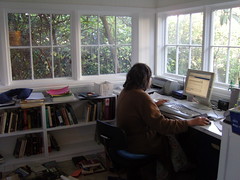
The room I write in is the nicest in our house. A do-it-yourself add-on built by a former owner, my study has an improvisatory, even a romantic, air to it. Resembling a screened porch at the back of the house, it's wainscoted up to its ceiling, with lots of fanciful if not awfully efficient cabinets and unexpected moldings that probably mask seams in the carpentry.

Best of all (especially for a room in a tiny San Francisco Victorian on a narrow little urban plot of ground) the paneled windows along the back and a side wall let in lots of light and other amusements from our backyard and the ones adjoining. Cats in the shrubbery keep watch on their territories even as they doze, while my glamorous actress/model neighbor modulates from singing torch songs to informing one or another of her little boys that he has to "share that with your brother."

When our visitors get the (necessarily very brief!) front-to-back house tour, this is the last room they see. And they usually breathe something like "ah," or "oh yes" -- windows and woodwork calling attention away from the 1950s crumbling asphalt tile on the floor, the white paint yellowed and threatening to flake off the walls and ceiling.

At least until recently. Though who knows how long we would have gone on that way if an architect friend hadn't murmured, "That tile is made of asbestos, you know."

We hadn't known. We raised our son here, after all. But as of last week, the tile is sealed off by a nice new floor and the walls and ceiling are wonderfully, beautifully repainted.

"Just white," I told Teresa, the housepainter. But Teresa's an artist at what she does and artists don't go for easy answers (they're also more curious -- she's read some of my books and came to my book party).

"There are an infinite number of whites," Teresa told me. "You need to think about this."

And so I did. I thought about the room's northern exposure, the cool blue light that pours in when I'm in the throes of a project and begin writing at dawn or before.

And so the white walls and ceiling now have a pearly sunrise glow; the lower wainscoting is a cool, pale blue-gray; moldings, window frames, cabinets, and bookshelves as pure and bright a clouds-of-glory white as Teresa could manage.

And now that I've seen the room empty for the first time since 1984, I can see where the bookshelves (here, in the hallway that Teresa also painted, even in the nearby kitchen) really should have been. Not to speak of beginning getting intimations of how they should have been arranged.

And so... inevitably (you writers and perhaps some of you readers as well know where this is going, don't you?) I, and Michael too, are undertaking a major rearrangement of our books and shelving all through the house.

As you can see from the books scattered about in the photograph waiting to be categorized, it's a slow process. I need to think about this, I tell myself. It's not wasted time, I insist, it's a shape of the space of my life.

Of the life I share with my husband/research partner/most astute reader. Perhaps it's a holiday gift to ourselves and each other. It's not our custom to exchange anything else this time of year. But I'm finding it delicious to realize a little better every day what I need to read and what I don't, not to speak of what I want to work on next -- together or maybe even with Michael.

But in preparation, we're gathering the books about the history of eros and romance -- even (or especially) in literature and philosophy -- in shared space, in a big mahogany bookcase I once got at an auction.

While as for my study -- luxuriously, I may devote one whole bookcase to to-be-read and check-this-out-again, though part of this may also be given over to indispensable-never-to-be-without.

All the books about Jane Austen go together. Lord Byron. Mary Wollstonecraft.

Fiction and poetry (except for novels directly relevant to what I might be working on) still go on the floor-to-ceiling shelves of our living room, though. Because it's a social space, I guess, for sharing with guests what we most love. And showing off (just a little) what we're made of.

But there will be one fiction shelf in my study devoted to a growing passion of mine: for those novels (some out of print) inspired by that moment in literary history when writers and lovers came together, not only to create the modern horror genres (Frankenstein and also Byron and Polidori's gentleman-vampire) but to live and die too fast, and hence to remain (in Keats' words) "for ever young," forever frustrated, angry, selfish, brave and beautiful...

So far I've got:

Passion, by Jude Morgan. A big, delicious, deeply affecting novel by a British romance writer -- who, btw, turns out to be a guy! In alternating sequences covering a decade or two, Morgan tells the stories of the younger romantic poets, Keats, Shelley, and Byron, by telling the stories of the women in their lives, Fanny Brawne, Mary Godwin Shelley, and (two for Byron) Lady Caroline Lamb and Augusta Byron Leigh, with a brilliant prologue about the literal mother of one of them and the figurative mother of them all (and maybe us as well), Mary Wollstonecraft. All of the stories are beautifully wrought, but if I had to pick a favorite, it would be of Augusta, Lord Byron's half sister and (according to some, though not -- I'm told -- the Byron Society), his lover and the true love of his life. (And thanks again to hoyden Janet Mullany for insisting I schlep this one back home from the 2007 Dallas RWA National conference).

Love's Children, by Judith Chernaik. Constructed in a manner similar to Passion, but on a miniature rather than an epic scale. This one comprises first-person narratives by four of the women in Shelley's life: Mary Shelley, her stepsister Claire Claremont, half-sister Fanny Imlay, and Shelley's first wife Harriet, during the year when Mary was revising Frankenstein. Delicate, perceptive, tragic, a story of erotic and amatory liberation in a time when the risks to women were immense (both Harriet and Fanny committed suicide). I read this one after I'd finished writing The Slightest Provocation, and was fascinated that Chernaik had Mary, Claire, and Percy Shelley angrily reading newspaper accounts of the Home Office provocateuring that constituted the political heart of my novel. And I was deeply amused by Chernaik's portrayal of the dalliance between Shelley and Claire: in The Slightest Provocation, my heroine Mary Penley rebuffs Shelley's advances and advises him to "leave aside the fantasies of communal love and for God’s sake get rid of the stepsister." (Love's Children is out of print, but worth the search)

The Year of December, by Lucy Gores. Lots of readers find Claire, "the stepsister," a shallow, bratty annoyance, but her life and letters tell a more interesting story. Yes, she threw herself at Lord Byron at seventeen and had a daughter, Allegra, by him. But she showed backbone and judgment when she protested his sending the child to an Italian convent school. And one can't help but grieve for her upon learning that five-year-old Allegra died there in a fever epidemic that swept the convent -- and to root for her when she pulled herself together to travel across Europe and work as a governess in Russia. Living a long, productive life and never marrying, Claire remained more faithful to Mary Wollstonecraft's passionate feminism than Mary Shelley did. Gores' fanciful novel (written in 1974 and long out of print) follows Claire to Russia and thrusts her into a radical political intrigue worthy of her, the 1825 Decembrist Uprising against the Tsar. I haven't read this yet, but I love its imagined premise -- and its reminder that the romantic era was bracketed by the French and American Revolutions on one end and the rebellions that swept across Europe for decades on the other.

Imposture, by Benjamin Markovits. I was hot to read this when I posted to this blog about the roots of Regency vampire fiction last September, and I loved Imposture when I read it soon after. Though I will have to admit that the story of John Polidori, who lived and died in Byron's shadow, is so sad that I had to switch off with Christopher Moore's hilarious vampire novel Bloodsucking Fiends. Still, in some ways Polidori survives with honor, as the author of The Vampyre, which originated the gentleman-vampire school of fiction, even if its source was a (less good) story by Byron.

I'm not entirely sure what draws me to the romantics and their little wrinkle in literary/historical time, but I suspect it has something to do with my coming to adulthood in another outrageous, risky era -- the 60s -- and that I feel myself to be part of a collective story that I want to hear from more angles than my own...

...if still in my own newly pearly and glorious writing space.

And so -- perhaps returning to thoughts prompted by Mary's lovely post earlier this week -- do you have a mythic, personal time period, either your own or one in history?

And how about your own space for getting in touch with it?

Friday, October 31, 2008

The Best Seductions Begin With Words and Ideas: History Hoydens Interviews Pam Rosenthal


HH
: Your last novel, The Slightest Provocation, painted a less pretty picture of Regency England than we often get in romance. Does your upcoming The Edge of Impropriety continue in this vein?

PR: Edge is probably a lighter book, a comedy of manners and a satire of the ton.

My heroine, the arriviste Marina Wyatt, Lady Gorham, supplements a respectable but not luxurious widow's portion by writing silver fork novels (books about London high life: these things really were popular during the period, especially among middle-class strivers whose only chance to see Almack’s was in the pages of a novel).

My hero, Jasper Hedges, starts out shabbier, snobbier, more upper-class, and slightly appalled by Marina's commercial success. (Remember that Lord Byron, as a gentleman, didn't take money for "Childe Harold.") Jasper's a Cambridge classicist, an antiquarian, and (because I love finding ways for my brainy heroes to get their hands dirty) an erstwhile Mediterranean adventurer who digs up Roman coins on his family's estate.

While as for prettiness - well, the cover is certainly as pretty as any author could hope for. And this time the conflicts under the covers have largely to do with art and culture.
I like to call The Edge of Impropriety a novel of eros, esthetics, and empire. Jasper and Marina exchange their first glances among the beautiful sculpted bodies of the Elgin Marbles in the British Museum. But Jasper believes (as did Lord Byron as well) that the marbles were an illegitimate spoil of empire. So there's an imperial theme woven through the class comedy.


HH: You did a lot of research about classical art and literature for this book, didn’t you?

PR: A better way to say it might be that I took the opportunity to address my own shocking ignorance of the subject, when my husband/research partner showed me a book about the erotics of Greek and Roman art and got me hooked. So I’m a very little bit less ignorant now.

I posted about my joys of discovery on this blog and continued posting my discoveries as I researched and wrote the The Edge of Impropriety.

Because one of the joys of being a History Hoyden is having a venue for sharing the goodies. Just as one of the joys of being me is having a husband who knows what I like sometimes before I do. (And if that knows-
what-she-likes business has a familiar ring, it's because I’ve used the phrase elsewhere in my books, in a different, more down-and-dirty context).


HH: You’ve managed to bring down the tone of the discussion with remarkable rapidity.

PR: Probably because I’m beginning to believe that whatever I do (and no matter how much reading and research) at heart I’m an erotic writer. You wouldn’t think it to look at me, and I certainly didn’t set out to be one. But the muse has a sense of humor and it seems to have fallen to me to pour all the lonely yearnings of a bookish adolescence into my erotic imagination.

Which means that I also get to pour the ongoing joy of discovery of other erotic traditions into my writing - most recently of poets like Sappho and Catullus, though there was also Ovid in The Slightest Provocation.


HH: So it turns out that what you write is erotica rather than, as your web site has it, “erotic historical romance.”

PR: I’m coming to think so, and to think that my historical romance-writing persona Pam Rosenthal has an awful lot in common with my evil twin Molly Weatherfield, who’s written the wild and crazy comic BDSM.

Because for me (for both me’s) no matter how graphic the writing ultimately gets, the best seductions begin with words and ideas. As in this snippet from the excerpt from Edge that’s currently on my web page:

The copper wire of [Jasper Hedges’…] spectacles had caught the light. “And what thrills [the gods…], what torments them with curiosity and desire, Lady Gorham, is the possibility of death. Mortality. The fragility of our bodies, their vulnerability to the passage of time. Human limitation is something the gods can never truly know, but they find its pathos quite beautiful. And the only way they can experience death’s pathos is through a human’s touch.”

A shiver passed through her. Followed by a flood of warmth.

I write erotica for people who find that sort of thing as hot I do and want to follow my characters upstairs after the dinner party ends.

But since it's skin rather than subtext that makes the romance industry deem something erotica rather than erotic romance, I get counted as a writer of erotic romance -- which is probably why I've been getting gorgeously dressed (or half-dressed) women on my covers instead of bare-chested men.


HH. The Edge of Impropriety will be released next week, on election day. And on your own blog, Passions and Provocations, you told your readers, "if you only have time to do one hugely, critically important thing on election day… you know what that is. And it’s not rushing out to buy The Edge of Impropriety." How seriously did you intend this?

PR: Absolutely. There's nothing like being at a pivotal point in history to bring things into perspective. I’ve felt myself overwhelmed these past weeks -- by the economy, the level of
interest in the election, the intended and unintended narratives of the candidates and their campaigns, the ways in which people have begun to access and reassess their own places in this present very complicated juncture. All of which seem to me particularly complicated things for a historical romancer to address, and which I’ve been trying to puzzle out for myself.

There’s something amazing about living in a moment when the stakes are so huge and the outcome so perilously unknown. Historical romance -- and to my mind all historical fiction -- trades on some opposite approaches to this issue, and so I’m seeing online discussions (like Kathrynn’s here and Janet’s at Risky Regencies) about the ways in which we turn to romance and other escapist fictions for comfort at times like this.

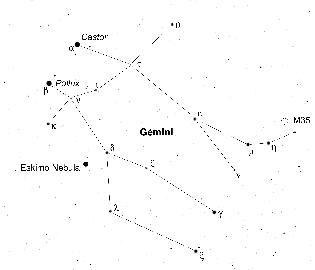
About which (Gemini-like) I’m of two minds. On the one hand, I need as much comforting as the next person -- and the most comforting thing I know is the overarching romantic fantasy of a universe that wants to bring its lovers together after testing and finding them worthy (or more generally any narrative that promises and delivers on a satisfying resolution).

But on the other hand I find myself rather thrilled by the knowledge that this is not how things actually work, and that fictions and stories are our consolation for the maddeningly difficult truth -- which is that emergent human history just keeps spiraling into the unknown and unresolved. And that we have nothing but the best of ourselves to rely upon along the way.

Or at least to make us more passionate, more deeply engaged romance writers and historical novelists.

And I’d love to hear from both readers and writers about where you find yourself at this moment.