Showing posts with label Harvey Milk. Show all posts

Wednesday, June 2, 2010

Clothing Makes the Character


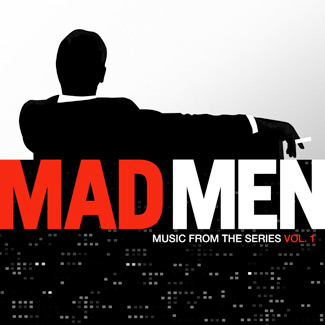
Pam had a great post last year about period clothing in the wonderful movie Milk and the fascinating television show Mad Men and in historical fiction. As I blogged about around the same time, one of the things I loved about Milk was its wonderfully vivid recreation, in settings and costumes, of San Francisco in the 70. At times I felt I was watching scenes from my childhood. I recently caught up on seasons one and two of Mad Men and then was riveted to season three (and am now eagerly awaiting season four). It's a fascinating, layered show, that brings to life New York in the early 1960s. It's the era when my parents were dating and first married. I have pictures of them in similar clothes to those in the show, my dad in suits and ties and gleaming white shirts, my mom in fitted dresses and suits that required a girdle and a structured bra. By the time I remember them, in the 70s, my dad's version of formal was a turtleneck under a sports coat, and my mom usually wore jeans to work or Diane von Furstenberg-type dresses that were fluid and much less structured. They look like different people from the couple in polished, formal clothes in those early 60s photographs.

Clothes are so much a part of defining a character. As Pam wrote, But as a writer I'm more interested in the clothes from the inside out. The way they make us feel when we wear them. Because our clothes may be our most consistent guides and goads to who we try to be in a world we didn’t create; our nakedness when we're alone an intermittent reminder that we aren't exactly those people; our nakedness with a lover a way of revealing this fact.

I love clothes, both as a writer and in real life.I think a lot about the clothes my characters wear and what that says about them. I love to pour over Regency fashion plates (I'm so thankful for Candice Hern's great website)and think about which clothes would fit which character. Sometimes I think about what sort of clothes my characters would wear if they were living in the present day, which can be an interesting way to get a new take on the characters.

I like to describe clothes as the characters interact with them. I think quite a bit is revealed about Charles and Mélanie in the first scene between them in Secrets of a Lady where Charles shrugs out of his evening coat sparing a silent curse for the close-fitting passions of the day while Mélanie unwinds the voluminous folds of her cashmere shawl, peels off her gloves, unwinds the ivory satin ribbons that crisscrossed her silk-stockinged ankles. Charles is impatient with clothing and doesn't think about it much. Mélanie removes each layer with care. I changed the color of Mélanie's dress in that scene several times, until I settled on champagne-colored silk, which immediately seemed right. Writing this post, I realized there's also a metaphorical element in that Charles and Mel are undressing in that first scene, removing the layers of clothing that define and contain their roles, in the way they will strip away layers of secrets in the course of the story. Recently a reader commented on the fact that their clothes disintegrate over the course of their adventures, as the façade of their perfect life also crumbles.

Later in the book, Mélanie thinks She felt naked and vulnerable, as though the layers of goffered linen and pin-tucked sarcenet and rushed velvet had been stripped from her body. Layers that constrained her but also defined who she was, who had been for seven years. I think I pay particular attention to clothes and accessories when I'm writing about Mélanie because she's always playing a role. One of the first lines I wrote about Jeremy Roth was where he thinks that Mel looked like a woman who always wore earrings, which I think says a lot about both Mélanie and Roth. In Beneath a Silent Moon, Mélanie wears a shirt and breeches for a couple of nighttime adventures. I hadn't planned that in advance, but when I got to the scene where she and Charles go to explore Dunmykel's secret passage, it occurred to me that Mel, who always dresses for the part, almost certainly would wear breeches on occasion and would probably have packed them on this trip, knowing the sort of adventures she and Charles might encounter at Dunmyel. That led to the sequence later where she's mistaken for a boy by the smugglers. The morning following the first scene, Mélanie thinks that She'd exchanged last night's shirt and breeches for a cambric morning dress, scalloped and threaded through with peach silk ribbon. The ensemble of a decorous wife. Like me, Mel understands that the right clothing defines a character.

Vienna Waltz, on which I'm currently finishing up revisions, takes place in the social whirl of the Congress of Vienna, so clothes are particularly important to all the characters. Whether it's masquerade ball costumes, elaborate court dress, Renaissance costumes the Carrousel (a recreation of a tournament) or simply what one wears to pay a morning call. In the midst of investigating a murder, Mélanie/Suzanne thinks She chose a Vitoria cloak of Pomona green sarcenet and a French bonnet of green velvet and white satin with Blanca’s advice (she was after all calling on one of the most fashionable women in Vienna though the purpose of the visit was not social). She also ruins an evening gown early on in the book, climbing over the roofs of Vienna to avoid pursuit. She tends to be hard on her clothes. I'd been in tears if I ruined so many beautiful dresses.

Writers, how do you approach clothing your characters? Readers, do you notice details about clothing in books? Any examples that particularly stand out?

Friday, February 13, 2009

Seeing Through Clothes: Milk, Mad Men, and Me

I finally saw Milk last night, and like Tracy, I left the theater in tears.

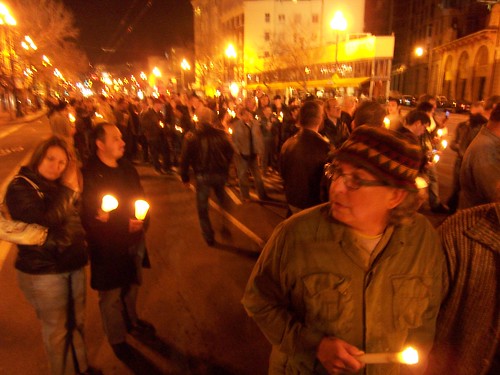
A lot of it was the memory of the events themselves – like the Briggs Initiative to rid California schools of gay and lesbian teachers (and their supporters) and the heroic, successful, hands-on campaign to defeat it.

I remember this particularly vividly because a friend of mine, activist Amber Hollibaugh, set off in a van and drove around rural California towns like the one she’d grown up in – an out lesbian taking on local fundamentalists in public debate, in 1978.

Could this have really happened, I ask myself? Could people really have been that brave?

It did happen. You can read Amber's account of it here.

But I know it's true because I remember how after the campaign, Amber showed me a lovely blousy overshirt (it was an era of big, filmy, voile-y sorts of things from India), and told me how she wore it to debate one Reverend Royal Blue of Redding, California. The shirt didn’t wrinkle, she said, and the metallic threads running through it gave it a sort of dressy look, good for being onstage in a local community center. Funny that amid all that astonishing, inspiring, take-on-the-world chutzpah, a big blue shirt with metallic threads running through it is what made Amber's bravery real for me.

Funny but true. There’s nothing like the clothing of an era to bring us back there. Milk has an uncanny, offhand realism about it – Sean Penn and other cast members wear the slouchy jeans of the late '70s just as I remember them being worn. And my husband Michael had that very same rust-colored jeans jacket – it would have been several years old in ’77 or ’78, which is accurate too (most of us don't throw our clothes away after a year).

In fact, the costumers the TV show, Mad Men talk somewhere in a DVD extra about the '50s clothes and objects they used for the show's 1960 first season.

Not that this favorite show of mine is anothing like Milk. Mad Men is about advertising rather than activism; it's cool rather than passionate, trading in desire and frustration rather than risk and triumph.

But what a sly, true take it has on an era's styles and surfaces, codes and constraints, as expressed through the world of objects its characters move through, sit on, wear, and (perhaps most especially) covet.

Sadly perhaps, since our cable contract is too "basic" for AMC, I'm a season behind and dependent on DVDs for my Mad Men fix. So I've only watched through end of Season One, the Thanksgiving 1960 episode (its ending credits scrolling against Bob Dylan's "Don't Think Twice," a song that wasn't written until 1962, the year Season Two begins – appropriately enough for this post, with a Valentine's Day episode).

But the enforced scarcity of a cheap cable contract makes me all the more obsessive consumer of the DVDs, plumbing the voiceovers and other extras for meaning – which in the case of Mad Men are the interviews with the costume designer and makeup people, along with snippets from the actors wearing the clothes and makeup:

- The women in their girdles and amazing torpedo bras: for all the lack of bodily freedom, many of the actresses admitted to enjoying feeling more "put-together" than we get to be these days)

- The men in their suits with the 13-inch fly zippers: the actors say the pants are too tight and rise too high; they complain of the discomfort. But watch them walk – watch John Hamm move across the frame (after the commercial – sorry! – about 1 minute, six seconds into this clip -- there, that wasn't so painful, was it?); I don’t know what it is about that walk, but I know that a part of me – a deeply desiring part of me from my early teens – remembers that walk and that look as a masculine ideal.

But as a writer I'm more interested in the clothes from the inside out. The way they make us feel when we wear them. Because our clothes may be our most consistent guides and goads to who we try to be in a world we didn’t create; our nakedness when we're alone an intermittent reminder that we aren't exactly those people; our nakedness with a lover a way of revealing this fact.

And the limnal moments of dressing and undressing, especially when shared with a lover (not to speak of a reader!)… well, in my writing, anyway, for me those are perhaps the sexiest, most complicated and challenging moments of all. Which is why, I guess, I care so much about what people really wore in the periods I write about – why, like Kalen Hughes, costume expert extraordinaire, I take seriously that Regency stays and shifts didn’t just fall off at the touch of a male finger.

(I’m indebted to Kalen, for example, for teaching me that in 1828 women’s stays began to have metal grommets around the holes for laces – can you think of a better way to show-not-tell the beginnings of an advent of radical physical unfreedom for women?)

And why I usually like to include a dressing as well as an undressing scene among the erotic parts of my books – because I love the pathos of people going back to their worlds, of eros and ego in a world of objects.

And why I’d love to know how the writers among you think about the clothes (period and otherwise) that you write about…

…and what you readers want when you read about them.

Oh, and an acknowledgment: The title of this post comes from Anne Hollander's deeply illuminating study of clothing in the western art tradition.

Wednesday, January 14, 2009

"Milk"--and bringing an historical world to life


Happy New Year! Hope everyone had a wonderful holiday season. I had a fabulous time celebrating with friends and family and indulging in a couple of my favorite holiday (and non-holiday) activities--shopping (the sales were amazing even if I was on more of a budget than usual) and going to the movies. I saw two wonderful movies, Doubt (as thought-provoking on film as when I saw it in the theater) and Milk. Milk was shattering, left me in tears, and to me felt much more immediate than a lot of bio-pics do. Of course it didn't hurt that I remember a lot of the events vividly. The Prop 6 campaign, and my mom saying "not that I'm worried about who teaches my daughter, but if I was worried I'd be a lot more worried about heterosexual men." One of my classmates (who must have heard it on the radio, because we didn't have tv at school and it was way before radio) bursting into my 7th grade class with the news that San Francisco Mayor George Moscone and Supervisor Harvey Milk had been assassinated. Going home and asking my parents why it had happened and "what happens now?"

But it was one particular cinematic view in Milk that really took me back in time. In the mid-to-late 70s, my mom and I often spent weekend afternoons at the Castro Theater, seeing old movies (no VCRs yet). We usually parked on the other side of Market Street and walked down the hill to the theater. There's one shot in Milk, down that hill, showing the theater marquee, that took my breath away because it looked so like what I remembered.

And that, I realized, is part of what we try to do as historical novelists--recreate the past so vividly that the reader feels she or he has stepped back into an historical era. It isn't easy. Usually we're writing about eras far beyond our memory and often in far away places. Even if we're able to visit the setting of our books, inevitably the scene has changed. The production team for Milk worked hard to recreate the San Francisco of the 70s. Two of my friends were extras in the movie. They were briefed on how to dress to fit the era and watched the documentary The Times of Harvey Milk before they shot the scenes they were in (they also talked to people who had known Harvey Milk who said Sean Penn was so like him it was uncanny). I was at a party in the Castro neighborhood the day before I saw the movie, so the difference between the way the neighborhood looked in the movie and the way it looks today was vivid. The marquee of the Castro Theater looks different, signs were changed, old storefronts and restaurants recreated.

As a novelist, I do a similar sort of "set dressing" in my head. I've spent quite a bit of time sitting in Berkeley Square, looking at the house that's my mental image for Charles and Mélanie's house and the Georgian houses next to it (pictured above), imagining the square lined with similar houses, the plane trees younger, the red telephone booth gone, phaetons and barouches and curricles in place of cars, Regency-dressed children their nurses playing in the park. I walk down London Street mentally editing out the Victoriana (and anything later), trying to blend the sights before me with period engravings of how the street in question looked in the era of my books. I go into country houses that have been redone through the centuries and try to imagine them before post-Regency embellishments.

Have you visited the locations in your books (or looked at contemporary photographs) and tried to mentally "set dress" them to the era you're writing about? Have you seen Milk? If you lived through the era, did it feel authentic? If don't remember the time and events, did you find the movie compelling? Other holiday movies you found memorable?