Showing posts with label Emma. Show all posts

Wednesday, July 6, 2011

Revisions & the Sympathy Factor


I turned in revisions yesterday on my Waterloo-set book, Imperial Scandal (which will be out in April 2012). I love the revision process, a chance to hone and shape and refine the story and characters (though I get very nervous letting the book go, afraid I've missed something). Thinking back through the revisions, I didn't actually make that many major changes (though it certainly felt as though I was working on them long enough!). But I did make one significant change at my editor's suggestion. It involved reworking a scene which originally involved infidelity on the part of the one of the major characters.

This was a scene I'd had in my own mind for a long time before I wrote Imperial Scandal, and I was sure that this was how this would play out for these two characters (two people who are devastated and cast adrift in the wake of the battle of Waterloo). But my editor was afraid it would destroy reader sympathy for the character committing infidelity and on reflection I could totally see her point (I had actually known I was pushing the envelope with this scene). When I broached the topic on my website with some readers who were familiar with both characters, reactions were mixed, but in general convinced me my editor was right to worry about the sympathy issue.

Oddly enough, going back to Leslie's and Pam's recent excellent posts on writing sex scenes, this was the one sex scene I'd written recently where it actually seemed important to show some detail of how the scene played out. I'd actually had some qualms myself about whether or not one of the characters (not the one committing infidelity as it happens) would actually go through with it. I ended up writing two new versions of the scene, one in which the characters almost make love and break it off, one in which is a tearful farewell without lovemaking (though it does still include a farewell kiss). I ended up using the later, and I'm quite happy with it and how it fits into the arc of the book. But when I was describing the revision over the weekend to a writer friend who had read the original manuscript, she said she'd liked the way the scene originally played out (even though it surprised her) and that it actually made her more sympathetic to the characters.

Which prompted me to think about what makes me lose sympathy for a character. It's an elusive thing. In general, once I'm engaged with a character, I will stick with her or him through a lot. And an action that might make me lose sympathy for one character in one set of circumstances might not bother me so much with another character in other circumstances. Heathcliff lost my sympathy when he let his sickly son die (not calling a doctor). Francis Crawford of Lymond held on to my sympathy when he was more directly responsible for the death of his son, the difference for me I think being that Heathcliff acts out of anger and hurt whereas Lymond is trying to save others. And that Lymond is wracked with guilt afterward. I confess I lost sympathy for Fanny Price when she objected to amateur theatricals. Whereas Emma's Woodhouse's treatment of Miss Bates saddened me but didn't destroy my sympathy for Emma. Of course Emma too feels guilt afterward.

I'm still pondering other characters and what engages or disengages my sympathy. Meanwhile, while I like the revised scene in Imperial Scandal, I'm also glad I had the chance to write it the way I originally envisioned it. After Imperial Scandal is published, I'll post all three versions on my website. I'll very interested in reader reactions.

Writers, what's the biggest change you've made in the revision process? Have you ever changed something because you were worried about reader reactions? Readers, has a character you liked (particularly in an ongoing series) ever lost your sympathy? Why?

Friday, April 9, 2010

The Heroine's Journey. Or not?

One of the joys of participating in this blog is that I so often find inspiration in the posts of my fellow hoydens. "Yes," I'll find myself thinking as I read this or that post in the weeks preceding my turn. "Yes, that's true and interesting. But for my purposes, I'd like to look at it this way..."

So, for example, qua Leslie's post about the Duchess of Windsor, her fabulous shoes and horrendous politics, some time I'd like to think more about the roots of today's romance (and mystery) genres in the Tory-ish habits of minds of writers like Georgette Heyer and Dorothy Sayers, even P.G. Wodehouse, during the period between the wars -- the comforts (take that as you like) of class inequality in a period of political instability. For readers and writers of historical romance today, how much of the Regency England we've come to feel so much at home in actually got its polish and perfection during (and in the image of the high life of) 1930s Britain?

But that's a post that'll take more work and reading than I have time for here and now.

And anyway, this week I've been mulling over some thoughts sparked by Tracy's post about unlikeable heroines. Or my response to it, anyway, when I realized with particular emphasis and pathos how very little geographical distance Emma Woodhouse ever covers, and how unusual that is for a romance heroine.

I don't have any statistics here (and of course there are all sorts of variations and exceptions). But still, it seems to me central to the romance genre that its heroines very often embark upon journeys before they (literally and figuratively) find their ways home. In a genre that tells the story of its heroine's quest for her self and simultaneously for her ultimate home in the world, very often that heroine has to leave home, abandon the familiar and the familial in order to see herself (and others, and of course most particularly the hero) outside the accustomed map of understandings she's grown up with.

The first romances (written by second-century AD Greeks during the era when Greece had become the Roman Empire's artsy outpost -- its Tribeca, say, or perhaps its Hollywood) are almost comically clear about their stories' need for voyages, often to the ends of the known world. According to my own summary (in The Edge of Impropriety):
...most of the ancient novels were full of adventures — shipwrecks, slavery, pirate raids, lovers parted under duress. Sometimes the lovers' benighted parents even sent them off to sea — as though to make sure events would have every opportunity to separate them.
Of course the Regency hero quite often has had his war adventures. But in the heroine-centered romance tradition that began, I think, with Richardson and got its turbo charge from Jane Austen, it's the heroine in particular whom we accompany upon her voyage out into the world in order to make her own personal sense of it, herself, and others.

And yet, what does it mean to voyage out in the world? For a protected young woman of the middle classes (unlike, say, Charlotte Bronte's heroines like Lucy Snowe in Villette, who works in a school), where could she go but to someone else's home? The home might be paradisal (like Pemberley) or hellish (like Northanger Abbey), but it always hides and ultimately reveals secrets of human relationships and past suffering -- the unraveling of which is deeply interwoven with the young woman's growth beyond the familiar and familial patterns she started with.

The form, of course, reached a kind of perfection in Pride and Prejudice. The best kind of perfection, I think -- because we have three more Jane Austen novels to explore the theme in fascinating, quirky, and perhaps less romanticized variation: think of Fanny Price in Mansfield Park, who journeys back to her childhood home in Portsmouth to find that it isn't home any more. Or Anne Elliot in Persuasion, who (as critic Tony Tanner points out) quite radically rejects the entirety of home and family she grew up with... to find a completely new home and family as far-flung as the British Navy (and Empire) will allow.

And then there's Emma, who never leaves Hartfield (which estate, as Jane Austen points out, is just a little "notch" cut out of Donwell Abbey -- by the end of the book returned to its rightful owner). Emma is a novel of charm and brio, but it's also a story that takes place within a very tight set of limitations (perhaps even tighter than those constraining the sometimes doleful Mansfield Park).

Does a girl whose personal maturation has been so limited by the needs of an inadequate father really get to mature under the tutelage of a husband/father figure she says she will call "my Mr. Knightley"?

Emma has never even seen the sea (no mean feat for a resident of a small island nation whose middle and upper classes delighted in visits to watering places). Yes, she and her Mr. Knightley will finally go there on their honeymoon. But is this an entirely happy ending? Has Emma ever really made the sort of journey we want for our heroines?

What do you think?

And what meanings do you draw from the inner and outer voyages of your favorite romance heroines?

Wednesday, March 31, 2010

Anti-Heroines, Likability, & the Double Standard


There were a couple of fascinating posts and follow-up discussions on Dear Author in the last couple of weeks. The first was a post by Robin on Loving the Unlikeable Heroine, particularly interesting to me as I love to write and read about characters who are at least potentially unlikable. Especially heroines, I think because I love characters who are rule-breakers and heroines, at least in historical fiction, tend to face many more rules than heroes. Which leads to the follow-up post Jane wrote after Robin’s piece about whether there’s a double standard in the romance genre for what readers consider “allowable” behavior in heroines versus heroes and why.


Both of these posts took me back to a blog I wrote a a couple of years ago on my own website about anti-heroines. I got the idea for the blog when Sarah, a poster on my website, wrote to me because she was reading The Three Musketeers and getting to know the fascinating Milady de Winter. Sarah wrote, “I know I tend to prefer heroines who use their ‘feminine wiles’ – or sexuality – to achieve their own way, instead of resorting to the cliched ‘PC’ approach of typically male methods, such as physical violence, and Milady is the perfect example of a strong woman.”

As with so many classics, my first introduction to The Three Musketeers was my mom reading it out loud to me when I was quite small. I remember her describing the book before we read it and saying “It has a fascinating heroine–I mean villainess.” That’s a perfect way to describe Milady, because while she’s definitely an antagonist to d’Artagnan, Athos, Porthos, and Aramis, she’s a compelling, fascinating character. As Sarah said, Milady “was actually wronged as well as in the wrong, and yet was punished for her ambition and desire.” Sarah compared Milady to the Scarlet Pimerpnel's nemeiss. “Milady reminds me a lot of Chauvelin, actually – the sympathetic villain, the ‘anti-hero’.”

Anti-heroine seems an appropriate description of Milady and, I think, sums up the contradictions of her character. Milady is an agent of Cardinal Richlieu which pits her against the musketeer heroes in the complex intrigues of the novel. She also, it is later revealed, has a connection to Athos. Athos (the most tormented of the musketeers) was once married. He was madly in love with his wife until he realized she bore a brand which meant she had been in prison. Enraged that she had deceived about her identity and past, he killed her. Or thought he did. It turns out she escaped, and she and Milady de Winter are one in the same. From the time I first read the book, I was far more sympathetic to Milady than to Athos (a view my mother reinforced). Sarah had the same response. As she wrote, “I think Milady won my sympathy in comparison with the men in the story, particularly when her ‘crime’ is held up against her husband’s. Imagine if Percy [the Scarlet Pimerpnel] had flown so violently and absolutely off the handle when he learned that Marguerite had kept her past from him!”

I hadn’t thought of this comparison until Sarah brought it up, but it’s very apt. Athos trying to kill Milady is much as if Percy tried to kill Marguerite. Or if Charles tried to kill Mélanie when he learns about her past in Secrets of a Lady. As much as I’ve thought of alternative ways the revelation of Mélanie’s past might have played out, that’s one scenario that never occurred to me. And yet, Charles would have had a “better” justification than Athos, because Mélanie was using him when she married him. Milady lied about her past to Athos, but as far as I recall she wasn’t spying on him or otherwise betraying him at that time.

What makes an anti-heroine? Are they the opposite of a heroine? Or of what we expect of a heroine? As with an anti-hero, I think the term encompasses a wide range of characters. I wouldn't I’d call Marguerite Blakeney an anti-heroine. She has some interesting flaws, but for the most part she is a caught in a fiendish dilemma and trying to do the right thing (at considerable personal cost). Mélanie may be an anti-heroine. Her actions are certainly food for debate, she elicits a wide range of responses from readers. I always knew that Milady de Winter influenced Mélanie a bit, but until I wrote this post, I didn’t realize quite how much :-) .

JMM pointed out in the discussion on my website that "Historically, women have always had the odds stacked against them.... That’s why I enjoy seeing heroines who 'play the game' in historical romances/mysteries. Honestly, I think these women are often punished merely for *surviving* in a world which gave them little choice."

Sharon added "There’s another trait that I think many anti-heroines share: they are ahead of their times. In another time and place, they would be perfectly admirable women. For me there are differences between an anti-heroine and a villainess. The 'crimes' of an anti-heroine are against societal stricture, not humanity. She has a conscience and would suffer from remorse if she committed a crime against humanity. In this regard, I think Milady starts out as an anti-heroine and ends up a villainess.

"By the way, I think what is pure-and-sweet depends on one’s definition. I saw the movie although I never read The Age of Innocence. At the end, I think the countess purer and sweeter than the Winona Ryder character. Now who are the heroine, the anti-heroine, and the villainess?"

The Age of Innocence is a fascinating example in this context. I’ve seen the movie (several times) and read the book. Ellen, the countess (the Michelle Pfeiffer character), starts off with a lot of the trappings of the anti-heroine–sophisticated, glamorous, a bit jaded, mysterious, possessed of a past. Whereas May (the Winona Ryder character) is innocent and pure and starry-eyed and very much a conventional heroine. Yet in the end, it is May who manipulates the situation (I think Winona Ryder is brilliant in those scenes) and Ellen who makes a choice based on what she thinks is right. I don’t think the story has a villainess, but I think I’d call Ellen the heroine and May the anti-heroine.

Sarah wrote that “another literary ‘black hat’ is of course Becky Sharp in Vanity Fair – I couldn’t quite finish that novel, but I did admire her determination and guile!” I would definitely call Becky an anti-heroine. Unlike Milady she is the protagonist of the story rather than the antagonist, but she schemes her way throughout the novel, managing to make her friend Amelia, a more “typical” heroine, look distinctly dull in comparison. Catherine, Robert Goolrick's A Reliable Wife, which Kathrynn wrote such an intriguing blog about, crosses all sorts of moral lines in classic anti-heroine fashion, as do the book's other major characters. Though part of what fascinated me about the book was that I felt a great deal of empathy for her and for her husband and to a lesser extent for the third major character.

Troubled, spoiled Barbara Childe in Georgette Heyer’s An Infamous Army perhaps might also be called an anti-heroine. Certainly her prospective sister-in-law Judith sees her as an undesirable wife for the hero. Judith would prefer him to marry sweet Lucy Devenish, like Amelia more typical heroine material. But Lucy proves to be not precisely what she seems on the surface. And Barbara grows and changes in the course of the novel and ends up with a quite believable happy ending. Scarlet O’Hara also grows and changes in the course of Gone with the Wind, though the end of the novel is more up in the air. And then there’s Emma in Jane Austen’s novel of the same name. I don’t think I’ve ever heard Emma described as an anti-heroine, but a friend said that much as she loved Austen’s novels, she just couldn’t sympathize with Emma. Emma is arguably more flawed than the heroines of Austen’s other novels. Given my fondness for flawed and imperfect characters perhaps it’s not surprising that she’s tied with Elizabeth Bennet as my favorite Austen heroine :-) .

What makes anti-heroines so intriguing? Well, for one thing (as I noticed as a child) they usually get to wear the best clothes :-) (only compare Emma with Jane Fairfax or Becky Sharp with Amelia or Milady with Constance). But more seriously, I think it’s in large part that they often are characters who break rules and defy conventions. That’s part of the appeal of anti-heroes as well, but I think there’s something particularly interesting about women who defy conventions in an historical setting in which there are so many restrictions on a woman’s role. Becky Sharp has nothing but her wits to rely on (unlike Amelia, who is protected by fortune and family, at least in the beginning). I’ve always seen Barbara and Emma both as bright women who have trouble finding an outlet for their intelligence.

As a child of seven, I liked Milady because she got to *do* things, instead of waiting to be rescued. She plays the game with (and against) men and sometimes wins. Going back to the Dear Author post on the the double standard, it always bothered me that such a big deal is made about Milady's adultery, and yet heroic d'Artagnan sleeps with her while supposedly madly in love with Constance. And sweet, pure Constance is in fact involved in an adulterous relationship. She’s betraying her husband, even as Milady betrayed Athos. For that matter, the musketeers spend a large part of the book preventing Queen Anne’s adultery from being revealed to her husband. I have no problem with this in context or with Constance’s relationship with d’Artagnan, but it makes Athos treatment of Milady even more infuriating. Fascinating irony, but from what I can tell from reading the novel, the irony was lost on Dumas.

JMM pointed out on my website that "I think it’s telling that in the Disney 'Three Musketeers', Athos begs Milady’s forgiveness and tries to save her." I would have ended Milady’s story quite differently had I written it. Sarah asked “Is it necessary to believe that an anti-heroine can be ‘redeemed’? In a previous topic, you mentioned that you would have written Milady with a ‘heart’, but what would that mean for her? Should she have spared Constance? …I think this is what intrigues me – the concept that ’strong’ women must be caring and forgiving at heart, or face their own destruction, as ‘independent’ heroines are really only awkward, plain creatures searching for a husband!’”

I certainly don’t think anti-heroines need to be redeemed or even redeemable. I would have written a Milady with a bit more compassion (I wouldn’t have had her kill Constance) because that’s the way my mind works and the sort of story I write. I would have wanted to give her a happy ending with Athos–which would have necessitated changing Athos’s character a great deal (more than Milady’s, I think). That’s me, and the stories I tend to tell. My heroes and heroines (and even a number of my villains) tend to have a fair amount of compassion and empathy (when my mom’s and I attempted to write a hero who began the book as amoral–in A Touch of Scandal–he didn’t turn out nearly as amoral we intended). But I too dislike the idea that heroines or anti-heroines need to give way to softer impulses. Mélanie has her share of compassion (though not as much, I think, as Charles), but she puts her loyalty to her cause before her loyalty to her husband, and if she had to do it again, I don’t think she’d make a different choice.

Do you like anti-heroines or do they simply lose your sympathy? Any thoughts on the characters discussed above or any other anti-heroines to suggest? If you’ve read The Three Musketeers (or seen any of the film versions) what did you think of Milady? Do you think Mélanie is an anti-heroine? What about Ellen Olenska? Or Emma? (I suspect Pam may have something to say here). What makes a character likable or unlikable for you? Do you think your standards differ for female or male characters?

Friday, January 29, 2010

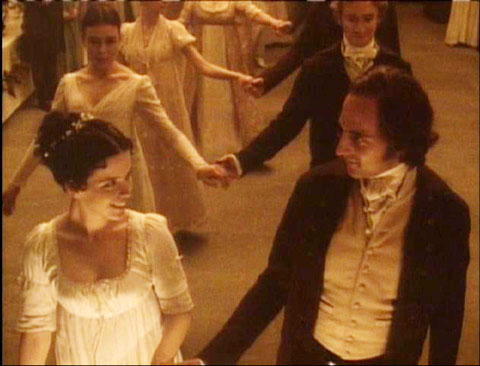
The Latest PBS "Emma"


After I busy work-week, I finally wrestled the TV away from my 6 year old and insisted it was my turn---I invited her to watch "my show". Reluctantly, she settled on the couch next to me, but much to my amazement, she never peeped for the next two hours---watching "Emma" on PBS.

Now this is child who can quote song and verse from High School Musical One, Two and Three, a child who will find the latest version of I Carly, or the Wizards of Waverly Place, and yes, sometimes even Hannah Montana, before she can find her shoes. I was shocked. But sat she did, all the way through, seemingly fascinated.

Now the latest version of Jane Austen's Emma has been advertised as "more approachable"---as if it wasn't. And it was widely hoped that the lovely young actress and actor who play the leads were "more relatable" than those of the past. I guess if a 6 year old found something particularly view-worthy about this show, then PBS has far exceeded anyone's expectation in creating a version with mass market appeal (but IMO, no updating to the story-line has EVER been needed---it has always had mass-market appeal).

So is this version more contemporary? What I notice is one lively Emma, who makes a lot of faces at everyone (not a Regency attribute, I believe), but she certainly is engaging. I think I like her a little more than other Emmas, because she is so incredibly naive and clueless---a lot like the well-cast Alecia Silverstone in "Clueless". Emma in this PBS version is portrayed as interfering, class-conscious while ignoring the realities of life, and ego-centric, but she has a certain charm that makes everyone, even the viewers, tolerate her. I do not share the opinion of some reviewers that she was "as clueless as a block of wood." Not on all accounts. She argues far too well with Mr. Knightly.

In PBS' latest installment, Emma is still a heroine, well-dressed and clever enough not to be at all dull. She's been that way for 195 years. No modernization needed. To prove my point, she captured the interest of a 6 year old, who asked me if we could read the book. I leapt from the couch yelling, yes! Move over Troy and Gabriella. Emma Woodhouse and Mr. Knightly have arrived.

PBS, you get an A from me for "Emma".

What do you think? How does the latest PBS installment of "Emma" stack up? Does it make the grade?

Friday, October 23, 2009

A World to Fall in Love With?

The Jane Austen/Warren Hastings connection Lauren posted about recently got me thinking about another kind of Austen connection: Not, this time, of reach beyond the circumscribed geography of her life, but rather of the density of connection within her books, as three or four families in a country village (to use Austen's own words) become a palpable community that resonates with shared (if sometimes contested and often unspoken) experience.

When I began writing romance, one rule I encountered was not to create too many minor characters. Which is a reasonable enough stricture for a beginning writer, and most particularly one bound by the Iron Law of Thou Must Foreground the Romance Plot.

But as I continue, I find myself so taken with the idea of a world built upon the interlaced lives of its characters (major and minor), that I'm increasingly willing to stub my writerly toes on the boundaries of the genre (especially when I'm fortunate enough to have readers like Tumperkin, who's blogged so eloquently of my efforts to try to create a web of character relationships).

And if it's chutzpah to stub my toes (and bang my head) against something Jane Austen did so brilliantly, not to speak of more or less having invented... well, no guts, no glory. I want a hero and heroine who can live not just for and with each other; not just behind the well-guarded estate gates of Pemberley; but in a community, even a society.

I want to try to model what's so often implicit in social relationships: the delicate and almost unspeakable matters of social class and cultural capital, as not only to mark power and opportunity but to wonder what "value" really is.

Because while there's a kind of fairy tale thrill in having a viscount marry a scullery maid (as in my first shot at romance, The Bookseller's Daughter), it seems to me a deeper and much touchier business for to create a pair of lovers who try to negotiate the smaller stuff -- old money versus new, aristocracy versus "trade."

Which is why, when I began to research post-Waterloo England for my domestic spy story The Slightest Provocation, I became fascinated by the contentious relationships between the old landed aristocracy like Kit's family, versus the middling people in the professions or in trade, like Mary's brewer father.

And which is also why (as you may have surmised from a whole lot of my posts) I spend a ridiculous amount of my research time simply rereading Emma -- the only one of Jane Austen's novels bearing the name of an individual protagonist as its title just happening to be (snarkily, paradoxically, Jane-ishly) her most brilliantly elaborated group portrait, a mini-world of tiny, all-important social distinction.

The paradox is easy to miss, partly because part of the world of romance fiction is already, traditionally, a world of wanting a more romantic world than you find yourself in.

Austen had already written about romantic, poetry- and novel-reading heroines (Marianne Dashwood in Sense and Sensibility and Catherine Moorland in Northanger Abbey) who couldn't "read" the worlds around them any more than Bridget Jones can read hers. But handsome, clever, rich Emma Woodhouse doesn't even have the excuse of female Quixotism to excuse her misapprehensions: she does what she does merely from a youthful excess of self-importance, an intolerance for the ordinariness of village life.

While as for the Austen fan who might be led to similar misapprehension -- like one who once announced she particularly enjoyed the Gwyneth Paltrow Emma movie because that Emma is liked by everyone in Highbury.... Well, I'll be more tolerant of this readying than Emma might have been. Because part of the responsibility must surely be ascribed to the Austen Industry's desire to keep us falling in love with that well known and adorable green-lawn-and-white-muslin England that never existed -- most especially not in the world of Jane Austen's imagination.

Here's an experiment for those of you who love re-reading Jane Austen: Read Emma with special attention (no skipping!) to everything tiresome Miss Bates and infantile Mr. Woodhouse have to say. You already know the Emma/Knightley story well enough; this time follow the apothecary Mr. Perry on his rounds and take note of Mr. and Mrs. Cole, Mrs. Goddard, the Martins, perhaps even the Cox family.

In other words, try to read it just once with the romance plot relegated to the background.

(While also endeavoring to wipe your memory clear of Gwyneth Paltrow and especially the far-too-pretty Jeremy Northam. The 1996 TV Emma with Kate Beckinsale and a powerful, peremptory, looking-his-age Mark Strong is much more to the point -- though not surprisingly, unavailable available on DVD.)

But the important thing is to try and keep your readerly attention on what the "minor characters" say and do.

I think you'll be as surprised as I was, to trace the patterns of social mobility and conflict as business is done and fortunes rise in quiet, boring Highbury during the moment we call the Regency (which is also the moment just before the Industrial Revolution embarks upon its mad tear from steam power and the railroads to global warming and the world wide web).

And you might also be surprised how much information is shared and exchanged between these minor characters. As Miss Bates says, "What is before me, I see." Try seeing it with her, as her world practically lifts off the page and into orbit on the depth, power, and density of Austen's realization.

It's not exactly a world to fall in love with.

But it might be an interesting and challenging one to fall in love within.

To which I also want to add a word of correction to my previous post last month about sickness and related matters in Regency England, about consumption in the nineteenth century imagination -- wondering whether the disease might have had a sort of unspoken presence in Emma.

I wasn't entirely right. It's not unspoken; it's genteelly spoken. When Jane Fairfax falls ill (during the darkest period of the novel for many of its characters) the local apothecary Mr. Perry reports nothing touching the pulmonary complaint, which was the standing apprehension of the family...

But I was right in the long term. Particularly at at time when tuberculosis (consumption, the pulmonary complaint) was understood as hereditary, Miss Bates (whose sister died of the disease) is clearly filled with apprehension every time her sister's daughter Jane catches the sniffles. And the sensitive circumlocution of Mr. Perry's report is particularly touching in that given the state of medical science, sensitivity was probably the only thing he could realistically offer anyone who fell ill in Highbury.

Finally, though, the big question here is, Is Emma a romance novel? Chicklit? Realist fiction? Or even (with all its misunderstandings, all that stuff you have to strain to hear and interpret) a precursor of the genteel mystery novel? (Remembering as well that one of the smartest cinematic interpretations of the novel ever was called Clueless.)

Contemporary advocates for the respectability of today's popular romance genre want Jane Austen firmly in our corner.

History hoydens -- writers and readers both -- what do you think?

(note: I'm at the New Jersey Romance Writers Conference, but I will try to check in for discussion)

Friday, September 11, 2009

Sex and (the historical) Sensibility: Sickness, Seaside, Seduction

In my last post, I wrote about needing to know about Regency boating attire. And how the good advice I got from generous colleagues in the romance writing biz helped me develop the boating scene I was writing.

Which scene happily led to The Seduction Scene by the Sea.

Mutual seduction, let me add, a good time being had by all including the author.

Because I'm not the kind of romance writer who's given to protest that she writes the hot stuff purely in the Service of Plot and Character Development and at great personal cost to herself. Erotic writing, as I always stress in the Writing the Hot Historical workshops Janet Mullany and give from time to time, ought to be its own reward. While also, of course, carrying with it the feeling of its historically understood world, quite as fully as any other scene in the novel.

My own shorthand for thinking this way is that while you probably need to get some of characters' clothes off (in this case, the boating costume I worked so hard to put together), you don't want to ignore the constraints and complexities of authentic period underwear.

Or the constraints and complexities of a period's assumptions and beliefs -- many of which I've been happily learning on a website Kalen recommended to me during the discussion of beach attire (and of which I've recently become a Facebook fan). The Jane Austen Society of Australia offers a wonderful set of discussions of Jane Austen "at the seaside": reports of talks recently given to the Society, both about Austen's own travels to English seaside resorts, and about how the various venues figure in her work.

Reading these discussions (as well as one important source, Roger Sales's book Jane Austen and Representations of Regency England), I felt once again the pleasure of researching historical romance: the discovery of everyday meanings in earlier times, of assumptions and associations we wouldn't make now, but which were only common sense then.

As in the title of this post. Sickness, seaside, and seduction are not a set of categories I would have thought to link together (as Sales does in his chapter on Emma). But the more I considered it, the more sense it made.

Of course we know that the state of medical science was pretty primitive. No antibiotics to kill germs -- well, there was no germ theory of disease. We sometimes finesse this in our romance novels by imagining a wise herbalist, often a woman, who can cure this or that via the natural antibodies in this or that leaf or twig.

And doubtless there were such healers. But in the main, this was a society that knew a great deal of invalidism, whose middle and upper classes built a holiday culture of health resorts based upon dubious therapeutic regimens, and whose popular imagination held some highly romanticized views of disease -- particularly of tuberculosis, or (as it was so evocatively called) consumption, with the hectic flush, the wasting, the heightened sensitivity the popular culture attributed to it.

Jane Austen, who had a hypochondriac for a mother, wasn't much for romanticizing disease. What we remember instead are her tyrannical or comically passive-aggressive semi-invalids like Mr. Woodhouse and Mrs. Churchill of Emma. Nor do we find much about consumption -- perhaps because the creator of popular romance fiction had her own wonderfully complex and highly ambivalent views of the romantic sensibility (qua Marianne Dashwood in Sense and Sensibility and Captain Benwick languishing over Byron in Persuasion); or because this most poetical of nineteenth century conditions was perhaps more readily seen as a disease of urban bohemians and the demimonde.

But consumption does lurk (at least in memory) along the sunny country lanes of Emma's Highbury. Jane Fairfax's mother (née the younger Miss Bates) died of it (along with grief for her husband killed in battle) when Jane was three. Miss Bates never speaks of it, but I think I hear the worry behind her voice every time Jane shows sign of catching a cold. And though it's ultimately impossible to prove a literary point by its absence, it makes sense to me that the threat is simply too real and too frightening for even Miss Bates to chatter about.

What people do chatter about in Highbury, and of course at length, is what they eat, how they keep warm and dry, whether or not to take the sea air at the coast, and which of the resorts along the coasts to frequent. Jane Austen wasn't much for the culture of inland watering places -- some of her finest satire is reserved for the manners and customs at Bath (we're ready to think the worst of the wife Mr. Elton finds there even before he introduces her to the citizens of Highbury).

But Austen did enjoy sea bathing, via the curious contrivance of bathing-machines, closed carriages in which you changed into bathing attire, were pulled into the sea, opened the doors, and were helped into the water by "dippers" employed for that purpose. One of the most delightful pages at the JASA site discusses this activity in detail. I've linked to some of the illustrations, and urge you to check out the discussion itself.

And how nice, given the state of medical science, that such a pleasant set of pseudo-therapies developed. During the Regency, those who could afford it went to watering places for a wide variety of illnesses; it seems to me they drank mineral water or plunged into the sea for just about everything -- in Emma, Jane Fairfax's guardian Colonel Campbell goes to Weymouth in hope of a cure for deafness; one hopes he had a good time anyway.

For Bath and Brighton, Weymouth and Ramsgate became a great deal more than health resorts -- and it's certainly not surprising that resorts originally devoted to physical culture would also come to be places of sociability, sexual license, and perhaps even a whiff of exotic foreignness.

The Prince Regent built his pavilion at Brighton. And Brighton was where Wickham successfully seduced Lydia Bennet, after failing to have his way with Georgiana Darcy at Ramsgate. Jane Fairfax and Frank Churchill became secretly engaged at Weymouth. According to Roger Sales, "watering places were among the favored refuges for French émigrés during the Revolutionary and Napoleonic Wars." Mr. Knightley, that staunchest defender of English values, worries that Frank Churchill may be bringing French manners to Highbury, when he tells Emma that "your amiable young man can be amiable only in French, not in English."

Clearly, as Sales points out, Emma is built around a struggle between the values of Frank's looser, Frenchified, watering-place morals and the "true" Englishness of Mr. Knightley's squire-archical Highbury Village. And yet, as Sales also reminds us, when Mr. Knightley and Emma (who up until now has never even seen the sea) do take their honeymoon journey, it's for two weeks at the seaside.

All of which makes me want to travel to Brighton, to Weymouth, even to Chesil Beach, site of Ian McEwan's achingly sad and beautiful novel (an anti-romance, I think, that comes awfully close to romance in a strange and compelling way).

Have any of you traveled on the English coast? Where shall I go?

And (with a nod to Susan Sontag's Illness as Metaphor, which got me thinking about consumption): how many literary and artistic consumptives can you list, from Mimi in La Bohème to Keats and Kafka?