Okay, I admit it: I have thirty two bookcases. There are times when I’d like to have fewer, like when I’m dusting. On the other hand, a big, fat reference book with tons of illustrations is heaven on earth for a historical author.
What’s an author to do? E-readers and e-reading applications – like Kindle, Nook, and iBooks – aren’t known for their ability to showcase illustrations or complex tables, comparing multiple factors. They simply wrap text around the screen, no matter how large the letters or the screen are. Over and over again, until the book reaches the end of its tale.
This means that I read fiction as ebooks but almost no research books in that format. Other people feel the same way: for example, this week’s top ten bestsellers in print were non-fiction while fiction ruled the digital bestsellers.
But I’d love to do research in a digital book and do so whenever I get the chance. For example, biographies are often delightful.
A friend gave me Adrian Goldsworthy’s Antony and Cleopatra. It’s a scholarly examination of their lives, which focuses more on them as political allies than lovers. The prose is so smooth that it reads faster than many novels and one can skip over the maps.
And then there are the classic research tomes – books like Brian Lavery’s Nelson’s Navy: The Ships, Men, and Organisation, 1793-1815. It saved me more than once when I wrote “Caught by the Tides,” my Regency novella in Beyond the Dark. That story hinges on the naval nuts-and-bolts Napoleon needed to pull off his invasion of England in 1803.
Lavery’s Nelson’s Navy has 350 pages on everything anybody ever wanted to know about anybody’s navy during that era. It’s packed with tons of illustrations, both period and modern recreations, all carefully annotated with their source. Plus, it comes with a full bibliography, footnotes, and index. The only possible complaint is that some of the illustrations could be in color. Oh, and that it might weigh less than four pounds. (Yes, the phrase “door stop” has been used for it.)
But it’s wonderful. I just wish it were an ebook. Then I could zoom it on some of the illustrations – like the photo of the naval cook stove, with the two integrated kettles on top and the oven in the side. (Just how did people use all those handles coming off in all those directions?) Plus, I could carry it with me to read anywhere I went – and never dust it again. (Oh, happy day!)
If I was truly lucky, somebody would turn it into an application for iPads or other tablets. Then it could include videos or animation for some of the drawings, like how a warship’s sails worked. But that’s expensive with a capital E and unlikely to happen for every reference book.
At least Brian Lavery provided a condensed introduction to naval warfare during the Napoleonic era in Life in Nelson’s Navy. At ninety pages long and with no illustrations, it’s available in both paper – and digital.
Thank heaven options are starting to appear.
Reader, do you like your research books in print or ebooks? What would you like your ereader to do better for your research?
Showing posts with label Cleopatra. Show all posts
Showing posts with label Cleopatra. Show all posts
Friday, March 2, 2012

Friday, April 22, 2011
Hooked on Classics Yet Again: The Face of Cleopatra
Quick: what did Cleopatra look like?
And if the beautiful face that comes most readily to mind is Elizabeth Taylor's from the lumbering
 1963 movie extravaganza -- well, until recently it did for me too, and probably would have done so even before Taylor's lamented death last month.
With, I'll sheepishly confess, Nefretiri's even more beautiful one a close second in my muddled imagination of the ancient world -- at least until a quick trip to Wikipedia informed me of the little matter of
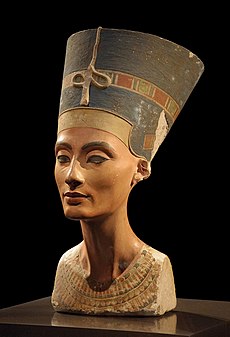 1300 years intervening between the reigns of the two Egyptian queens.
But even taking into account my historical imagination shamelessly in the thrall of pop history and history according to the movies, it turns out to be pretty understandable that I couldn't call an image to mind of a woman whose name has become a byword for fatal female attraction.
Because the
 images we have of Cleopatra -- from an age when public representation of rulers was ubiquitous -- are a paltry few, most reliably existing on coins like this one from 36 BC, minted, as Cleopatra's recent biographer, Stacy Schiff, tells us, to announce Antony and Cleopatra's political alliance.
Not that there weren't sculptures aplenty all over Egypt during Cleopatra's lifetime (and one in Rome, too: Julius Caesar had it done all in gold, in the temple of Venus that he built) but they haven't survived. For the simple reason that in the years after Antony and Cleopatra's defeat and suicide, as Rome went from Republic to Empire under Octavian (who renamed himself Augustus) her statues were systematically torn down and replaced by those of the conquering Roman emperor. Even as the ancient kingdom of Egypt lost the autonomy under Rome that Cleopatra had worked all her adult life to maintain -- and as, under Augustus, Rome created its own great literature, and a public mythology that outlasted Rome itself by some millenia, with Cleopatra's story transformed into
 history's great negative lessons about what happens when a woman gets too much power.
And if all this leaves little memory of the canny and self-possessed -- if notably unbeautiful -- woman on the coin, with her white diadem of office, a fortune in pearls around her neck and woven through her elaborate hairdo, and her knowing smile, Schiff's recent biography has achieved the job of historical reclamation to spectacular effect. The cover of which book -- at least in its current hardback edition -- manages to have it a number of provocative ways, subtly recalling the image on the coin in its aspect and its handling of the diadem, hair, and pearls, hinting at the fabled beauty we've come to assume even as it rotates the face away from us, turning it backward into shadow.
Particularly artful, that turn into shadow, given how little direct information we have about the woman, Cleopatra VII, who ruled Egypt for twenty-two years -- and how much of what we do "know" comes from a Roman political PR machine staffed by the likes of Virgil, Horace, and Plutarch (who was the main source for Shakespeare).
A family values kind of guy (for his citizenry if not for himself), Augustus clad his empire in a strict ideology of masculinist rectitude. How better to do this than to portray the richest person in the Mediterranean, who spoke nine languages -- a charismatic, profoundly well-educated woman who, in Schiff's words, "knew how to build a fleet, suppress an insurrections, control a currency, alleviate a famine"-- as a sexual wanton who ruled by nefarious wiles? Particularly because that same woman did, after all, sleep with two of the most powerful men of her time, have children with them, and at important junctures, cause both Julius Caesar and Marc Antony to do her bidding.
Cleopatra, as Schiff says, "stood at one of the most dangerous intersections in history, that of women and power." Not to speak, I have to add, of love and sexuality. And while the story we've inherited is sure to dazzle by dint of these sure-fire elements, the actual record is woefully short on specifics. Schiff reminds us that "there is no universal agreement on most of the basic details of her life, no consensus on who her mother was, how long Cleopatra lived in Rome, how often she was pregnant, whether she and Antony married, what transpired at the battle that sealed her fate, [even] how she died."
How then to try to tell the story in its own terms and not those that have shaped our own troubled imaginations of men and women, power and sexuality? Schiff says that she has "not attempted to fill in the blanks." "Mostly," she continues, "I have restored context." Which is an impressively modest way to describe the job she's done of absorbing and marshaling a massive array of historical evidence into a three-hundred page read of... can I say "breathtaking"... liveliness and clarity of style?
"How strange --" my husband said, picking up my copy and reading a page or two, "a biography written in the conditional tense." I hadn't realized it, but he was right. With so much of the record gone forever, one must speculate, make one's best judgments, be imaginative and yet precise in the same paragraph, and not yield an inch of ground when the evidence will allow it.
As in Schiff's impeccably controlled examination of Cleopatra's voyage to Rome. Beginning what's not known ("Whether she traveled for reasons of state or affairs of the heart -- or to introduce Caesar to the infant son he had not yet met -- is unclear") the biographer makes her way to firmer ground and states her case in a meticulous blaze of verbal confidence:
Two things are abundantly clear. She could not have left Egypt were she not firmly in control of the country. And she would not have dared to set foot in Rome had Julius Caesar not wanted her there.A triumph of the conditional, and an inspiration for any journeyperson writer.
I can't recommend this book highly enough, and I'm curious what works of history (particularly in their writing) have thrilled and inspired you in similar ways.
Friday, December 10, 2010
Holiday Wish List: Books, Books and More Books

'Tis the season: things are slowing down at my day job and I finally have the chance (I hope) to catch up on my reading! Nothing beats sitting by the fireplace late at night, reading by the low lights and glow of holiday decorations---my wish list is naturally longer than "War and Peace" but my preference for a good historical tale, romance or otherwise, comes shining through. Here are my top picks this year:
1. Cleopatra, A Life, by Pulitzer Prize winning author, Stacy Schiff. Everything I've heard about this book is spectacular. Move over Philippa Gregory, from the excerpts I've read and the reviews, Ms. Schiff has done for ancient Egypt what Ms. Gregory did for Tudor England. Here's a bit from the New York Times review: "Ms. Schiff waves onto the stage Cleopatra’s Alexandria in all its splendor and beauty: its gleaming marble edifices, the oversize sphinxes and falcons that lined the paths to the city’s Greek temples, the Doric tombs decorated with crocodile gods in Roman dress. She enables the reader to see Cleopatra’s court — her elaborate retinue of tasters, scribes, lamplighters, royal harpists, masseurs, pages, doorkeepers, notaries, silver stewards, oil keepers and pearl sorters — and to picture her fleet of royal barges, equipped with gyms, libraries, shrines to Dionysus and Aphrodite, gardens, grottos, lecture halls, spiral staircases, copper baths, stables and aquariums." Ms Schiff portray her Cleopatra as the ultimate heroine: "Her death , an honorable death, a dignified death, an exemplary death,” over which she presided herself, “proud and unbroken to the end” — even won over her detractors, Ms. Schiff observes: “by the Roman definition she had at last done something right; finally it was to her credit that she had defied the expectations of her sex.”
I can't wait to read this book. And BTW, check out the beautiful cover. When I first saw it, I thought this was some kind of Regency-Cleopatra-Story. But I saw the author in an interview (on the Daily Show, no less) who said as soon as she was seated, "The cover is historically accurate. A Queen in ancient Egypt would have worn pearl earrings and pearls threaded through her hair." After that, I got this sort of "you had me at hello" feeling.
2.Lady of Hay by Barbara Erskine, a kind of time-travel history. The heroine is hypnotized to regress to the twelfth century in Wales where she re-lives her previous life as Matilda, hanged for treason. Guaranteed to please the lover of Gabaldon's books, as quoted from Geraldine Ketchum on suite101.com. This book has just been re-released.
3. Sarum by Edward Rutherfurd tells the history of a family and a village in England from prehistory to modern times. Somehow, I missed this book. Good thing it seems to be perpetually in print!
What's on your wish-list this season? Any new books that have grabbed your attention? Romance, historical fiction or other?
Subscribe to:
Posts (Atom)