Thursday, April 30, 2009

Visiting Mayfair--and some news

I came back from a quick visit to London last week. I packed a lot into a very short time, including a visit to the Regency Town House in Brighton--I blogged about it last week at the Riskies, where today I'm blogging about my newest favorite place in London, the excellent and fabulous Fan Museum in Greenwich.

But while I was there I blatantly played tourist by going on a London Walk of Mayfair--something I've never done before. A couple of other Americans talked the entire time about some poor woman in their town whose ears must have been burning and I took (mostly dreadful) photos. The walk was pretty good, but obviously previous walkers were fascinated by London real estate so a lot of the information given was about house prices (ridiculously high).

Mayfair was originally the site of a fifteen-day May Fair, renowned for its rowdiness and finally banned in 1708. Architect/developer Edward Shepherd was commissioned to develop the area and by the mid-eighteenth century completed the site, which included paved alleys, a duckpond (aaw!) and a two-storey market topped with a theater. (Now I'm kicking myself because I think that building still stands and is a pub and I didn't photograph it).

So in the center of the grand Georgian houses we associate with Mayfair there's a charming area of picturesque alleys, shops and restaurants, Shepherd Market (according to our guide, it's a busy red light area at night). I do enjoy a bit of sleaze and narrow alleys...

I really loved the frontage of this shop that sold statues and I wished I'd used this setting in The Rules of Gentility when Philomena and Inigo go shopping together. Next time I'm going back to look inside...

But yes, the grand houses. This was the area where Caroline Lamb and Florence Nightingale lived (although not together or at the same time, although their houses have gone--either knocked down by the Blitz or developers) and many other big names. Handel lived next door to Jimmi Hendrix (although not concurrently) and the BeeGees also get a blue plaque (honest).

Here's Beau Brummell's house (left) and the house of the Duke of Clarence, Mrs. Jordan and their ten offspring (right). The blue plaque at the Duke's house, however, celebrates a more respectable resident whose name I can't remember.

Here's Berkeley Square and one of its venerable plane trees (two hundred years old). And on the right, the London home of American president John Adams.

Here's an interesting factoid about the shift of the fashionable from Soho to Mayfair. After the rich and famous moved to the new development (which was pretty much in the country then, thus achieving the Georgian ideal of the pleasures of the town with the salubrious effects of the countryside), Soho became a lower class, artisan area. William Blake set up shop there. So did several thousand French emigres, mostly weavers, which I thought was really interesting, because I wrote something one time where the heroine lived in the ground floor of a Soho house which resonated to the thud of a loom above. My critique group said, as one woman, huh? But I was right; something, sometime, had lodged in my brain and come out at exactly the right moment.

And now the big news... remember, you heard it here first unless you came from the Riskies...

I've sold a two-book deal to HarperCollins, Immortal Jane, and the first is about Jane Austen joining forces with sexy vampires against a French occupation of Bath (and you should have heard me cackle when I wrote the proposal). My working title is... yep, Blood Bath (I really, really hope they let me keep it). It's scheduled to come out next summer so I'd better get busy.

So since I'm supposed to end a blog with a question, have you ever taken a walking tour in London? Or any other city? What did you think?

Wednesday, April 29, 2009

Ramblings on the Oregon Shakespeare Festival, The Music Man, & Mismatched Couples


My good friend and critique partner, Penny Williamson, and I just got back from our annual spring trip to the Oregon Shakespeare Festival. It’s wonderful going to the theater with a good friend who’s also a writer. I've found some wonderful literary inspiration on visits to Ashland, Oregon--the allusion to Othello which sets the theme in Chapter 1 of Secrets of a Lady, the Hamlet references running through Beneath a Silent Moon, the question "whom do you identify with in Julius Caesar?" which runs through the as yet unpublished The Mask of Night.

This trip was no exception in the literary inspiration department. Between performances Penny and I indulged in some of our favorite activities--we walked, shopped, lingered over meals at favorite restaurants, and analyzed the plays.

The plays were a rich and wonderful mix. One favorite was Equivocation, a world premiere by Bill Cain in which William Shakespeare is commissioned (or rather commanded by King James’s right-hand man Robert Cecil) to write a play about the Guy Fawkes gunpowder plot. A brilliant, layered play about politics, writing, family–and theater. (It may spark a blog post when I have a bit more time to think about it). Another surprise favorite was Meredith Wilson’s The Music Man. When Penny and I first heard OSF was doing The Music Man, we were a bit skeptical about a Broadway musical mixed in with OSF’s usual blend of Shakespeare, modern and older classics, and edgy new plays. We left the theater completely entranced. It was a wonderful, clever, sweet-but-not-sappy production that brought out how River City, Iowa, is changed by musical con man Harold Hill and how Harold Hill is equally changed by River City and its inhabitants.

Particularly Marian Paroo, the town librarian. The romance at the heart of The Music Man is delicate and heart warming. Con man Harold Hill who is looking for a “sadder but wiser girl” and librarian Marian Paroo who is waiting for her “white knight” seem complete opposites and yet you root for them to get together. More than that, you believe in their happy ending. Perhaps because, as Penny and I discussed, while Marian and Harold are both misjudged by those round them, they see each other with surprising clarity. Marian falls in love with Harold knowing he’s lied about his past. Harold sees past Marian’s frosty demeanor. Meredith Wilson’s clever lyrics point to the fact that this seemingly mismatched couple may have more in common than one thinks. In the song “The Sadder but Wiser Girl,” Harold refers to The Scarlet Letter and the goddess Diana. He may be the most well-read person in River City next to Marian, who shocks the town by reading Chaucer, Rabelais, and Balzac. Musically, their two signature solos, “Goodnight My Someone” and “Seventy-six Trombones” have the same melody, disguised by different tempos. A clever way of showing how in sync their minds are beneath the outward show.

This got me thinking about other favorite mismatched literary couples who are soul mates under the skin. Such as Beatrice and Benedick from Much Ado About Nothing (which OSF is doing later this year). Despite their war of words Benedick believes Beatrice without question when she swears to her cousin Hero’s innocence. He sees through the truth of the situation while the other men in the play are taken in. Or Mulder and Scully who begin as skeptic and believer but become each other’s touchstone.

Arthur Clenham and Amy Dorrit in Little Dorrit (I came home last night and curled up with the last episode) are mismatched not by personality but by age and circumstance, which prevent Arthur from seeing Amy’s feelings for him or acknowledging his own for her. Mary Russell and Sherlock Holmes are also mismatched in age, not to mention her interest in theology and his rationalism and the lack of interest both have in marriage (and echo of Beatrice and Benedick). Yet the spark of sympathy between them is clear from their first scene together in The Beekeeper's Apprentice. (Speaking of Holmes & Russell, I just bought The Language of Bees and am having to remind myself I can't stay up all night reading it).

For me to believe in a happy ending, I need to believe that the characters are somehow uniquely right for each other. That realization can be that much more powerful and interesting when they are seemingly an impossible match. In my own series, Mélanie goes into her marriage to Charles knowing they are an impossible mismatch in ideology, loyalties, background, and life experiences. Yet when she realizes she loves him it’s because “though he might not know her true name or any details of her life, he understand her as no one else ever had”.

Do you like stories about mismatched couples? Any favorite examples? What does it take for you to believe the characters have a chance to be happy? Are there literary mismatched where the author didn't convince you the differences between the characters could be overcome? Writers, do you get inspiration from the theater? Who else watched Little Dorrit (have you seen the 1988 Christine Edzard films, which are equally engrossing)? Who else is looking forward to Russell's & Holmes's latest adventures in The Language of Bees?

Monday, April 27, 2009

Crusading Heroines & Readers Who Love Them

Pam’s comments on a recent post had me thinking all weekend . . .

There is a trend in historical romance (or so it seems to me) for heroines to be crusading do-gooders, or at the very least to be overly aware of the myriad of horrors that lurk behind the everyday commonalities of life and commerce and production. This awareness on their part seems to be in direct contradiction to historical reality and even to modern reality.

When I’ve discussed this issue with friends (of both the reader and the writerly persuasion) I get a response that I find quite curious: they think that having characters highlight the dark side of life back then by being reformers makes the character more accessible for a 21st century reader. I like to counter by asking if they felt a lack of connection with the women on Sex in the City or Desperate House Wives because they don’t obsess about the factories full of women (and yes, they’re almost all women, practically girls) who spend 9/10 hours a day sewing their garments, or the boys who cobble their shoes, or the Pakistani children who sharpen and polish surgical instruments so their doctor boyfriends can earn their astronomical salaries to pay for those dinners at Nobu? I never noticed that it was a problem for the masses.


In fact, most modern Westerners (yeah, I’m pointing my finger at Canadians and Europeans here too) don’t know and don’t care where their “cheap” goods come from. The mom shopping at Wal-Mart for her kinds Dora the Explorer flipflops doesn’t care what conditions they were made under and she doesn’t want to be told and made to feel bad. The college student dumping his old PC for a shiny new Mac doesn’t know (and doesn’t care) about the electronic waste that’s poisoning the 3rd world. People don’t want to be told that their penchant for beef is one of the leading causes of global warming, or that the imported teak floor they just installed is an environmental nightmare.

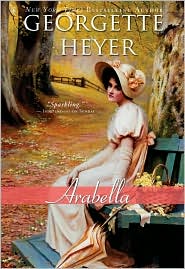
But I’m beginning to wonder if readers’ penchant for crusading historical heroines isn’t a way of sidestepping their modern guilt over all of the above (I mean, we all KNOW at some level that everything we buy and eat and wear and drink has a cost in blood, sweat and tears that someone else is paying, right?). If characters like Heyer’s Arabella Tallent (who scoops up climbing boys and faces down their masters) and Jeffries’ Lady Clara Stanbourne (who runs a home for pickpockets), and, oh, I don’t know, a dozen other books I’ve read where the heroine runs some committee for the poor, or puts on a ball, or is BFFs with her maid, aren’t giving us an extra jolt of fantasy and an extra hit of feel-good-about-the-world that is totally based on our being able to feel superior along with our heroine? Perhaps I’m too cynical, but I don’t see this same trend in contemporary romances (or maybe I’m just missing the books with the heroines who are consumed by modern causes . . . but I think not, cause in a modern setting such a character quickly begins to feel preachy).

I mean, can you tell me (without looking!) where your shoes were made?

Friday, April 24, 2009

To Veil or Not To Veil...


My romantic fantasy of veiled woman in Arabic tradition as mysterious and intriguing figures has suffered a “reality split” from current studies of Middle East cultures. The cold hard truth is that my romantic fantasy was... a romantic fantasy.

Islamic law is based on previous Arab tradition, which unfortunately denied women most of their basic rights. The belief that women are inferior to men, and that they need men to protect them, underlies not only the Koran, but the collection of other religious scholars’ writings. Such writings are consulted, in varying degrees, by the ulama, or venerated religious judges, and this explains the variations in interpretation–from conservative (using the Koran only) to more liberal (using additional learned writings as supplements). Picture, if you will, the 20th century Congregationalist and the Born-Again Christian interpretations of the Bible.

The coming of Islam did improve the overall status of women in specific areas, even though many sections of the Koran seem to be addressed primarily to men. “Allah desires to make things light for you, for man was created a weak creature.” [The Koran, Sura 4, “On Women”]

Islamic law recognized a woman’s right to choose her own marriage partner and set limits on the practice of male polygamy (an Arab tribal tradition). A man can have as many as four wives if he can provide for and treat them equally.

Marriage
was defined as a contract between a man and a woman, or a man and a woman’s legal guardian [emphasis added]; the required dowry was to be paid directly to the bride, not to her male relatives. Women are entitled to inherit wealth and, further, married women should be able to control their own money and property. This was a huge change from the traditional Arab practice of a man’s owning not only the woman but all her wealth upon marriage.

Husbands must support their wives financially during marriage and even for a certain period after a divorce; “the divorced woman shall not be thrown out on the street or forcibly detained in the house.” In addition, there are specific recommendations for attaining a divorce, including a cooling-off period and working with an intermediary (a kind of couples counseling).

However, such decrees did not significantly change the dominant position of men in Muslim society. The Koran describes men as a degree higher than women in rights and responsibilities; also, it requires women to be obedient to their husbands. Men are permitted to divorce their wives without cause [emphasis added] and to deny women custody rights over children who have reached a certain age.

As Islam spread during and after the 7th century AD, it gradually absorbed some of the custom of the conquered peoples, including the practice of veiling and secluding of women. Seclusion in this case meant limiting women to the company of other women and close male relatives in their home or confining them in separate female living quarters.

Although veiling and seclusion are not specifically stipulated in most Islamic sources, some Muslim scholars have used passages from the Koran and the collection of Mohammed’s subsequent traditions to justify such practices. “Say to the believing women that they should lower their gaze and guard their modesty; that they should not display their beauty and ornaments except for what must ordinarily appear; that they should draw their veils over their bosoms and not display their beauty except to their husbands.” ["The Book of Light," 24:31]

The issue of a wife accused of infidelity is handled thus: “Bring four witnesses from you [supposedly all witnesses were men] and if they testify to the whoredom, shut those women up in the houses till death take them... but if they repent and amend, turn away from them.” [Sura 4]

Through the centuries, as new situations arose, Islamic jurists and scholars have added learned opinions to the basic tenets of the Koran. One can hope that what is–or will be in future–added to the body of written opinions on women’s rights will be increasingly less repressive and more open to liberal and female-empowering interpretation.

Friday, April 17, 2009

Time and Again: Hanging with the Romance Scholars

A lot of vampires this year.

I mean discussion of vampires (though since it was Anne Rice's home town you never know) at the annual meeting of the PCA/ACA (Popular and American Culture Association) last week in New Orleans.

And of course a whole lot of discussion on romance novels, including presentations from fellow hoyden Lauren Willig and myself, on panels sponsored by the Romance Subject Area of this scholarly organization.

All a little bit new to me, since although I'd signed up for last year's PCA in San Francisco the conference wound up conflicting with my Amazing Three-Week Revision-turned-Rewrite of The Edge of Impropriety, so all I did was limp in to deliver a limp presentation and limp back home to the computer. Other than which my conference-going has been mainly limited to Romance Writers of America's annual national extravaganza and (deep in my past) a few extramural meetings of software developers.

But I do know enough to predict a few inevitabilities re myself and big meetings...

  • First, that I will start out shy, convinced that no one will talk to me. It'll be RWA 1999 all over again, I tell myself, when I genuinely believed (now it can be told) that the point of getting a book published was so you'd have somewhere to go on the Friday night of RWA National when the publishers gave their parties and the published girls got all dressed up.
  • Next that I will discover (again!) that people are really quite nice and friendly -- whereupon (wired by the opportunity to talk face-to-face with all entities I've hitherto only encountered online or in books -- or in the case of Lauren, both) I talk way too much; toss around in bed thinking of what-all I could additionally have said; wreck my health (at least temporarily) by agonizing over my own panel presentation and falling to pieces after I give it; finally to stagger happily onto an (inevitably) germ-infested airplane and cough and sniffle my way through my first days home.
  • And finally that the conference hotel elevators will never be up to the task of getting everybody where they want to go as fast as they want to get there, so it's best to learn to make elevator friends.
All of which were true of my experience at PCA/ACA -- including a great conversation during a long elevator wait with a very very young man who'd just given a presentation on The Wire, which I would have gone to if there weren't so many romance panel discussions. Still, it was great to connect with a non-romance pop-culture homie, greeting one another in the local patois, viz, "are you into Omar or Stringer Bell?" (It's Stringer for me, of course -- evil, gorgeous, and heartbreaking in his glasses and lonely doomed dreams.)

While as for wrecking one's health -- I did tell you the event was in New Orleans, didn't I? It was my first time there, and though of course I was looking forward to the food, I didn't expect that for my first lunch, wandering around the city before the conference got underway, I'd eat the single most delicious thing I've ever eaten in my life -- a fried oyster po' boy sandwich at Parasol's Restaurant and Bar (yeah, it's as funky as the picture -- and wonderful) in the Irish Channel Neighborhood near the Garden District (found with Lonely Planet's help).

Nor did I have any idea that New Orleans cooking is so good and skillful that you can ingest more grease, sugar, carbs, meat, and alcohol than you'd have imagined possible and it doesn't catch up with you until sometime after you get off the plane back home and start in on the hacking and sniffling.

But by now the coughs and sniffles are almost gone, I'm sure that any day now I will return to my Weight Watchers regimen, and I had a terrific time, mostly due to the energy and enthusiasm of the romance scholar contingent. You can find out more from and about this smart and lively, warm and wonky bunch at the Teach Me Tonight Blog, and most particularly about their missionary zeal that romance fiction should get the same scholarly attention that all the other popular culture forms (like detective fiction, sci fi, etc etc) get. Which means conferences (check out the big news about this upcoming do -- Love as the Practice of Freedom, at Princeton), an academic journal, and attention paid to research and classroom teaching.

And though missionary zeal isn't my favorite stance on anything (in any roomful of head-nodders, you'll find me knitting my brow), I'm happy to report that at PCA my yes-buts and calls for explanation brought forth interesting, respectful responses and much to ponder. Some snippets being...

  • The roundtable on pedagogy where I learned that many college students (including, sacre bleu, English majors!) don't immediately understand that a text is a structure that can be taken apart like a car engine. Who knew? But given that that seems to be the case, it makes good sense to teach them literary analysis is with a book they know they like -- like a romance.
  • An ad hoc to-be-continued-I-hope conversation I had with An Goris, who's doing her dissertation on Nora Roberts, as we tried to find words for what, stylistically, makes Nora Nora -- typical and exceptional, creator and participant of the genre at the same time. No conclusions, but I was fascinated by how interesting and challenging a question it was.
  • A terrific presentation on British and U.S. takes on the Regency -- from Professor Maryan Wherry -- which began with a quote from The History Hoydens Blog.
  • You've already gotten preliminary taste of Lauren's presentation here -- it was even better extended and out loud, and the only problem was that she was the only historian presenting (her panel-mates talking about the psychology and sociology of romance communities -- interesting all, but not the same thing). Yo, romance scholars! Get more historians! Lauren's discussion of how romance readers understand history needed more stuff to bounce off. Re-enactor culture maybe, Kalen? Hoydens, what do you think?
  • As for my presentation -- it was about time. By which I mean that I talked about how time works in the the romance novel (with some help from Jane Austen and the genre's ancestors in drama and religion). Which was fun to think through and which taught me something about the romance form as I'd been using it even before I knew I was doing it. Because before I prepared this paper I hadn't entirely realized that all of my romance novels end in the same space they begin, as per the loopy shape of the romance story as I understand it, the ongoing plot making its way along a great circle route through the past. And I'm grateful for the comment from the very lovely Professor Julie Moody-Freeman, that for journeys through the past I should look to the work of Toni Morrison (whom I haven't read in years but whom I will soon again, now that I've got a new hook to hang her work on in the lumber room of my musings).
And, as they say, much much more -- including, I see, an extensive set of reports on the vampire panels at Professor Jessica Miller's fascinating and new-to-me blog, Racy Romance Reviews (it was also great to meet Jessica at the conference) -- a gazillion books to resolve to read -- and plans for the future... if they'll have me... 'cause I'm sort of thinking of taking on space next year.

But I left out so much. Thanks again, romance scholars! And all input from participants, would-be participants, vampire fans, hoydens and theory-groupies, and anyone with a hopeless crush on Stringer Bell... all welcome.

Wednesday, April 15, 2009

When Life Imitates Art: Creating Characters

Have you ever "met" a character you created?

This phenomenon has occurred twice so far in my writing career. In my debut contemporary novel, Miss Match, a romantic comedy, I created the character of a self-important actor, Rick Byron, whose career was built on the shaky foundation of a megawatt smile rather than any discernable theatrical talent. In my mind, he physically resembled a hybrid of two "himbo" actors who began their careers in the '80s and who have had remarkable staying power, not just on the screen, but because of their respective tabloid-fodder marriages. The sandy hair, that killer grin ... and then, one night I caught an episode of one of America's most popular reality shows ... you know the one--where young people of limited vocal skills bend notes into pretzels in the hopes of winning a recording contract. And there on the television screen, hosting the show, was the character I had written.

The eeriest thing about seeing a very credible version of the character I'd invented was that I'd had so much fun writing Rick Byron that he made a second appearance as the fatuous host of the reality dating show that is at the center of my second novel, Reality Check -- written when reality TV was in its infancy and no one knew that it would take over the boob tube, thereby sending scads of professional actors and writers to the bread lines.

Although this exceptionally popular musical reality show might have been running at the time my novel hit the bookstores, it didn't yet exist when I created my character in both incarnations (as movie star and as reality show host); and, not being a viewer, I didn't see the real-life host until years after it was up and running. It was disconcerting, to say the least, to see a product of my imagination made manifest.

The second time I "met" a very reasonable facsimile of one of my characters was a couple of years later. A secondary character in Herself is Kelly Adonis, a tall, bald, gay, former Olympian diver and ex-commercial spokesman, now an aqua fitness instructor. While the novel was in the publishing pipeline, well past the copyediting stage, a substitute teacher filled in for one of the water aerobics classes at my gym -- and, good grief (!) there he was!

I'm wondering if there's a word for this phenomenon; why do I think it's the sort of thing Pam would know?

While we often draw our literary characters, and in particular the historical figures in our novels, partially from life models, what are the odds of it happening the other way? Have you ever had the same or a similar experience to mine? What was your reaction when you "met" your character?"

Monday, April 13, 2009

Music to Write By

This will not be a long post because you are the source of information for this research project.

I’ve been writing a long time and have always worked in silence. In silence, if you do not count the phone ringing, the lawn being mowed, trucks delivering stuff which means the doorbell sounding. But I digress.

For years I have written in silence but that seems to be changing. As of three days ago I am writing with music in the background. I started with the soundtrack from the movie LAST OF THE MOHEGAN and then moved on to Respighi and even some Enya which, though I enjoy her music, did not inspire me in any way. Actually Enya’s music made me seriously consider a nap.

So here are the questions for the day. Do you write in silence or with music? Do you use the music to inspire emotion in your writing or to motivate you to keep writing? If you use music, would you be willing to share your favorites?

And while I am on the subject of change. Has anyone checked out Twitter? I am having great fun collecting information from my favorite sources all in one place – New York Times, Wall Street Journal, Alan Sepinwall’s reviews of TV shows, CNBC and Vogue. I follow a couple of friends and acquaintances but do not twit myself.

So take your pick: music to write by and Twitter. Your thoughts?