Harriet Beecher Stowe, daughter of a New England theologian and wife of a seminary teach, saw herself as an aide to God in healing the broken-hearted, preaching deliverance to the slave and setting at liberty those who are captive. In 1852 she wrote Uncle Tom’s Cabin, or Life Among the Lowly, a blockbuster novel that highlighted America’s crisis over slavery. The book left millions seething with anger and shame.
The most memorable passage in the novel describes the flight of the fugitive slave mother "Eliza" across the frozen Ohio River. Stowe learned the story directly from one Reverend John Rankin who helped her, and chances are she never knew that her journey that night became part of the mythology of the Underground Railroad.
The real story is hair-raising. One winter, a heavy-set black woman left the plantation where she was enslaved, carrying an infant wrapped in a shawl, escaping a slave trader who had come to sell her away south. Sheltered in a house until she heard dogs baying on her trail, she grasped a plank and ran to the river’s edge.
When frozen solid, the river could be crossed by horses, but a thaw had rotted the ice and it was full of holes and cracks, with river water running over it. The woman had no choice. She took a single step forward and broke through. Standing in freezing water, she plunged forward toward the Ohio shore, carrying the baby in one hand, the plank in the other.
As depicted in Bound for Canaan (Fergus Bordewich):
"Then without warning she broke through again, this time up to her armpits. She pushed the baby ahead of her onto the ice, then levered herself up with the aid of the plank. Laying the plank across the broken ice, she crept along it until she fell through once more. Again she managed to throw the infant ahead of her before she sank. Crawling back onto the ice, she continued her progress in this fashion until the ice disintegrated beneath her again. This time she sank only to her knees, and she knew that she was close to the Ohio shore. When she finally touched solid land she collapsed, physically spent.
In Stowe’s story, Eliza races toward the banks of the frozen Ohio with a slave trader in close pursuit:
"Right on behind her they came; and, nerved with strength such as God gives only to the desperate, with one wild cry and flying leap, she vaulted sheer over the turbid current by the shore, onto the raft of ice beyond. It was a desperate leap, impossible to anything but madness and despair... The green fragment of ice on which she originally alighted pitched and creaked as her weight came on it, but she stayed there not a moment. With wild cries and desperate energy she leaped to another and still another cake–stumbling, leaping, slipping, springing upwards again! Her shoes are gone–her stockings cut from her feet–while blood marked every step; but she saw nothing, felt nothing, til dimly, as in a dream, she saw the Ohio side."
A white man had watched her struggle across the ice and was preparing to seize her when he heard her baby whimper. Instead of arresting her and sending her back into slavery, he led her to a safe house, the home of Reverend John Rankin. More than a decade later, novelist Harriet Beecher Stowe rendered the fictional slave "Eliza" and her perilous crossing of the river into literature.
Friday, November 28, 2008

Monday, November 24, 2008
Aphrodisiacs, then and now
Does absinthe make the heart grow fonder?

I can hear the groans at my feeble pun, but couldn’t resist. In actual fact, alcoholic beverages -- taken in moderation -- are the only aphrodisiac that generally work, at least when taken in moderation. Unfortunately, most people don't quit while they're ahead (leading to some forgettable encounters for many of us, I'm sure). Even Shakespeare acknowledged that alcohol, to paraphrase Macbeth, increases the desire but takes away the performance."
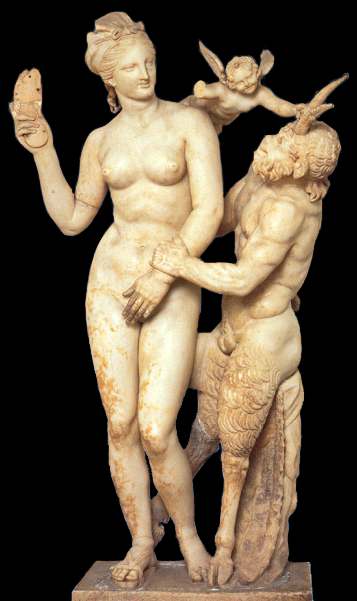
The word aphrodisiac comes to us from Aphrodite, goddess of sexuality and romantic love. According to legend, Aphrodite considered sparrows sacred, and the ancient Greeks thought sparrows were especially lustful (in much the same way some Americans view rabbits). Because of the association with Aphrodite, Europeans were inclined to eat sparrows, particularly their brains, as aphrodisiacs.
Because sexual function was key to reproduction, even the church got involved in the discussion of aphrodisiacs. The thirteenth century monk St. Thomas Aquinas wrote that an aphrodisiac had to produce "vital spirit" and be nutritious. In Aquinas's writings, the heartiest food -- meat -- was an aphrodisiac. Aquinas also believed that drinking wine produced the "vital spirit," a belief that persists to this day (and as noted above, has some basis in science).
Cleopatra was said (by her detractors) to have brought her lovers to their knees by the use of potions and perfumes. Today, we use the term aphrodisiac to refer to anything that inspires lust; we don't think of an aphrodisiac as a cure for sexual dysfunction or impotence. But in Galen's time, there was no distinction between lack of desire and lack of ability. Galen believed that anything capable of producing "wind" could also inflate the penis.
Of course there were also folk tales not rooted in the "sound science" of physicians like Galen. Mandrake root, which is forked and said to resemble the apex of a woman's thighs, was eaten as a cure for female infertility. One ancient aphrodisiac we recognize today is oysters, which may have come to be known as an aphrodisiac only because of their resemblance to female genitals. Few old medical texts list oysters as an aphrodisiac, although literary references are legion.
Another well known aphrodisiac is Spanish fly, used famously by Robin Schone in her breakout novel The Lady's Tutor. Among other things, the chemicals in Spanish fly irritate genital membranes, which many consider arousing. Now for the inevitable down side -- Spanish fly can cause kidney failure and gastrointestinal bleeding. Most of the historical aphrodisiacs are merely disgusting, but Spanish fly can be deadly. Based on the scenario described Schone's book, I think the heroine was in serious danger of having taken a fatal dose.
Many other reputed aphrodisiacs were equally deadly. In the Renaissance, nightshade and foxglove -- both highly poisonous -- were rubbed on a sleeping man's eyelids to make him amorous upon waking. Most of these deadly aphrodisiacs weren't ingested, probably because a dead lover was not the goal of using an aphrodisiac.
Despite all these efforts to stir the passions artificially, there is no real substitute for good old-fashioned hormones. As Ovid says in The Art of Love, after giving an exhaustive list of aphrodisiacs:
Regardless of their ages, the heroes and heroines of romance, of course, need no artificial stimulants. But I'm curious if you've seen the occasional aphrodisiac in fiction, or if there are reports of historical figures using them.
I can hear the groans at my feeble pun, but couldn’t resist. In actual fact, alcoholic beverages -- taken in moderation -- are the only aphrodisiac that generally work, at least when taken in moderation. Unfortunately, most people don't quit while they're ahead (leading to some forgettable encounters for many of us, I'm sure). Even Shakespeare acknowledged that alcohol, to paraphrase Macbeth, increases the desire but takes away the performance."
Fetch me that flower,Almost any edible (and some marginally edible) thing has been considered an aphrodisiac at some point in history. And in most eras, the medical or scientific philosophy of the day was used to shore up these beliefs. In ancient Rome, a physician named Galen believed that any "warm and moist" food could be an effective stimulant, provided it also produced "wind" -- in other words, flatulence. Personally, I'm not sure the rewards would be worth the obvious down side. Nevertheless, up through the eighteenth century, Galen's theory held sway, which made asparagus, mustard, anise, nettles and sweet peas popular aphrodisiacs for centuries.
the herb I show'd thee once;
The juice of it on sleeping eyelids laid
Will make man or woman madly dote
Upon the next live creature that it sees.
--Oberon, A Midsummer Night's Dream
The word aphrodisiac comes to us from Aphrodite, goddess of sexuality and
 romantic love. According to legend, Aphrodite considered sparrows sacred, and the ancient Greeks thought sparrows were especially lustful (in much the same way some Americans view rabbits). Because of the association with Aphrodite, Europeans were inclined to eat sparrows, particularly their brains, as aphrodisiacs.
Because sexual function was key to reproduction, even the church got involved in the discussion of aphrodisiacs. The thirteenth century monk St. Thomas Aquinas wrote that an aphrodisiac had to produce "vital spirit" and be nutritious. In Aquinas's writings, the heartiest food -- meat -- was an aphrodisiac. Aquinas also believed that drinking wine produced the "vital spirit," a belief that persists to this day (and as noted above, has some basis in science).
Cleopatra was said (by her detractors) to have brought her lovers to their knees by the use of potions and perfumes. Today, we use the term aphrodisiac to refer to anything that inspires lust; we don't think of an aphrodisiac as a cure for sexual dysfunction or impotence. But in Galen's time, there was no distinction between lack of desire and lack of ability. Galen believed that anything capable of producing "wind" could also inflate the penis.
Of course there were also folk tales not rooted in the "sound science" of physicians like Galen. Mandrake root, which is forked and said to resemble the apex of a woman's thighs, was eaten as a cure for female infertility. One ancient aphrodisiac we recognize today is oysters, which may have come to be known as an aphrodisiac only because of their resemblance to female genitals. Few old medical texts list oysters as an aphrodisiac, although literary references are legion.
Another well known aphrodisiac is Spanish fly, used famously by Robin Schone in her breakout novel The Lady's Tutor. Among other things, the chemicals in Spanish fly irritate genital membranes, which many consider arousing. Now for the inevitable down side -- Spanish fly can cause kidney failure and gastrointestinal bleeding. Most of the historical aphrodisiacs are merely disgusting, but Spanish fly can be deadly. Based on the scenario described Schone's book, I think the heroine was in serious danger of having taken a fatal dose.
Many other reputed aphrodisiacs were equally deadly. In the Renaissance, nightshade and foxglove -- both highly poisonous -- were rubbed on a sleeping man's eyelids to make him amorous upon waking. Most of these deadly aphrodisiacs weren't ingested, probably because a dead lover was not the goal of using an aphrodisiac.
Despite all these efforts to stir the passions artificially, there is no real substitute for good old-fashioned hormones. As Ovid says in The Art of Love, after giving an exhaustive list of aphrodisiacs:
Prescribe no more my muse, nor medicines give
Beauty and youth need no provocative.
Regardless of their ages, the heroes and heroines of romance, of course, need no artificial stimulants. But I'm curious if you've seen the occasional aphrodisiac in fiction, or if there are reports of historical figures using them.
Friday, November 21, 2008
A Question of Influence: Literary Women
 I've been unusually sociable recently, guest blogging with both hands to promote The Edge of Impropriety. It's been fun, actually, to find out a little of what readers think it is I'm doing -- and I'm looking forward to my book party tonight for some face-to-face as well.
So if you're in the San Francisco Bay Area, I'd love it if you came by the Center for Sex and Culture (1519 Mission Street between 11th and S. Van Ness in San Francisco) between 6 and 8.
There will be munchies -- I've really enjoyed planning that part: dolmas and stuffed dates and other Mediterranean finger food in honor of the Parthenon Marbles; cake with strawberries and Devonshire cream, because strawberries and Devonshire cream are what my heroine Marina wants to eat on the morning when... but you'll have to read the book yourself to find out what happens that morning...
For more information about the party, please check my blog -- where you'll also find a post about one of the founders of the venue where I chose to hold my celebration: the writer, educator, sexologist, and all-around source of inspiration to
 the erotic component of what I do, Dr. Carol Queen.
Carol -- and other "pro-sex feminists" like Susie Bright -- got me writing erotica in the first place. And in the second place as well: Miranda/Randy, the cross-dressing heroine of Carol's The Leather Daddy and the Femme, was an early model for Phoebe/Phizz, cross-dressing heroine of Almost a Gentleman.
Because the other thing I'm enjoying in this uncontracted period is the chance to remember where I come from. Soon it'll be time to get deep and narrow into the next project, to turn solitary again. But right now (and in accordance with the season) I'm giving thanks for all sorts of stuff I was lucky enough to read or hear or learn from.
And I'm also enjoying reading about how influence and inspiration worked for the writing women of the nineteenth century, by taking the opportunity to re-read Literary Women, by Ellen Moers.
I've mentioned Moers before, because her witty and insightful first book The Dandy: From Brummell to Beerbohm, was another major inspiration for Almost a Gentleman, and one I turned back to during the writing of The Edge of Impropriety, for its take on Lady Blessington and the Comte d'Orsay (prototypes of my heroine Marina and my ingenue male lead Anthony) and because its chapter on silver fork novelists like Lady Blessington and Benjamin Disraeli seemed to me to contain as much useful information than other whole books devoted to the subject.
But at the time of Moers' death in 1979 (of cancer, sadly, at age 50), she was certainly best known for Literary Women. A book very much of the 1970s, joyously informed by the energy of second wave feminism if sometimes painted with too broad a brush, Literary Women is always original and thought-provoking. And one of its major subjects is this business of the communication and comradery between writing women of the nineteenth century.
 I mean, who knew (certainly not me) that the recluse Emily Dickinson read the invalid Elizabeth Barrett Browning's verse novel Aurora Leigh with profound attention (have any of you read Elizabeth Barrett Browning? I haven't). Elizabeth Barrett found George Sand's Indiana "brilliant beyond praising."
And the tides of transcontinental influence flowed both ways: George Sand wrote fulsomely about Harriet Beecher Stowe, and George Eliot wrote to Mrs. Stowe with equal reverence, honoring her (as Moers says) as "predecessor in that great feminine enterprise of rousing the imagination 'to a vision of human claims.'"
In Moers' retelling, what drew these women together (during a period that the more aesthetically-minded Virgina Woolf called, not entirely admiringly, the "heroic age") was a sense that the conditions they encountered as women brought them closer to the exigency of the "human claims" of all those who were oppressed or excluded from the broader society -- even though the the wide variety of personal strategies with which these women struggled against their own situations, all of them animated by that inconceivable nineteenth-century energy.
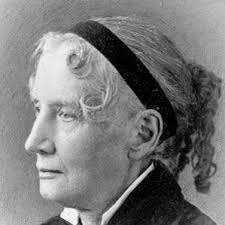
Here's a letter from Harriet Beecher Stowe to her sister, from the period during which Stowe despaired of having time to write Uncle Tom's Cabin, so involved was she in trying to get the attention of her plumber:
These negotiations extended from the first of June to the first of July, and at last my sink was completed.... Also during this time good Mrs. Mitchell and myself made two sofas, or lounges, a barrel chair, divers bedspreads, pillow cases, pillows, bolsters, mattresses; we painted rooms; we revarnished furniture; we--what didn't we do?And on the day she wrote this, she was called away from it, "for the fish-man... a man who brought me some barrels of apples... a book-man... Mrs. Upham, to see about a drawing I promised to make for her; then to nurse the baby... into the kitchen to make a chowder for dinner..."
....and then came the eight of July and my little Charley. I was really glad for an excuse to lie in bed, for I was full tired, I can assure you. Well, I was what folks call very comfortable for two weeks, when my nurse had to leave me...
During this time I have employed my leisure hours in making up my engagements with newspaper editors. I have written more than anybody, or I myself, would have thought. I have taught an hour a day in our school, and I have read two hours every evening to the children...
And yet the first installment of Uncle Tom's Cabin appeared the next year.
 While George Sand, whose marriage had gone stale, somehow managed to maneuver a situation where she could live in Paris, in male dress (which was cheaper and easier to maintain), for part of the year. Part of the deal was that she had to support herself (even though the money brought to her marriage was hers, it now belonged to her husband). So she did. As Moers reports it:
Once in Paris, she made contact with leading editors and writers....To learn her craft, she wrote alone or in collaboration numerous articles, tales, and novels.... A five-volume collaborative novel marked the end of her apprenticeship....next came Indiana....
The whole business took some fifteen months, only about half of which she was able to spend in Paris or devote to the literary life.... It took her friend Balzac, that dynamo of literary energy, about ten years to complete a similar apprenticeship in journalism and hack fiction.
After which one reads with hedonistic delight the arrangement that the invalid Elizabeth Barrett somehow wangled from her wealthy father and adoring family:
She wanted to do nothing but read and write; it has been estimated that her curiously convenient regime as an invalid gave her more time, daily, for those occupations than any other modern young person has ever enjoyed.
Somehow even in the invalid's hushed chamber, there pulses that Victorian impulse toward the superlative. And even here, much of what went on was this business of influencing and being influenced.
As we all are, I suspect, and perhaps particularly those of us who still write about the questions of love and life that continue to engage women readers.
Writers, do you weave yourself into a tapestry of mutual support and admiration?
And readers, are you interested in the lives and interrelationships of writers you enjoy reading?
And hope you can make it to my party tonight.
Wednesday, November 19, 2008
Great Buns! Parker House Rolls & other Eponymous Foods

There's something timeless about "grande dame" hotels. They possess a certain brand of elegance you no longer see in hostelries constructed of glass and steel with their monochromatic linens and minimalist furnishings. Where's the comfort in that? Give me the landlubber's equivalent of the Queen Mary (now a rather fun historical hotel permanently docked in Long Beach, CA), with lots of warm tones, polished wood, plush carpets, and afternoon teas with sterling silver flatware. Give me glamour. Give me faded elegance restored to its original lustre (or even a smidge on the tatty, much-loved side; that's okay, too). Give me a hotel with a past.
Or a repast.
One of the many reasons I loved to visit my maternal grandmother was because she served "Parker House" rolls at dinner. I never saw her actually bake any bread from scratch so I'm sure they came from an Arnold's or Pepperidge Farm package, but the rolls were warm and buttery and yummy. They would have been my equivalent of madeleines, but she baked those too. And those were from scratch.
In the past couple of months I've visited Boston a few times; I found myself in the Parker House Hotel on Yom Kippur, the Day of Atonement and the holiest day of the year for Jews, but right now all you really need to know about the holiday is that you're supposed to fast until sundown. I was hungry by afternoon's end, counting down the minutes, point-shaving, inventing rationales in order to eat sooner rather than later. If it's a cloudy day, does that mean the sun is already down? In any event, I had both motive and opportunity and was determined to break my fast with a first-ever, actually-from-the-source Parker House Roll.
I'm still touched by the fact that, after I explained why I wanted them (from anecdotal information about my grandmother to holy fast day) and took out my wallet, the hotel staffers didn't charge me for the rolls. They were kindness itself, which made the bread, gleaned from the courteousness of strangers, taste even more delicious.
I savored each warm bite, closed my eyes, thought of my grandmother, and let the bread melt on my tongue. It didn't disappoint. So I ate three more. And I have been thinking (and exercising) ever since about eponymous food and the origins of, and history behind recipes that have entered our collective culinary lexicon.
Boston boasts the Parker House Roll. And then there's its British cousin, the Sally Lunn Bun (sometimes called the Bath Bun) made famous at Sally Lunn's bakery in the oldest standing house in the city of Bath. The building itself dates to 1482, long before Sally arrived.
From Sally Lunn's website, we have the history of Sally and her famous creation, an adaptation of the manchet, or traditional English West-country yeast bread:

History - Sally Lunn, the original Bath Bun & the Oldest House in Bath
In a nutshell....
Sally Lunn, a young French refugee, arrived in England over 300 years ago. She found work at what is now known as Sally Lunn's House and began to bake a rich round and generous bread now known as the Sally Lunn Bun. This bun became a very popular delicacy in Georgian England as its special taste and lightness allowed it to be enjoyed with either sweet or savoury accompaniments. Many attempts have been made to copy our world famous Bun with little success. The story of Sally Lunn's House starts long before the arrival of Sally Lunn in 1680 - our museum shows the history of Bath's oldest house many hundreds of years before the current timber framed construction - when you visit you will see the Roman and Medieval foundations of the house and finds from excavations. You will also see the original kitchen that was used by Sally Lunn. You can see images of the museum in our photo gallery. The original 'Bath Bun' is in fact The Sally Lunn Bun – so which bun is which?
The Sally Lunn Bun is the Original Bath Bun.
It is a rich round and generous brioche bun’ similar to the historic French festival ‘breads’. Sally Lunn, a Huguenot refugee (perhaps better known as Solange Luyon) came to Bath in 1680 via Bristol after escaping persecution in France. In Lilliput Alley she found work with the baker and introduced her now famous light and delicate ‘bun’ to pre Georgian Bath. Sally’s fame, together with that of her bun grew and grew alongside that of the city of Bath. Versions of the Sally Lunn Bun can be found around the world in Canada, The United States, New Zealand and Australia. Further, even in the UK attempts have been made to copy the original Sally Lunn Bun. The original and very secret recipe is passed on with the deeds to Sally Lunn’s house and is still made by us by hand.
All things evolve and become copied over time. Recipes claiming to be similar to Sally Lunn buns can be found in publications dating back to early in the eighteenth century.
Elizabeth David, who wrote the definitive book: English Bread and Yeast Cookery in 1977, suggests from her extensive research that Sally Lunn Buns with their delicate and light personality “differed greatly from a version downgraded by bakers into the amorphous, artificially coloured, synthetically flavoured and over-sugared confections we know today. This London Bath bun should, I believe, be distinguished from the Bath Bun of Bath”
Notice the words "very secret recipe." They so taste like a giant brioche, actually, only less flavorful. Served "sweet" or "savory" depending on what you put on them, their very neutrality complements the taste of the accompanying accoutrements.
However, the Parker House Hotel's website offers the original receipe right online to their eponymous rolls, as well as the recipe for Boston Cream Pie, also a Parker House culinary invention. The pie, close in size to a cupcake, is delectable and tastes nothing at all like anything else I've ever seen masquerading as Boston Cream Pie, so beware of cheap imitations as they say.
 Parker's Restaurant, where Parker House Rolls and Boston Cream Pie originated
The original recipe for Parker House Rolls
Ingredients:
6 cups All-purpose flour
½ cups Sugar
2 tsp. Salt
2 pkg. Active dry yeast
1 cup Margarine or butter (2 sticks) softened
1 Large egg
6 cups All-purpose flour
½ cups Sugar
2 tsp. Salt
2 pkg. Active dry yeast
1 cup Margarine or butter (2 sticks) softened
1 Large egg
Method: (about 3 ½ hours before serving)
1. In large bowl, combine 2 ¼ cups flour, sugar, salt, and yeast; add ½ cup
Margarine or butter (1 stick). With mixer at low speed, gradually pour 2 cups hot tap water (120 degrees to 130 degrees F.) into dry ingredients. Add egg; increase speed to medium; beat 2 minutes, scraping bowl with rubber spatula. Beat in ¾ cup flour or enough to make a thick batter; continue beating 2 minutes, occasionally scraping bowl. With spoon, stir in enough additional flour (about 2 ½ cups) to make a soft dough.
2. Turn dough onto lightly floured surface and knead until smooth and elastic, about
10 minutes, working in more flour (about ½ cups) while kneading. Shape dough into a ball and place in greased large bowl, turning over so that top of dough is greased. Cover with towel; let rise in warm place (80-85 degrees F.) until doubled, about 1 ½ hours. (Dough is doubled when two fingers pressed into dough leave dent.)
3. Punch down dough by pushing down the center of dough with fist, then pushing
Edges of dough into center. Turn dough onto lightly floured surface; knead lightly to make smooth ball; cover with bowl for 15 minutes and let dough rest.
4. In 17 ¼ inch by 11 ½ inch roasting pan, over low heat, melt remaining ½ cup
Margarine or butter; tilt pan to grease bottom.
5. On lightly floured surface with floured rolling pin, roll dough ½ inch thick. With
Floured 2 ¾ inch round cutter, cut dough into circles. Holding dough circle by the edge, dip both sides into melted margarine or butter in pan; fold in half. Knead trimmings together; re-roll and cut more rolls. Cover pan with towel; let dough rise in warm place until doubled, about 40 minutes.
6. Bake rolls in a 400-degree oven 15-18 minutes until browned.
Yield: About 3 ½ dozen.

The Waldorf-Astoria Hotel, across the street from St. Bart's Church
Another "comfort food" I grew up with was Waldorf Salad, though I confess I've never had it from the source, Manhattan's Waldorf-Astoria hotel, still posh on Park Avenue (apart from the odd burst of gunfire, but we like to keep the tourists entertained).
Another "comfort food" I grew up with was Waldorf Salad, though I confess I've never had it from the source, Manhattan's Waldorf-Astoria hotel, still posh on Park Avenue (apart from the odd burst of gunfire, but we like to keep the tourists entertained).
According to the American Century Cookbook, the first Waldorf Salad was created in New York City in 1893, by Oscar Tschirky, the maître d'hôtel of the Waldorf Astoria. The original recipe consisted only of diced red-skinned apples, celery, and mayonnaise. Chopped walnuts were added later to this now American classic.
Waldorf Salad Recipe
Ingredients
1/2 cup chopped, slightly toasted walnuts
1/2 cup celery, thinly sliced
1/2 cup red seedless grapes, sliced (or a 1/4 cup of raisins)
1 sweet apple, cored and chopped
3 Tbsp mayonnaise
1 Tbsp fresh lemon juice
Salt
Pepper
Lettuce
1/2 cup chopped, slightly toasted walnuts
1/2 cup celery, thinly sliced
1/2 cup red seedless grapes, sliced (or a 1/4 cup of raisins)
1 sweet apple, cored and chopped
3 Tbsp mayonnaise
1 Tbsp fresh lemon juice
Salt
Pepper
Lettuce
Method
In a medium sized bowl, whisk together the mayonnaise (or yogurt) and the lemon juice. Add 1/2 teaspoon of salt, 1/4 teaspoon of fresh ground pepper. Mix in the apple, celery, grapes, and walnuts. Serve on a bed of fresh lettuce.
Serves 2.
What about you? What eponymous foods have tempted your palate over the years? Have you ever used any of them in a book? Or, have you ever created a fictional place and an accompanying specialty of the house for it?
Monday, November 17, 2008
Les Pavillons
The “getaway” spot has been a part of our culture for a long time. But what are we getting away from? Today, it is generally the city, and many people have some  version of a place they escape to on weekends whether it is a true second home or a tent site in a national or state park.
In the eighteenth century Les Pavillons were where courtiers would go to escape the crowds at the Versailles. The Pavillon de Hanover at left is one such example. These exquisite buildings could be found in the city or the country. They were of varying size, though generally much smaller than we would associate with the wealth of that period.
Pavilions fit between two Regency getaways: follies, usually seen on great estates, though pavillons were bigger and more complete domestically and the "rustic" hunting Bos ,though the French pavillons was more convenient geographically. Though pavillons were meant as an escape they were only an escape from the crowds and not from the comfort and elegance of the period. The interior salon at left give us a sample of the lifestyle, so differnt from Versailles where much of the time was spent standing (and looking for a bathroom)
In my WIP I wanted a small townhouse for the use of my hero’s mistress and found one Pavillon that suited my needs and taste perfectly. To move it to England I had my hero’s father, who had spent a great deal of time in France, hire the son of the orginal architect to build a version of it in London. Then the duke gave it to his "too serious" oldest son. My architectural resource is LES PAVILLONS OF THE EIGHTEENTH CENTURY by Jerome Zerbe and Cyril Connolly.
The pavillon I chose is the Pavillon Colombe located outside Paris. (see below) It was built in 1769, for three sisters of Venetian background, all actresses who abandoned the stage for marriage or lovers but retreated to the pavilion when the need arose. The original owner was the lover of Mary Catherine Colombe's (seen here in a painting by Fragonard). Whe he married, he allowed her the use of the retreat for the rest of her life. She lived to be eighty.
After the Great War, Edith Wharton purchased Le Pavillon Colombe and erstored it. It was her favorite residence after The Mount, her home in Lenox, Massachusetts. In 1979when this book was published the owners were the Duke and Duchess de Talleyrand who attempted to restore the interior to its original configuration.
I cannot find any information on its current status but it will be lovingly described in my next Pennistan book STRANGERS KISS
Architecture always distracts me, especially residential architexture. I have a book on tree houses but have not been able to fit that in a regency story yet. What bits of history do you want to share with your readers? And readers, what do you always want to know more about?
 version of a place they escape to on weekends whether it is a true second home or a tent site in a national or state park.
In the eighteenth century Les Pavillons were where courtiers would go to escape the crowds at the Versailles. The Pavillon de Hanover at left is one such example. These exquisite buildings could be found in the city or the country. They were of varying size, though generally much smaller than we would associate with the wealth of that period.
Pavilions fit between two Regency getaways: follies, usually seen on great estates, though pavillons were bigger and more complete domestically and the "rustic" hunting Bos ,though the French pavillons was more convenient geographically.
 Though pavillons were meant as an escape they were only an escape from the crowds and not from the comfort and elegance of the period. The interior salon at left give us a sample of the lifestyle, so differnt from Versailles where much of the time was spent standing (and looking for a bathroom)
In my WIP I wanted a small townhouse for the use of my hero’s mistress and found one Pavillon that suited my needs and taste perfectly. To move it to England I had my hero’s father, who had spent a great deal of time in France, hire the son of the orginal architect to build a version of it in London. Then the duke gave it to his "too serious" oldest son. My architectural resource is LES PAVILLONS OF THE EIGHTEENTH CENTURY by Jerome Zerbe and Cyril Connolly.

The pavillon I chose is the Pavillon Colombe located outside Paris. (see below) It was built in 1769, for three sisters of Venetian background, all actresses who abandoned the stage for marriage or lovers but retreated to the pavilion when the need arose. The original owner was the lover of Mary Catherine Colombe's (seen here in a painting by Fragonard). Whe he married, he allowed her the use of the retreat for the rest of her life. She lived to be eighty.
After the Great War, Edith Wharton purchased Le Pavillon Colombe and erstored it. It was her favorite residence after The Mount, her home in Lenox, Massachusetts. In 1979when this book was published the owners were the Duke and Duchess de Talleyrand who attempted to restore the interior to its original configuration.

I cannot find any information on its current status but it will be lovingly described in my next Pennistan book STRANGERS KISS
Architecture always distracts me, especially residential architexture. I have a book on tree houses but have not been able to fit that in a regency story yet. What bits of history do you want to share with your readers? And readers, what do you always want to know more about?
Friday, November 14, 2008
Mending the Bodice?
 I must admit, after all these years of reading romance—and more recently—of writing romance, I still wince when I see the term “bodice ripper.”
As historical authors, we bear the brunt of the stigma associated with this term. How many times have I heard historical romance writers, as the authors of the bodice ripper, are not serious writers, we write by formula (please, someone tell me what it is so I can use it), and that we have cardboard characters who swoon, fight and—well, you know—rip bodices?
I googled the phrase bodice ripper and found this discussion as the first link (from the Phrase Dictionary):
Romance Novels known as Bodice Rippers: “These books owe much in style to the work of English romantic novelists like Jane Austen and Emily Bronte. Nevertheless, the term itself is American. The first reference in print is from The New York Times, December 1980:
"Women too have their pornography: Harlequin romances, novels of 'sweet savagery,' - bodice-rippers."
It soon caught on and appears numerous times in the US press from that date onward. Here's an early example, in a story about [then] emerging novelist, Danielle Steel, from the Syracuse Herald Journal, New York, 1983:
"I think of romance novels as kind of bodice rippers, Steel says."
The genre is commercially highly successful, but isn't taken seriously by most literary critics. Most examples are judged by more base criteria than the classic works of Austen or the Brontes. Bodice Rippers are strictly formulaic and the plot usually involves a vulnerable heroine faced with a richer and more powerful male character, whom she initially dislikes. Later, she succumbs to lust and falls into his arms. The formula requires the books to be fat 'page turners', i.e. a plot device, usually a seduction scene, must happen at frequent intervals. Depending on the author or publishing house style, the principal characters must marry. It is virtually obligatory for the cover picture to show the swooning, ample-bosomed heroine.”
I’m sure Ms. Austen and the Brontes would be appalled. And Gasp! A romance writer helped define exactly what a bodice ripper is.
But thank heavens, someone made a decent current post on wikipedia (http://en.wikipedia.org/wiki/Romance_novel) all about romance as a genre, showcasing how many different lines of romance their really are, most of which do not fit the classic description of a bodice ripper as defined above.
I haven’t read a real bodice-ripping romance in years—except maybe a few recently where the heroine ripped her own bodice or she ripped the hero’s shirt. Different ball-game entirely. Yet the phrase “bodice ripper” persists, used by the uninformed and those who turn their noses up at what they think is romance. We are so much more than bodice ripper writers.
I was pleased to find this description of the romance genre in a crafts book.
From MAKING SHAPELY FICTION (by Jerome Stern):
“Writing successful genre fiction demands serious professional craftsmanship….It demands an understanding of such matters as optimum length, best ages for main characters, desired number of subplots, satisfactory endings and so forth….Some writers, though they neither enjoy nor know much about a genre will cynically try to turn out a romance…The effort usually ends up being a waste of time, their lack of belief in what they’re doing shows through. A sellable genre novel has to have its own freshness, its own originality, its own integrity . . .”
This was written in a book intended for “literary” writers and it’s one of the few discussions of genre where there’s no put down here, where bodice ripper isn’t even mentioned. This is refreshing.
The term will probably never go away, but maybe someday we’ll view it like we do those goofy outdated and often politically incorrect comic books from the 1940s.
In the meantime, what do you think it will take to mend the bodice? The abolishment of clutch covers? Or a new generation of readers who can’t remember Rosemary Rogers?
Thursday, November 13, 2008
Dumb Luck in a Box
I have a haphazard approach to research when I'm writing. It goes like this: look it up fast; if that fails, make something up and hope no one else knows either; prepare to duck. Sometimes, however, I'm right with bells on, and here's an example. This excerpt is from my March 2009 release A Most Lamentable Comedy:
I was pretty sure that my hero, Nicholas Congrevance, would have a box to keep writing things in. I was also pretty sure that it would have secret compartments for his emergency cash and other valuables in a life that demanded quick getaways.
 And then, lo and behold, I watched an episode of Antiques Roadshow where an 1805 writing box, by master designer Nicholas Middleton (with original label) was on show, a thing of marvelous complexity and beauty, with secret compartments. It looks nice enough although fairly simple when closed, but check out the video here.
Writing boxes, or portable writing desks, were useful things. They kept ink, pens, and paper in one place and provided a comfortable, sloped surface for writing. You could pick them up and take them to a warmer, or better lit part of the house, and you could also, of course, take them on the road.
 In the US, they were known as Jefferson boxes--this is Jefferson's, or possibly a reproduction of it--and with their cunning devices, springs, secret compartments, and usefulness combined with fine workmanship, they were the sort of item that would appeal to the presidential master-tinkerer. They were frequently made of exotic woods with stylish, delicate inlays.
 They could also be intensely personal items, used to store letters and other treasures. Here's a writing box, once owned by Darwin's first daughter Annie, who died when she was ten, and which her mother used to store these small, touching momentos.
Popular throughout the nineteenth century, the writing box became very sophisticated in design and function, tempting you to think of it as the precursor of the laptop.
 This is a box from the 1880s, made of American red oak, designed for shipboard travel and with an inbuilt calendar.
Here's a terrific source of boxes at hydra.com with some wonderful pictures. I would love to own one of these beautifully-crafted pieces.
Have you had dumb luck moments in writing? Or, do you want to make me jealous by telling me about the writing desk you own?
p.s. I'm over at the Riskies today talking about My Theory... about Regency fashion. Come and visit!
“Paris, then, sir? Or how about Vienna?”
I look up from my writing case, tossing billets-doux into the fire. “No. It’s been too long. I want to go home.” My fingers search for the hidden spring in the writing case, and with a quiet click the secret compartment opens.
Barton raises his scarred eyebrows as gold glints in the firelight. “Ireland?”
“No. England.” England. It must be the damn weakness from nearly drowning that makes me want to weep.
He shakes his head. “Well, I suppose no one knows you in England. It’s as good a place as any. Near twenty years since I was there, too. What shall we do there? The usual?”
I nod and lay a handful of coins on the table for the family who have saved my life and shared their meager food with us. It is the least I can do, for I plan to steal away before dawn.
“And your name, this time, sir?”
My name.
“My own name.”
He looks at me blankly.
“My name is Nicholas Congrevance.” It is a stranger’s name on my tongue.
“Yes, sir. Of course it is, sir.” He winks at me.
I was pretty sure that my hero, Nicholas Congrevance, would have a box to keep writing things in. I was also pretty sure that it would have secret compartments for his emergency cash and other valuables in a life that demanded quick getaways.
 And then, lo and behold, I watched an episode of Antiques Roadshow where an 1805 writing box, by master designer Nicholas Middleton (with original label) was on show, a thing of marvelous complexity and beauty, with secret compartments. It looks nice enough although fairly simple when closed, but check out the video here.
Writing boxes, or portable writing desks, were useful things. They kept ink, pens, and paper in one place and provided a comfortable, sloped surface for writing. You could pick them up and take them to a warmer, or better lit part of the house, and you could also, of course, take them on the road.
 In the US, they were known as Jefferson boxes--this is Jefferson's, or possibly a reproduction of it--and with their cunning devices, springs, secret compartments, and usefulness combined with fine workmanship, they were the sort of item that would appeal to the presidential master-tinkerer. They were frequently made of exotic woods with stylish, delicate inlays.
 They could also be intensely personal items, used to store letters and other treasures. Here's a writing box, once owned by Darwin's first daughter Annie, who died when she was ten, and which her mother used to store these small, touching momentos.
Popular throughout the nineteenth century, the writing box became very sophisticated in design and function, tempting you to think of it as the precursor of the laptop.
 This is a box from the 1880s, made of American red oak, designed for shipboard travel and with an inbuilt calendar.
Here's a terrific source of boxes at hydra.com with some wonderful pictures. I would love to own one of these beautifully-crafted pieces.
Have you had dumb luck moments in writing? Or, do you want to make me jealous by telling me about the writing desk you own?
p.s. I'm over at the Riskies today talking about My Theory... about Regency fashion. Come and visit!
Subscribe to:
Posts (Atom)