Wednesday, July 14, 2010

The Evolution of the Rake


This summer I had the fun of serving as an historical production adviser on Porchlight Theatre's production of Les Liaisons Dangereuses. This past weekend was closing weekend, and I saw the show twice, two last chances to savor the richness of the story and this wonderful production. In many ways elements of the play (based on Pierre Choderlos de Laclos's scandalous epistolary novel of the same name published in the 1780s in the lead up to the French Revolution, which gives this post a Bastille Day tie in) are not unfamiliar to historical romance. In fact, watching the play opening weekend, it occurred to me that I was seeing the prototype of the current historical romance hero. A rake sets out to seduce a beautiful, virtuous woman. He eventually wins her, but finds he has become emotionally entangled with her himself.

It sounds not unlike the plot of Georgette Heyer's Venetia. Save that in the case of Les Liaisons Dangereuses, despite falling in love with the woman he pursues, the rake gives her up to win a game of seduction with his ex-mistress whom he is also pursuing and with whom he also has complex emotional ties. And while he pursues the virtuous Madame de Tourvel, the rakish Vicomte de Valmont is also seducing and having an affair with the fifteen-year-old daughter of another ex-lover. (As my friend Penny Williamson pointed out when we saw the play, the text leaves open the possibility that Valmont is Cécile's father). If Valmont does in the end realize that his life is worth nothing without Madame de Tourvel, it's only after he's cruelly tossed her aside. He dies in a duel. She dies in a convent. Not exactly the stuff of today's romance novels.

All of which got to me to pondering when the rake evolved into a hero. To my knowledge, the classic rake first makes his appearance in literature in the Restoration era. Millamant in Congreve's The Way of the World and Charles Surface in Sheridan's School for Scandal both have rakish pasts, but they don't indulge in rakish behavior in the course of their respective stories. The more typical literary rake seems to be Valmont or Lovelace from Richardson's Clarissa, who cross lines no romance hero could. If they ultimately come to regret their behavior, it's only after they've done far too much damage to achieve a happy ending.

On the opera stage at much the same era, Don Giovanni boasted of his conquests and was dragged down to hell, unrepentant (and immune to love) until the end. Count Almaviva, of the Beaumarchais trilogy and the Mozart and Rossini operas, not only remains a rake after his marriage to the girl he supposedly adored, he is distinctly less intelligent than his valet Figaro (which, at least to me, makes him distinctly less sexy). A few decades later, Pushkin's Eugene Onegin, rather than seducing the innocent young girl who falls in love with him, callously spurns her. He then flirts with her sister, leading his friend, the sister's fiancé, to challenge him to a duel, in which Onegin kills his friend. Years later, Onegin sees Tatiana, the girl he spurned, now a beautiful and very married woman. He decides he wants her, only to be spurned himself.

What degree of sexual experience Jane Austen's heroes possess remains open to question, but none of them are rakes. The rakes in her novels, Willoughby and Wickham, are hardly figures of romance. They may not be as devious as Valmont, but they are equally oblivious to the damage they may do. The early Victorian era offers Charlotte Bronte's Mr. Rochester, who has an acknowledged libertine past. Rochester, of course, always intends to marry Jane Eyre not seduce her. Except that he's already married, so morally (particularly given Victorian morals) the effect is the same. Unlike Valmont and Lovelace, however, he doesn't plan to seduce and abandon Jane. Which perhaps is why Rochester achieves a happy ending. He's also a much more romantic figure than his literary forebears.

Many of Georgette Heyer's heroes are rakes, though one of her earliest and most classic rakish heroes, These Old Shades's Justin Alastair, Duke of Avon, was actually the villain (under a different name) of her first book, The Black Moth. Today's romantic heroes have libertine pasts more often than not. And at times they, like Valmont, set out coldly to seduce the heroine, only to be caught by love to their own surprise. But they don't wreak as much destruction and they manage to live happily ever after. In some ways the evolution of the rake is similar to that of vampire characters. From destructive (if sexy) villain to romantic hero.

What are some of your favorite literary rakes? Do you prefer the rakes of today's romances who are able to live happily ever after or the less idealized ones like Valmont? Could Valmont or Lovelace be a romance hero and have a happily ever after? Why or why not?

Monday, July 12, 2010

The Lady's Stratagem: Washing the Hair


One of my latest acquisitions is The Lady’s Stratagem: A Repository of 1820s Directions for the Toilet, Mantua-Making, Stay-Making, Millinery & Etiquette. It’s a wonderful book that reprints sections of antique guides on all of the above topics. One of my favorite sections is about personal hygiene. Everything from caring for your teeth to recipes for makeup to directions for bathing (a subject upon which period authorities seem to have been strongly divided, which might explain why so many of us are confused).

A wonderful example of this schism of opinion can be found in the sections featuring arguments for and against washing your hair. The Toilette of Health, Beauty and Fashion is decidedly against the practice, claiming that washing your hair frequently results in “head-ache, ear-ache, tooth-ache, and complaints of the eyes” and ends its commentary with the precept: “Wash the hands often, the feet seldom, and the head never.” The Duties of a Lady’s Maid on the other hand actively promotes the washing of the hair, and says quite saucily: “Some persons have a strong prejudice against washing the hair . . . were this prejudice confined to the ignorant and illiterate, I might pass it over without notice; but as it is put forth in books, and under authority of professional men, it requires to be exposed and refuted . . .” it goes on to state that frequent washing of the head with tepid water prevents the exact same ills that the other source claims results from the practice.

What did a lady do if she did not wash her hair? There seems to be quite a lot of combing of the hair with ivory combs to remove oil and “scurf” (dandruff?) and severe admonitions against the use of a metal comb, as it breaks the hair. There are directions to wipe your hair down with dry towels, or with linen during summer to remove moisture and perspiration. And there are directions for the use of egg-yolk to de-grease the hair: “Take the yolk of a raw egg. Moisten your hand with it, pass it over your hair several times, them comb with a fine comb.” Can you imagine?

I can see a character having great fun (and trauma, a la Anne of Green Gables) if she were to get her hands on one of these books.


Friday, July 9, 2010

The long arm of research


It’s surprising where research for an historical romance can lead! I’m now writing a western set in 19th century Oregon about a man who wants to try wheat farming (yes, there’s a love story, but research about wheat came first).

Wheat has been grown for at least 7000 years -- not for fun, but for survival. Wheat is ground into flour which makes bread which feeds people; were it not for wheat civilization might have petered out thousands of years ago.

Not only can wheat be eaten, it can be stored for food during winter and as seed for a new crop in the spring. Villages developed where land was available to grow wheat. Bronze tablets dating from the 9th century B.C. show the grinding of wheat and bread-making in Assyria. Ancient Egypt grew wheat, aided by its network of irrigation canals, which demanded organization and supervision.

Growing food led to trade, development of language, mathematics, and business and diplomatic relations with other villages and later nations. . Today, wheat is the world’s number one farm crop, from the poles to the equator, from sea level to the Himalayas. There are thousands of wheat strains; some suited to heat, some to cold, wet, drought, you name it.

So what’s that got to do with my romance set in Oregon? In the Old West, wheat was the most popular cereal grain grown by American farmers. In the early 19th century methods of growing and harvesting had progressed little since the days of the Assyrians and the Egyptians. Farmers, then, were used to hand labor. Mechanization was almost nonexistent

Wheat growers harvested their crops with a sickle or a scythe, cutting their way through the stalks while others followed to collect the bunches of grain and bind into sheaves. It was hot, sweaty, dusty, back-breaking work. Things improved when a cradle was added to the scythe, the curving fingers of which caught the grain as it was cut, leaving it bunched and easier to tie into bundles. Still, a strong and experienced man could cut only two acres of wheat a day.

Separating out the grain kernels was even more primitive: either a farmer beat the wheat with a flail or had his cattle tramp again and again over the wheat heads. When only 15, Cyrus McCormick invented a lightweight grain cradle, with which he could keep up with the older men in reaping, and that was the beginning of mechanized wheat production. Later, McCormick’s invention of the reaper changed harvesting forever.

The first reaper was a two-wheeled, horse-drawn arrangement; blades clipped the stalks close to the ground and a rotating wheel pushed it into the cutting blades and then back onto a platform as it was cut. But that was in Virginia. What about Oregon?

The mechanical reaper opened the floodgate and new machines poured into the farming areas. By the mid-1880s, a single Oregon farmer could handle vast acres of wheat.

Wheat flourished in the Willamette valley, despite the lack of a local market. It was expensive to ship down the river or overland, and by 1863 attention focused on the railroads, in particular a rail line connecting Portland to San Francisco. During the Gold Rush, when mining towns were provisioned by farmers in the Rogue River and Umpqua Valleys, long trains of pack mules carried loads of flour from the mills. Later gold strikes in Oregon quickly built small cities and by 1870, a wheat-consuming population created a healthy demand for flour and wheat-farming took off.

By 1867 Oregon flour was known as the highest priced and best flour on the New York market. That year, $149,065 worth of flour moved from Portland to California, where it sold for $5 a barrel. At the gold mines in California markets, it brought up to $25 per barrel. Exported wheat even reached the East Coast by a circuitous route: by ship from Astoria, Oregon, to Boston by way of the Hawaiian Islands.

The highlight of the wheat-farmer’s year was the harvest. When the stalks turn yellow and the kernels have fully dried out, wheat is ready to be harvested. Old-timers cut wheat using a scythe. The cut wheat was then “stooked,” or gathered by hand into sheaves. These were then brought in from the field to the threshing area, laid out on a canvas or tarpaulin, and beaten with a flail until the wheat separates from the straw. It’s still full of chaff, the fibrous outer shell of each kernel on the head, and for this the farmer needs a windy day and a lot of help. In ancient times, people tossed the wheat into the air, and - because wheat is heavier than chaff, it falls to the ground and the chaff is blown away.

Using the hand-flailing method, it takes 1 - 2 hours to gather a gallon (4 stooks) of finished wheat, which can yield anywhere from 8 to 60 bushels of wheat per acre, depending on weather, disease, rainfall, etc. etc.

After inventing the reaper in 1831, McCormick kept tinkering and improvements in farm machinery increased. These included a wire binder. Adding a binder to the reaper, pulled by four horses, a farmer could cut widths from 6 to 8 feet and dump the wheat onto a revolving canvas belt which carried it into a tying mechanism. When a certain amount of wheat was gathered, a needle was tripped which sent a long curved metal arm around the stalks and knotted it with twine.

One or two men called shockers speared the bundles with a pitchfork into shocks, five or six bundles standing upright by themselves. The bundle wagons then moved onto the field and two men pitched the bound grain onto the flat beds.

In the latter part of the 19th century, wheat farming became even more mechanized with the labor-saving threshing machine. Each year threshing crews moved from farm to farm, feeding wheat bundles into a threshing machine, usually set up in the farmyard. Here the grain was separated, the chaff flying out one end and the grain funneled out the side to sack-sewers, who bagged the separated grain and needle-stitched the gunnysacks closed at the top.

And at harvest time, when threshing crews appeared on farmsteads and the farm women cooked and served them three hearty meals each day, romance could bloom . . .

Friday, July 2, 2010

"I'm in the Romance Business..."

Well, duh.

Except the quote isn't from me or any of the usual suspects.

It's from the brilliant 20th century American pop composer and lyricist Frank Loesser, who wrote Guys and Dolls, which lots of people (including maybe me) think is the most perfect Broadway musical ever, and whose music and lyrics have taken permanent residence in my romantic imagination, and whom I'm sure is partly to be thanked or blamed for getting me into the business as well.

Tuesday was the hundredth anniversary of Loesser's birth, and the excellent folks at NPR did a lovely job commemorating it. I got my title quote from Fresh Air's Terry Gross's conversation with singer/pianist Michael Feinstein about Loesser's life and work (listen to it here and also check out the written info and links). And when Gross asked Feinstein to sing a Loesser song to close the interview, and he chose perhaps most the swooningly romantic one of all of them, "I've Never Been in Love Before" -- he introduced it with that line of Loesser's.

Unaccountably, Feinstein's performance isn't completely on the otherwise terrific Fresh Air link. But here's the great jazz musician Chet Baker doing it. I couldn't find a way to cut and paste the lyrics, which perhaps means I shouldn't, legally -- but you can read them here. As Feinstein says, they're simple. Gorgeously simple, a perfect capsule romance moment: the smart, witty, hitherto self-possessed lover (I thought my heart was safe/I thought I knew the score) newly and utterly humbled and transformed in the instant of emergent passion.

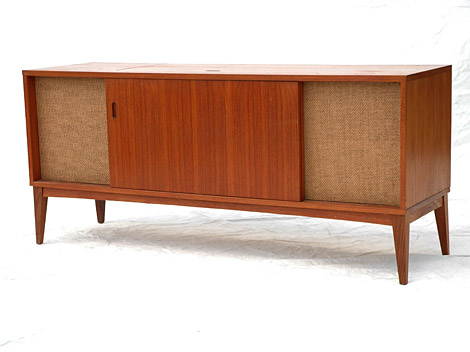
I'm listening to it right now via mp3, but I'm hearing it with the ears of my eleven-year-old self on the living room floor in front of on my parents' state-of-the-art stereo in its Danish Modern cabinet. An eleven-year-old who, needless to say, hardly "knew the score" (I didn't know anything except perhaps my own desperate desire to be that wonderfully wise and worldweary and yet that newly innocent. Mixing memory and desire again: no wonder I've always found "time-travel romance" a redundant concept).

Moving the phonograph needle back and forth over certain favorite tracks, the eleven-year-old wore down the vinyl of the 1950 RCA-Victor original cast recording as she soaked in a little romance-writer craft.

But this is wine
That's all too strange and strong
I'm full of foolish song
And out my song must pour

Since then, I've heard romance writers advise that metaphor is a good way to "heighten" emotional effect.

True enough, but there's more to say here.

Metaphor is language charged with energy. The effort to travel from point A to point B in the mind -- to make the link, let's say, between falling in love and getting tipsy -- finds its home in the words the mind finds itself shaping. Not because the lover intended to hype up the language at that moment, but because the work of making the connection, like an electrical current, took charge of the language -- transforming it as it flowed through it, and shocking everyone, most of all the astonished speaker/singer/lover.

"Physics for dummies," I call this sort of thing nowadays when I give erotic writing workshops: Because the best metaphors (or perhaps all of them) are instances of language involuntarily leaping out from somewhere not quite perceptible -- the capillaries, the forces binding the atoms of feeling and speech. In ecstasy (from the Greek for displacement).

The strange, strong wine of "I've Never Been in Love Before" would have been quite enough for one besotted pre-adolescent. But in happy fact it doesn't come by itself. It's the third element of a triptych of songs sung by the play's wonderfully, classically mismatched pair of lovers (straitlaced Salvation Army missionary Sarah Brown, and suavest of Broadway lowlife gamblers, Sky Masterson):

The first song, "If I Were a Bell," is comic, happy, ditzy. Ask me how do I feel, demands a slightly tipsy Sarah, emerging from her cocoon of pious rectitude to answer the question itself -- again and again, from simile to exuberant (if still conditional) simile: if she were a bell, a gate, even a salad splashing her dressing. Not quite ecstatically metaphoric yet, but wonderful nonetheless -- check out Doris Day doing it (from before -- as the wit Oscar Levant put it -- she was a virgin). And read the lyrics here.

The second (and my lifetime favorite) is "My Time of Day," Sky introducing Sarah to Broadway at four AM, "a couple of deals before dawn." This one (since I know it by heart), I will type out in its short, spectacular entirety, for anyone who loves big cities, rain-washed pavement, the intimacy of empty streets, the miracle of shared solitude.

My time of day is the dark time a couple of deals before dawn
When the street belongs to the cop and the janitor with the mop
And the grocery clerks are all gone

When the smell of the rain washed pavement
Comes up clean, and fresh, and cold
And the street lamp light fills the gutter with gold

That's my time of day, my time of day
And you're the only doll I've ever wanted to share it with me

Here's Peter Gallagher doing it, from a "making of" TV show about the 1992 Guys and Dolls revival and album.

In the play, as in the Gallagher clip, the song ends by Sky bursting out, "Obediah. Obediah Masterson, that's my real name." To which he adds, wonderingly, "You're the first person I ever told it to."

I've always loved the moment when you're finally able to share a secret, as well as give a name to a passion. And though at first I thought that the scene in my Almost a Gentleman -- after David learns Phoebe's real name, and wanders (ecstatic, transported) through foggy, gaslit London streets -- was inspired by "Maria" from West Side Story, it seems clear enough now that "My Time of Day" had quite as much to do with it.

Perhaps because it's about sharing a secret, for many years I thought this song was my special secret. But as I learned (also from NPR), "My Time of Day" was Loesser's favorite too. (And I notice today, for the first time, that the smell of rain-washed pavement made it into my novella, "A House East of Regent Street" as well.)

How about you?

Do you cherish a secret passion for musicals? (Or not so secret, maybe, since the advent of Glee-- not to speak of that great moment in TV history, Buffy: The Musical.)

Which are your favorites? (Because although I coyly asserted that Guys and Dolls might possibly be the most perfect Broadway musical, I wouldn't feel right without a mention of West Side Story or Carousel)

And did you know that Frank Loesser, who wrote some 700 songs, wrote at least two that I half unconsciously believed had simply always existed in nature -- "Heart and Soul" and "Baby, It's Cold Outside," (performed deliciously by Loesser and his first wife Lynn here and transcendantly by Ray Charles and Betty Carter here). Any other Loesser favorites?

And do you feel the same deep connection between song, metaphor, and romance that I do?

Wednesday, June 23, 2010

Midsummer Nights


Happy Midsummer (or just after Midsummer). Today was close to the longest day of the year, and I spent close to five ours of it absorbed in San Francisco Opera's fabulous production of Die Walküre. Not precisely a midsummer opera, though it does include some glorious music about spring. A couple of years ago, I gave a Midsummer Night’s Dream party (what’s more fun than a party with a Shakespearean theme?). Rushing around doing party prep, I was listening to Stephen Sondheim’s A Little Night Music (one of my favorite musicals), and I found myself thinking about the allure of stories set on midsummer nights.

Shakespeare created a brilliant template with A Midsummer Night’s Dream. Under a midsummer moon, lovers find and lose each other, friends become enemies and back again, lines are blurred between classes and between fairies and mortals. Until recently, I didn’t realize how much one of my favorite plays and movies, The Philadelphia Story, owes to A Midsummer Night’s Dream. There’s the estranged/divorced married couple, the pre-wedding setting, the characters falling in love (and blurring class lines) under influence of a mind-altering drug, whether it’s the juice of a rare flower or Pommery champagne. Philip Barry even sets the play on midsummer night and explicitly refers to it by having Tracy’s younger sister Dinah say “it’s supposed to be the longest day of the year or something” (to which Tracy, coping with the escalating complications of her wedding day, replies, “I wouldn’t doubt it for a minute.”).

Then there’s A Little Night Music and the movie upon which it is based, Ingmar Bergman’s exquisite Smiles of a Summer Night. Once again lovers change partners beneath a midsummer moon (beautifully evoked by a waltz among birch trees in the opening of A Little Night Music). But while the majority of the lovers in A Midsummer Night’s Dream and The Philadelphia Story end up back with their original partner (Demetrius being a notable exception) in A Little Night Music/Smiles of a Summer Night, the majority of the lovers change partners and end the story with the new partner. One might say that the events of the night help Frederik recover from the madness of his love for his child-bride Anne and back to his far more real love for his former mistress Desirée. “A coherent existence,” as Desirée puts it. Frederik, like The Philadelphia Story’s Tracy Lord, finds his eyes opened in the course of a midsummer night’s adventures.

Beneath a Silent Moon offers my own take on the midsummer night theme. I actually scoured A Midsummer Night’s Dream for quotes when looking for a title. for the book but couldn’t find one my publisher and I agreed on. I love Beneath a Silent Moon as a title (it was a suggestion of my agent, Nancy Yost) because while it isn’t a quote, to me it conjures up the moon imagery which is so prevalent in Dream. Perhaps not surprisingly, my version of midsummer madness includes lots of spies, smugglers, and secret meetings beneath a silent moon. But the elements are still there. Lovers find and lose each other, partners change, old loves are rekindled. Lovers and lunatics seem not so very far apart. “Love isn’t sensible,” Quen tells his former lover. “Love’s a fire that can’t be contained. Until it burns itself out.”

Writing this blog post, I realized Beneath a Silent Moon even offers it’s own dark twist on theme of a wedding party. Charles and Mélanie aren’t precisely estranged, but they are certainly struggling to define the dynamics of their marriage. And there’s a birch coppice which serves at the setting for midnight adventures, my own homage to the birch wood in A Little Night Music.

At the end of the book, Mélanie thinks, somewhat ironically, of the end of A Midsummer Night’s Dream. 'Jack shall have Jill; Nought shall go ill'. I think that Charles, like Tracy and Frederick and Titania waking from enchantment, finds his eyes opened in the course of the story.

Do you like stories with midsummer settings? Any favorites? If you've written a book with a midsummer setting, how did the setting impact the story?

Monday, June 21, 2010

HISTORICAL romance vs. historical ROMANCE

I was recently talking with a group of fellow historical writers and was pretty much flabbergasted to find that I was the only one who finds the seemingly endless supply of anachronistic sleepwear bothersome. One writer was willing to go to the mattresses in defense of the red silk nighty. She said that even though she knows it’s “wrong”, it says “sexy” to a modern reader in a way that nothing else can.

I find the entire concept depressing. The idea that accurate history is somehow not sexy enough, that it must be embellished and modernized in order to appeal to readers, verges on the insulting. I find it especially distressing that people would choose such specifically egregious errors to latch on to (it’s as though they’re throwing up their hands ecstatically and saying Sophia Coppola was right, what readers really want is a modern girl in a Halloween costume and high tops; stop jamming history down their throats!).

To me, it seems ridiculous to even bother writing “historical fiction” (be it romance, mystery, whathaveyou) if the “historical” part is optional. I know, I know . . . in Romancelandia a lot of the history has become optional: our characters are abnormally clean, have perfect teeth, and somehow our heroes never have the ridiculous haircuts that were in vogue for their age (has anyone ever written or read a medieval hero with a bowl cut?). Is a man with Fabio-locks in the Middle Ages any less offensive than a red silk nighty in Regency England? I think they’re both problematic, both a betrayal of the entire point of the genre, but clearly my perception of the genre as HISTORICAL romance is not universal. My friends, I think, view it as historical ROMANCE (I’m guessing these types of books are the ones so often labeled “wallpaper historicals” in reviews and reader discussions; the label is used pejoratively, but clearly their strong showings on “the lists” backs up my friends in their assertion that readers like this sort of thing).

Today I’m going to take a look at the different types of anachronisms I see in books, and because I think it unfair to point the finger at others, I’m going to use my own books and mistakes as fodder.

WORDS & LANGUAGE

There are a lot of different ways in which words and language might be anachronistic. Firstly there are words for concepts, ideas, and things which simply didn’t exist. I can say my hero is “enchanted” by the heroine, but I shouldn't say he is “mesmerized” (the word comes from the name of a specific man and he had not yet come to fame during the period in which my books are set).

Now, to further muddy the waters, lets say I’ve shifted back in time and/or moved my book to a non-English setting. Is it now ok to say he’s mesmerized? I would argue that it might be, since the writer has an entirely different set of rules. Now it’s even more about making the dialogue *feel* authentic to the setting and characters, but the burden of being limited to historically accurate words is basically gone. By no means is this an easier challenge for a writer however. In fact, it might be harder.

There are also words that *feel* period but aren’t. For example, I think “hellion” and “mount” (as a synonym for horse) both feel appropriate to the Georgian/Regency era, but they aren’t. They are both Victorian. Conversely, there are words (or names) that are period, but somehow feel anachronistic: the name Skyscraper for a horse. It’s just so wrong, and I’d never use it in a book, and yet, it’s perfectly period: Skyscraper won the Derby Stakes in 1789.


CONCEPTS & IDEAS

This can be a hard one. So many of the things we say and do everyday are based on the technology we’ve grown up surrounded by: Photographic memory, replay, steamrolled, derailed. There’s also all the self-help, introspective stuff we get from psychology (oh the ego of the man!), not to mention the scientific discoveries (honestly, he behaves like a Neanderthal!). So many ways in which we think about ourselves, others, and the way we experience the world are modern. Finding a historically appropriate way to express the same idea can be a challenge.


THINGS & FACTS

This can be both the hardest and the easiest thing to get right.

It’s hard because in order to get it right, you have to do a lot of research, and the odds are high that even if you do, some basic thing will trip you up: Scones, for example. Did you know that scones are Victorian? I surely didn’t. What’s more basic and English than a scone? *sigh* Long after my second book came out (where the heroine happily eats scones for breakfast) I discovered that a “sconce” in 18th century England is a bannock (a hard, fried oat cake), not a soft, fluffy muffin-type thing. Mea culpa, mea culpa.

But it’s also the easiest one to get right, at least within reason. Some things are basic, or factual. The law is the law. Forms of address haven’t changed. New World food stuffs simply didn’t exist in Europe before the end of the 15th century.

This is the category that our red silk nighty goes in. It’s not as if even the quickest survey of historical sleepwear wouldn’t show you that it’s white linen, white linen and yet more white linen (and it’ a basic t-shaped garment, not a Frederick’s of Hollywood slut-gown with lace and slits). So, getting this detail wrong shows one of two things: either the writer literally did NO research, or this is a willfully chosen anachronism (which I find hard to overlook and forgive). In this same category, you find the missing stays/corsets, the Regency heroine’s chocolate bon bons, medieval knights eating potatoes while their flowing Fabio-locks swirl about their shoulders, bastards inheriting English peerages, earls who are addressed as ‘you grace” . . .
MADE UP THINGS

There are some things which authors make up which are not anachronisms, but do seem to freak out many would-be authors because they are supposedly “afraid to get it wrong”. Here I’m talking about things like titles and businesses. Endless amounts of time gets spent (dare I say wasted?) on the various discussion loops I’m on batting these things around. How we pick titles and names for our characters seems to mystify—and frighten—people. Even worse, some writers are actually afraid to make up a small detail like a shop! If I need a shop and I don’t know of a famous example, I *gasp* MAKE IT UP! And guess what, I’m not damaging history or the authenticity of my book one jot by doing so. We all make up characters and give them imaginary titles and estates and family histories (sometimes even making them related to real people). Given this breach of reality, I have no problem simply making up an inn, or a book shop, or a tailor.

IN CONCLUSION

Perhaps I’m being ridiculous, but the willfully chosen error just gets under my skin and itches like mad! There’s something demeaning about it, something dismissive. Something about it says: It was too much trouble to find a way to make my vision/story work within the framework of history, and rather than alter my vision/story, I chose to alter history instead.

Am I insane? Am I being too picky? I understand that mistakes will happen, errors will slip though, but should I also be more accepting of the willful (or blatantly sloppy) anachronism? Perhaps I simply don’t see eye to eye with other authors about which details matter and which ones don’t? Are HISTORICAL romances and historical ROMANCES simply entirely different types of books? I’m still not sure, but I’m beginning to guess that my goal of creating HISTORICAL romances might not be shared by some of my friends . . . and maybe I just need to learn to be ok with that.

What do you all think? Are there really two distinct types of historical romance, and if so, does it matter to you to know which type you’re getting?


Thursday, June 17, 2010

Prejudice and pride


My first encounter with prejudice occurred when I was in high school and a girls’ organization I belonged to blackballed an applicant - not because she was Japanese, but because she was Catholic!

I attended an ethnically-mixed California public high school; the student body was a combination of Japanese (some Chinese), Mexican, and Caucasian kids, all of us Americans. What prejudice was I aware of? (1) Jealousy of the Asian kids because they tended to get superlative grades; (2) In-fighting among the Caucasian kids over status and who wore Lanz dresses and circle skirts; and (3) Envy of the manly Mexican “pachukos,” whose jeans hung around their hip bones and whose t-shirts sported cigarette packs rolled up in one sleeve.

Which brings me to the subject of my current work in progress: Chinese immigration in the 19th century and the extreme reaction of the indigenous (which included a large number of Mexicans) population. Yes, the Chinese “looked” different ; but so did the dark-skinned Mexicans; the Negroes, who found their way west following the Civil War; and the occasional off-the-reservation Indian. Americans were (are?) a woefully rascist people.

The Chinese laborers who flocked to the west on ships that were allowed to debark passengers only at the “mail docks” endured considerable discrimination in the “land of the free.” Chinese had been reported in the sleepy Mexican trading village of Yerba Buena (later San Francisco) in 1838. When gold was discovered at Sutter’s Mill in 1848, the U.S. government simply took over tracts of land from Mexico’s northern territories, and Chinese miners flocked to the diggings.

Most original pioneer Chinese were merchants and traders, but in the mid-1800s the fabric of Chinese society was unraveling and thousands of starving Chinese men flocked to America. Not many women, however; wives were left at home, were sent money, and were occasionally visited by their husbands, who were shortly off to America again to earn a livelihood.

These men were desperately poor and formed crews of laborers which the resident Americans called “coolies.” Most came on a “credit ticket” and served under bond for years to pay back their fare. They lost no time scraping a living any way they could and soon earned a reputation for being hardworking miners, canny merchants, and extraordinarily industrious, efficient, and courageous railroad crews who blasted through the Sierra Nevada mountains laying tracks to connect to eastern lines.

Other Chinese immigrants became fishermen, but they were resented by hostile Italian immigrants who dominated the California markets. Some Chinese became farmers, and a network of peddlers sold vegetables from house to house; some cultivated fields of strawberries as sharecroppers, tended orchards, and managed farm properties. They picked grapes, made wine, picked cotton and hops, tended livestock, and harvested wheat. In so doing they incurred the resentment of their American farm bosses because in some cases the Chinese knew more about farming than they did!

Conflicts were inevitable; white bosses tended to exploit Chinese workers; businesses resented the fact that their employees sent wages back to China instead of spending money here and boosting the economy. Discipline was extremely harsh and included whippings. Miners were driven off their sites. Attacks against the Chinese became common, and they had no recourse.
The 1854 law which said, “No Indian or Negro shall be allowed to testify as a witness in any action in which a white person is a party,” was extended to include “Chinese and all other people not white.”

Women were another problem. The earliest Chinese immigrants were well-to-do merchants who brought their wives with them. The poorer laborers, who came later, could not. Consequently, immigration of Chinese females was limited primarily to women who walked the streets and sold their bodies. Proper merchants’ wives were rarely seen in public. As a result, a “Chinese woman” was most often thought of as a whore. Brothels flourished, and resentment against the Chinese increased. Their children were denied access to public schools; adults could not become naturalized citizens. Chinese businesses were taxed and harassed.

Pro-Chinese forces supported Chinese rights; anti-Chinese political groups proliferated. In the 1870s, one organization went on the rampage, committing random murders, setting fires, fighting with police. It was not a peaceful time. And the cause? Partly plain old rascist discrimination, coupled with resentment of the Chinese originated in simple economic competition. Add to this dislike and disapproval and...

Looks as if I’ve got the background conflict for my work in progress!

Source: Genthe’s Photographs of San Francisco’s Old Chinatown, by John Kuo Wei Tchen.