Wednesday, December 10, 2008

Historical Saints and Sinners (or not!)


One of my mother’s favorite expressions is “Spoiled by a damned eyewitness!” which she gleefully utters when a person explodes an apocryphal anecdote about someone or something by contradicting a widely accepted version of events, then remarking that they were present at the time. The eyewitness naturally goes on to insert his or two cents on what really happened.

My research for my current historical nonfiction manuscript on notorious royal marriages has yielded several of these “spoiled by a damned eyewitness” moments, and I live for them! Some of the scandalous love affairs (which eventually became marriages, or the subject of judicial review) that I profiled in ROYAL AFFAIRS, my maiden voyage into nonfiction, will be revisited in my book on notorious royal marriages. It seemed egregious to omit them, merely because I’d mined some of the same territory in an earlier book (never expecting that I’d eventually get a contract to write a companion volume).

As an example, George IV’s two exceptionally notorious marriages could not be ignored just because I’d taken a different slant on them in a previous book. And in my decision to include a handful of rewritten entries bolstered by new and additional research, I figured I was in relatively good company; during the past couple of years I’ve read quite a few historical biographies that are updated and revised editions of an author’s prior tome on the same subject.

Having a much longer deadline for this wip (which still feels too short!) than I had for ROYAL AFFAIRS (a whirlwind of less than six months to research and write the ms.) has enabled me to discover additional sources. No wonder historical biographers love to revisit their old friends when they discover something new about them—material that contradicts the long-held theories about who a given person really was. I have no interest in agendist or apologist biographies (which too often inappropriately impose 20th and 21st century constructs and mores on a subject). However, I love finding primary source material that had not been included in other biographies, and which shines a different colored gel on that subject. . . .


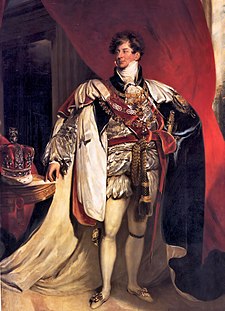
Which brings us back to saints and sinners. Since I can’t get them out of my mind, I’m eager to share a few of my recent discoveries about the two wives of the man who would become George IV, the big—and I do mean big—guy at the top of that sainted period known as the Regency, that kinder, gentler era (hah!) that was filled to the rafters with sinners of all stripes (and at the top of he heap was the bigamous Prinny).


The “Saint”
History tells us that the twice-widowed Maria Fitzherbert was a devout Catholic, patient as Griselda, maternal as Mother Teresa, and as long-suffering as Niobe. And certainly, George was awful to her, as were several of his cronies in Parliament, particularly Charles James Fox who vociferously denied the reality of her December 15, 1785 marriage to the Prince of Wales in a thundering oration delivered in the House of Commons. He lied because the prince had literally crossed his heart and vehemently denied that a wedding ceremony took place. Of course, to have done so would have cost him the crown. His clandestine wedding to Maria, while “legal” in the eyes of the Catholic Church, violated about five statutory laws, and in the case of the heir to the throne, civil law took precedence over canon law.
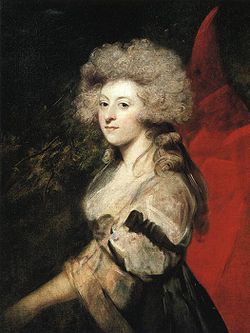

Mrs. Fitzherbert is often depicted as the long-suffering romantic victim of the Prince of Wales. But my second visit with her life exploded some of the myths about her personality. Evidently, she had a “fierce temper” in the words of the prince, but his estimation is corroborated by others who knew her well. She was also a woman of spirit and spunk who liked an off-color joke, spoke frankly, and (although her income had derived from her marriage settlements) was remarkably self-reliant. Like her royal admirer, she was vain, proud, and not without a sizeable ego. One of these “damned eyewitnesses” to the real Maria was her dear friend Lady Anne Lindsay, with whom she decamped to the Continent after Maria capitulated to George’s bedside marriage pledge (which followed his melodramatic, botched suicide attempt).

In Lady Anne’s words, “In spite of much nonsense, some haughtiness, some duplicity, I like her. She is . . . lovely and lovable amidst her circle of foibles and follies . . . whose inconsistencies deserve a long chapter from some historian who will attempt to draw her character and will make no real likeness because she has no fixed character but a medley of inconsistent and inconsequent particulars.”

The “Sinner”
Nothing can excuse Caroline of Brunswick’s emphatic inattention to personal hygiene, but did she really deserve to be called “the fiend” by her husband? A victim of her society’s double standards, Caroline was blatantly bawdy in an era when ribald humor was de rigueur—as long as it was men who were telling the jokes. And she was highly sexed in an age when marital infidelity seemed rather the rule than the exception—as long as the dalliances were discreet. Caroline blew that one, too.

“I had rather see toads and vipers crawling over my victuals than sit at the same table with her,” her husband (the oversexed, hypocritical hypochondriac also known as the Prince of Wales) declared to Lord Malmesbury soon after their royal marriage. And during the course of said union, while the prince took numerous mistresses in addition to his brief flings (some of which resulted in royal bastards) Caroline’s sexual misconduct became the subject of two separate investigations—the 1806 “Delicate Investigation” and the 1820 “Bill of Pains and Penalties.”

The first time Caroline and I spent some time together, I confess that I was somewhat firmly in the camp that considered her vulgar in the extreme. But the Caroline I gave a second chance to during the past couple of weeks filled my heart with pity; consequently, my entry on her mutually unhappy marriage to the Prince of Wales has become one of my favorites within my forthcoming book.

She was deprived of companions who might have become friends and eventually deprived of her own daughter’s society. George considered Caroline a dreadful maternal role model, but he wasn’t about to win any medals for fatherhood either. Their daughter, Princess Charlotte, tended to blame her mother for their separation, though toward the end of her young life she observed, “My mother was bad, but she would not have become as bad as she was if my father had not been infinitely worse.”

Lonely and bored under the prince’s “Carlton House System,” which endeavored to keep her a shut-in and proscribed her companions—one of whom was her husband’s mistress, Lady Jersey—Caroline needed a confidant, but didn’t know who to trust. She sought allies, but the prince’s friends would not interfere in the royal marriage. She wished to see more of her child, to watch little Charlotte being bathed and fed. And when she learned that the head of the nursery, the kindly and efficient Mrs. Dashwood, was ill, Caroline availed herself of the disruption to break her husband’s rules, and begged to see her little girl at an unappointed time.

Her attendants and visitors could see her unhappiness. Lady Sheffield, who dined with the princess in Brighton in late July noted that “her lively spirits which she brought over with her are all gone, and they say the melancholy and anxiety in her countenance is quite affecting.”

Caroline was in marital purgatory, in her words “a princess and no princess, a married woman and no husband—never was dere a poor devil in such a plight as I.”

In the spring of 1814, when Tsar Alexander of Russia came to England, Caroline was omitted from the guest list for his reception at Carlton House. Charlotte added her mother’s name, but her father scratched it out again. Then he thrice prevented the Tsar from paying a social call on Caroline by sending messengers to intercept him.

One night at the opera house Caroline arrived to hear the orchestra playing “God Save the King.” The people remained on their feet and greeted her with resounding cheers. On her way home, her carriage was mobbed with sympathetic well wishers. Poking his head into her coach, one man assured the princess, “We will make the prince love you before we are done with him.”

George’s pettiness even went so far as to prohibit Caroline from worshipping at St. Paul’s; he reserved every seat in the cathedral for a service to commemorate the peace and she was turned away. Balls in her honor were cancelled when the prince forbade his friends from accepting invitations to attend them. And we know that he had the doors of St. Paul’s barred against her entry on his coronation day, prohibiting her from entering the cathedral, let alone being crowned beside him.

The opportunity to revisit these two women whose romantic lives I had profiled earlier, gave me additional angles from which to view them and altered my opinion of them as well. Mrs. Fitzherbert was not entirely a saint and Caroline of Brunswick, though many of her sins were of her own making, often comes across as more sinned against than sinning—which is one of the reasons the House of Lords (albeit reluctantly) refused to convict her after the hearings on the Bill of Pains and Penalties.


During the course of your research have you ever discovered things about certain historical figures that contradict the perceived wisdom about their lives and characters and made you alter your own perception of them? Who were they and what did you learn about them that changed your mind?

Monday, December 8, 2008

Time and Place

Book signings are such an adventure. When I attend one as fan and not as an author, I am introduced to whole new worlds. One of my regular favorites are the signings at Turn the Page Bookstore in Boonsboro, Maryland. The store is owned by Bruce Wilder and managed by his daughter-in-law, Stacie Aufdem-Brinke.

The store focuses on mass market and trade especially romance, science fiction and mystery. Since the store is less than fifteen minutes from the Antietam Battlefield they also have a healthy collection of books related to the Civil War.

At Saturday’s signing I purchased books by Nora Roberts (who is married to Bruce), Gail Barrett, Elaine Fox, Cathy Caskie, and Dolly Nasby. What a range of stories from Nora’s last book in the sign of Seven trilogy, Elaine’s laugh out loud romantic comedy BEDTIME FOR BONSAI, Kathy’s regency set historical TO SIN WITH A STRANGER(just nominated for an RT Reviewers Choice Award), Gail’s latest, a princess in jeopardy silhouette TO PROTECT A RPINCESS) and Dolly’s book of annotated photographs on Gettysburg then and now, entitled simply GETTYSBURG.

Leafing through the Nasby book which I intend as a Christmas gift, I started to think about “then and now” in the context of writing historicals. London is a wonderful example. There are still pockets of the city that can take you back to the Regency and the Tower of London (minus the tourists) is as close as I have ever come to a time travel machine. But the river is completely different and the parliament buildings are not nearly as old as Parliament itself.

In my own neighborhood, the land and what grows on it has changed so dramatically that it would be an egregious historical error to write a book set in 1808 with the landscape of 2008.

Our neighborhood, within sight of the Chesapeake Bay, is filled with tulip poplar trees many of which are over one hundred feet tall and look as though they have been here forever, yet not one of them is more than seventy years old.

At the turn of the century a squirrel could travel from Maine to Carolina and never leave the branches of an American Chestnut tree. A blight destroyed all of the chestnuts by mid-century and the tulip poplar rook over what land that had not been cleared for tobacco farming. Eventually that was abandoned when the acreage was developed as a summer community of rustic log cabins.

There was another major change in the landscape in the early part of this century when the state of Maryland instituted a tobacco buy-out in which they paid framers to stop growing tobacco. Tobacco is a beautiful plant, elegant glossy leaves that cluster in plants that grow between three and four feet. Now the only sign of tobacco farming are the great barns that were used for drying.

How does the lay of the land influence what you write? How important is it to you to know what a city really looked like or how the farm land was used? As a reader do you care? Oh, and do you enjoy books signings – as a reader!

Friday, December 5, 2008

Winter Holiday Traditions

The Season is upon us! Wishing everyone the best, but I know the economy may make the winter holidays a little less festive this year.

This year my family will be very conservative about gift giving. We've tried to donate where we could to food banks, wish-trees, and toys-for-tots more often than we ever have before. At home, we are focusing on traditions...my kids and I are dragging out all those old Christmas decorative doo-das and putting them everywhere. I had to look up a little info about the tradition behind mistletoe, holly, stockings, and Christmas cards so I could answer my kids many questions, so I thought I would share what I learned:

" Mistletoe was used by Druid priests 200 years before the birth of Christ in their winter celebrations. They revered the plant since it had no roots yet remained green during the cold months of winter. The ancient Celtics believed mistletoe to have magical healing powers and used it as an antidote for poison, infertility, and to ward of evil spirits. The plant was also seen as a symbol of peace, and it is said that among Romans, enemies who met under mistletoe would lay down their weapons and embrace. Scandinavians associated the plant with Frigga, their goddess of love, and it may be from this that we derive the custom of kissing under the mistletoe. Those who kissed under the mistletoe had the promise of happiness and good luck in the following year.

In Northern Europe Christmas occurred during the middle of winter, when ghosts and demons could be heard howling in the winter winds. Boughs of holly, believed to have magical powers since they remained green through the harsh winter, were often placed over the doors of homes to drive evil away. Greenery was also brought indoors to freshen the air and brighten the mood during the long, dreary winter.Legend also has it that holly sprang from the footsteps of Christ as he walked the earth. The pointed leaves were said to represent the crown of thorns Christ wore while on the cross and the red berries symbolized the blood he shed.

According to legend, a kindly nobleman grew despondent over the death of his beloved wife and foolishly squandered his fortune. This left his three young daughters without dowries and thus facing a life of spinsterhood.The generous St. Nicholas, hearing of the girls' plight, set forth to help. Wishing to remain anonymous, he rode his white horse by the nobleman's house and threw three small pouches of gold coins down the chimney where they were fortuitously captured by the stockings the young women had hung by the fireplace to dry.

A form of Christmas card began in England first when young boys practiced their writing skills by creating Christmas greetings for their parents, but it is Sir Henry Cole who is credited with creating the first real Christmas card. The first director of London's Victoria and Albert Museum, Sir Henry found himself too busy in the Christmas season of 1843 to compose individual Christmas greetings for his friends. He commissioned artist John Calcott Horsley for the illustration. The card featured three panels, with the center panel depicting a family enjoying Christmas festivities and the card was inscribed with the message "A Merry Christmas and a Happy New Year to You."

The above came from:
http://www.allthingschristmas.com/traditions.html. There's more there on the nativity, Kwanzaa, Hanukkah, and Santa Claus, and other, but I've written mistletoe into a 13th century Christmas story I'm working on now and was glad to see that tradition has been around a long, long time.

I am hoping my kids will remember helping us hang goofy colored lights from our porch, setting up our ceramic Christmas city scene on the dining room table, and building the train set around the base of the Christmas tree long after they've forgotten which Lego set they got, or which character doll from High School Musical they didn't get!

What's your holiday tradition? Please spread some cheer and share!

Thursday, December 4, 2008

Adelard of Bath

Carrie Lofty is back with us today to talk about the heroine of her debut novel, What a Scoundrel Wants.

When I began the manuscript that would become What a Scoundrel Wants, I had big plans for my blind heroine, Meg, and her mile-wide dangerous streak. I'd read too many medieval romances that blended paranormal elements into their history, particularly the real-life existence of magic, so I knew from the start I wouldn't make her a witch. I wanted to stay strictly historical. Yet I felt equally compelled to find a legitimate way for my late twelfth century Englishwoman to understand the secrets of chemistry.

The key to this legitimacy came by way of Adelard of Bath (c. 1080-c. 1152). Adelard was an explorer and philosopher who traveled extensively in his youth, learning Arabic at a university in Toledo (modern-day Spain). He also studied in France, Italy, and Turkey, before settling in Bath around 1122.

After chancing upon an Arabic version of Euclid's Elements of Geometry, which had been translated from the original Greek, he created the Latin version that would become the basis of mathematics until the 16th century. He also studied astronomy, positing that the earth was round, and he formulated what would one day be known as the law of the conservation of matter. Fluent in multiple languages, he went to London and tutored King Henry II, helping include England in Europe's escape from the Dark Ages.

But what does this have to do with my heroine?

Turns out Adelard carried on a years-long conversation with his English nephew. They discussed the unknowns of the day, including the tides, Earth's position in space, and animal physiology. They also catalogued a pharmacopeia of herbs and remedies and, of most importance to my story, they discussed alchemy. Greek fire, gunpowder, acids--Adelard gave his nephew the keys to the whole of Arab scientific learning.

And I imagined Adelard's nephew to be Meg's grandfather.

Meg found her father's fat, tattered book and opened its warped pages. Dozens of letters from his great-uncle Adelard of Bath, the famous tutor to King Richard’s late father, Henry II, stuck out in disarray. She knew the feel of each one. She could no longer see the ornate scrawls of the famous scholar's handwriting, but she knew what they contained: observations, translations, theories about the natural world, and tales of Adelard's far travels. Fingering the pages, she imagined the wonder of that distant relative, his travels and his marvelous ideas. Her father had read the letters to her and Ada like a balladeer, sparking curiosities and questions. They added to the undertaking with their own observations, ever expanding the scope of their family heritage.

Thus her scientific learning and her sister's understanding of foreign languages comes with a basis in legitimacy. It's still pretend, of course, but it made me feel better knowing the possibility was there--a tiny window in history where an isolated Englishwoman might have access to the wonders of medieval science.

Of course, she suffers for it. That sort of knowledge looks a lot like, well...witchcraft!

Wednesday, December 3, 2008

Happy Endings


Happy ending, nice and tidy
It’s a rule I learned in school

Marc Blitzstein’s translation of Bertholt Brecht’s lyrics to the finale of The Threepenny Opera is laced with irony. Life, the song goes on to say, does not work out so neatly, with Queen Victoria’s messenger riding to the rescue.

Recently on my own website, we had a lively discussion about book series and in particular the wonderful Sebastian St. Cyr Regency-set mystery series by C.S. Harris, and whether Sebastian would end up with his old, star-crossed love, the actress Kat Boleyn, or his enemy's daughter, the bluestocking Hero Jarvis, who plays a larger role in the newest book in the series. There was, I realized, an implicit assumption by all of us (including me) that Sebastian at least would have a happy ending. But one of the things that both delights me and sets me on edge as a reader in mystery series, as opposed to romances, is that the happy ending isn’t guaranteed. Which for me as a reader can make a happy ending that much sweeter (one of my favorite romantic endings is to Barbara Hambly’s Darwath Trilogy, because it seems so hard-fought for and so very much not-guaranteed). But also leaves the door nerve-wrackingly open to other possibilities.

I love happy endings. I root for them against all odds, I worry about favorite characters, I rewrite “unsatisfactory” stories in my head. But some of my favorite stories don’t have happy endings, and, I have to admit, wouldn’t be the better for them. I recently saw the final dress of a breathtaking production of La Bohème at San Francisco Opera. La Bohème emphatically doesn’t have a happily-ever-after ending (I usually start crying in Act I–this time was no exception). On the other hand, Rent, based on the same story, does have a happy ending. I loved Rent, but the ending left me completely baffled, and in a sense ruined the show for me. I thought this was because I’d seen La Bohème. I saw Rent with my friend Penny, who also knows Bohème well; like me she ended the show staring at the stage in confusion. But I saw the Bohème dress rehearsal with my friend Greg who said he’d seen Rent before Bohème and he found the ending of Rent jarring as well.

I love and adore happy endings. But not all stories, even–perhaps especially–not all love stories, work with a happy ending. When Mimì came in in the last act of Bohème, I had a moment of thinking “oh, I don’t want her to die.” And yet a different ending takes something away from the power of the story.

When I brought the topic up on my own website, Donna commented that, "I confess to liking happy endings in novels, probably because life seems to dole them out sparingly. I also confess to wondering what happens down the line to some characters. Everything is so lovely and yet, you know there will be ups and downs. Having said that, I also enjoy other stories that you really can’t decide how it will end. It is fascinating to watch characters develop and change through a series especially. There is a tension that keeps me reading."

I find I always want to know what happens after the end of the novel too. So even though I like happy endings, I don’t really consider the story finished. One reason I love series, and even if a novel isn’t part of a series, I often think about “what happens next.” And ambiguous endings can be fascinating. I particularly like watching characters grow and relationships play out over the course of a series. Elizabeth George’s series is harrowing but also riveting. I love the Poldark and Palliser series, both the books and the tv adapations.

And then of course there's the whole question of what makes an ending "happy." In the discussion on my website, Stephanie brought up a recent production she'd seen of All's Well That Ends Well that made her "believe that they might achieve happiness, with time and work on both sides." I've seen All's Well several times, and I remember feeling much more optimistic about the ending when I first saw, which I think has less to do with the production and more with the fact that I was a teenager at the time. My definition of a happy ending was "Helena loves Bertram, they're married and he's accepted the marriage, so it's happy." These days my definition of a happy ending is decidedly more complex. As I mentioned in a previous post, after a production of Bus Stop, friends and I had decidedly different opinions about how "ever after" the happy ending was.

Stephanie also commented that "I suppose what I’m really in favor of are endings that seem true to what’s gone before. And I really can’t stand endings that jerk me around emotionally: like love stories that have one of the protagonists die violently on the last page, when all the signs have been pointing toward a happy or at least upbeat ending. Bittersweet or ambiguous is acceptable, as long as there’s been some indication all along that things might turn out that way." I think being true to what's gone before in the story is the most important thing for me about an ending working (and why the ending of Rent didn't work for me).

As a writer, I like the possibility of my stories not ending happily, if that makes any sense. I was going to say I don’t think I’d ever write a non-happy ending, but when I thought about it, I don’t think I’d precisely call the endings of Secrets of a Lady and Beneath a Silent Moon “happy.” For one thing, it’s an ongoing series, to the story doesn’t really end. I think I’d call the ending of Secrets “hopeful.” And the ending of Beneath “bittersweet.” Tinged with hope perhaps.

How do you feel about endings? Favorite examples to suggest of happy or non-happy endings? Or something in between? Has a jarring ending ever damaged a book for you? Writers, is there any type of ending you don't think you'd ever write?

Tuesday, December 2, 2008

Welcome, Carrie Lofty!

What a Scoundrel Wants
by Carrie Lofty
Available Now!

In Sherwood Forest, outcast warrior Will Scarlet rescues a blind woman who dreams of fire.

Now, to defeat the new Sheriff of Nottingham, he'll need to become a hero for the ages. It's amazing what a scoundrel will do for love...

"Readers will delight in this inventive foray into a legendary place, with characters both familiar and original. Carrie Lofty depicts Will Scarlet as a passionate adventurer, redeemed by the love of a good woman." ~ Susan WiggsNew York Times Bestselling Author


WHAT A SCOUNDREL WANTS is set in 1199. Is there a particular reason you chose that year?

I wanted Robin Hood to return from the Third Crusade during the course of the novel, so I decided to set it during the year King Richard of England died. His Crusaders straggled home throughout the year following his death in April of 1199.

How did you become interested in this time period? What you love about it?


To set a novel in the realm of Robin Hood basically required a medieval setting. I'd never studied medieval history before--my master's thesis was on outlaw legends of the American West--so I was quite intimidated while studying everything from chemistry to shoes. But research is a wonderful thing. I love immersing myself in a new time, a new place. Everything is exciting right from the outset.

What do you like least about this period? Anything that constrained you or that you had to plot carefully around?

Hygiene, education, and life expectancies were, naturally, quite a bit less appealing than we might hope, so I worked on balancing realism with the necessities of creating a romantic fantasy. Also, England was slow to emerge from the Dark Ages, and their understanding of science and medicine lagged behind Arab and even some Mediterranean societies. I worked to make sure my heroine had a legitimate reason to know more than her contemporaries with regard to these subjects (see my post on Meg and Adelard of Bath).

Anything you flat-out altered or “fudged”? If so, why?

Well, strictly speaking, long bows would not have been around in King Richard's day, and neither did the first mention of Robin Hood occur until well into the 13th century. With regard to instances such as these, I went with commonly held ideas about the Robin Hood legend rather than the facts. Dealing with a legendary character allowed a little more leeway than portraying a more factually grounded historical figure or time period.

Any gaffs or mea culpas you want to fess up to before readers get their hands on the book? I know I always seem to find one after the book has gone to press. *sigh*

As I was researching, I was unable to find detailed schematics of Nottingham Castle. I read descriptions of the market and how the Saxons and the Normans occupied opposing halves of the city, but no blueprints. Recently a friend of mine sent a blueprint of the castle and, well, it's almost what I described--if you pretend pretty hard! So I would change that if I could. Also, I think I use the word "fertilizer," which is majorly anachronistic. Granted, there are plenty of anachronistic words in the book, but that one stands out as being particularly modern-sounding. Science terms are hard because of the need to balance reader understanding with the terms available at that time.

Tell us a little about your hero. Something fun, like his favorite childhood pet, or his first kiss.

As a child, he was a brat and a loner--all mischievous pranks and spying on pretty girls. I imagine his first kiss would've been pretty early! He's vain, but he'd never want to be regarded as such, and if given the opportunity to eat a pear, he wouldn't care for the taste.

What sparked this book? Was it a character? An historical event? A scene you just couldn’t get out of your head?

I talked about the inspiration for the book here, but the scene I couldn't get out of my head was when villagers try to burn Meg for witchcraft. The only problem is that I envisioned the scene as a sighted person: the black night sky, angered faces, and sparks from the bonfire shooting upward--all color and swirling fear. But Meg is blind. I had to work at re-imagining that scene (and many others) to reveal it through the other senses available to her. A tricky challenge!

What/Who do you like to read?

Historical romances, of course. My favorite authors are Penelope Williamson, Laura Kinsale, Candice Proctor, Megan Chance, Susan Wiggs, Lisa Kleypas, Loretta Chase, and Jo Goodman. For literary fiction, I love Ian McEwan, Helen Dunmore, Tracy Chevalier, Frank Herbert, and Charles Dickens. And I'm currently in my 15th year of working through the complete Shakespeare!

Care to share a bit about your writing process? Are you a pantser or a plotter? Do you write multiple drafts or clean up as you go?

I plot my characters but pants my stories. If I don't know who I'm writing about first, then the whole thing feels wrong and artificial. This way of working makes for some pretty terrible first drafts, but I allow myself a great deal of freedom--anything to get the basic bones of the story in place. I do major revisions on my second pass. After a third "tweaking" pass, where I incorporate my CPs' perspectives, then I call it good.

What are you planning to work on next?

SCOUNDREL'S KISS, the sequel to WHAT A SCOUNDREL WANTS, will be released in late 2009. In it, a Spanish warrior monk falls for the woman he’s sworn to protect, but she tempts him to abandon his vows of obedience, non-violence, and chastity. In addition, SERENADE, my first novel, will be released as a free serial on my web site beginning January 2009. Set in 1804 Salzburg, SERENADE is the story of a widowed violin prodigy and a composer who stole the symphony he’s famous for.

First chapters for all of my books, current and upcoming, are available on my website.

Thanks for having me!

Monday, December 1, 2008

More Brain Crushes: Steven Ozment


As many of you know, I grew up among re-enactors. What you might not know is that one of my main eras/locations is 16th century Germany (or the Duchies that now make up modern Germany). The origins of the group I started out with are quite specific: The Northern Renaissance Faire that took place in Novato CA for many, many years, and the obscure fact that Queen Elizabeth I had a troop of Landsknecht mercenaries in her employ. Here’s a picture of my in my Durer inspired dress.

Among this group of re-enactors, Steven Ozment (the McLean Professor of Ancient and Modern History at Harvard University) is like a god. His books are engaging reads, full of very personal history that is easy to identify with, as well as serious studies of the history of the era and times.

His larger histories are also well worth reading, but it’s the more personal books that appeal most to me. My favorite is probably The Buergermeister's Daughter. Based on an archive of letters between Anna, her father and siblings, and her lovers (who included both a nobleman and a cavalry officer) it’s a gripping, true-life story of a woman who existed outside her time and place. Anna carried on multiple affairs, was ejected from her home, and when she sued her father for support, he had her captured and chained up in her room! She eventually escaped and her lawsuit against her siblings for her part of the family estate went on for 30 years (hence the magnificent collection of letters in the court’s archive).

But I’ll admit that the tender, loving letters between a husband and wife that are the center of Magdalena and Balthasar are also highly appealing, and the stories spanning three generations of one family told in Three Behaim Boys are simply fascinating (the third Behaim dies of fever in South America, his wandering feet and martial ways having led him on a most interesting path.

So, for those interested in history outside the hothouse of Britain, check Ozment out. For those of you who might be interested in romances set in this world (you knew I’d get here, didn’t you?), check out T J Bennett (she was a Golden Heart finalist with me, so I’ll admit to being biased).